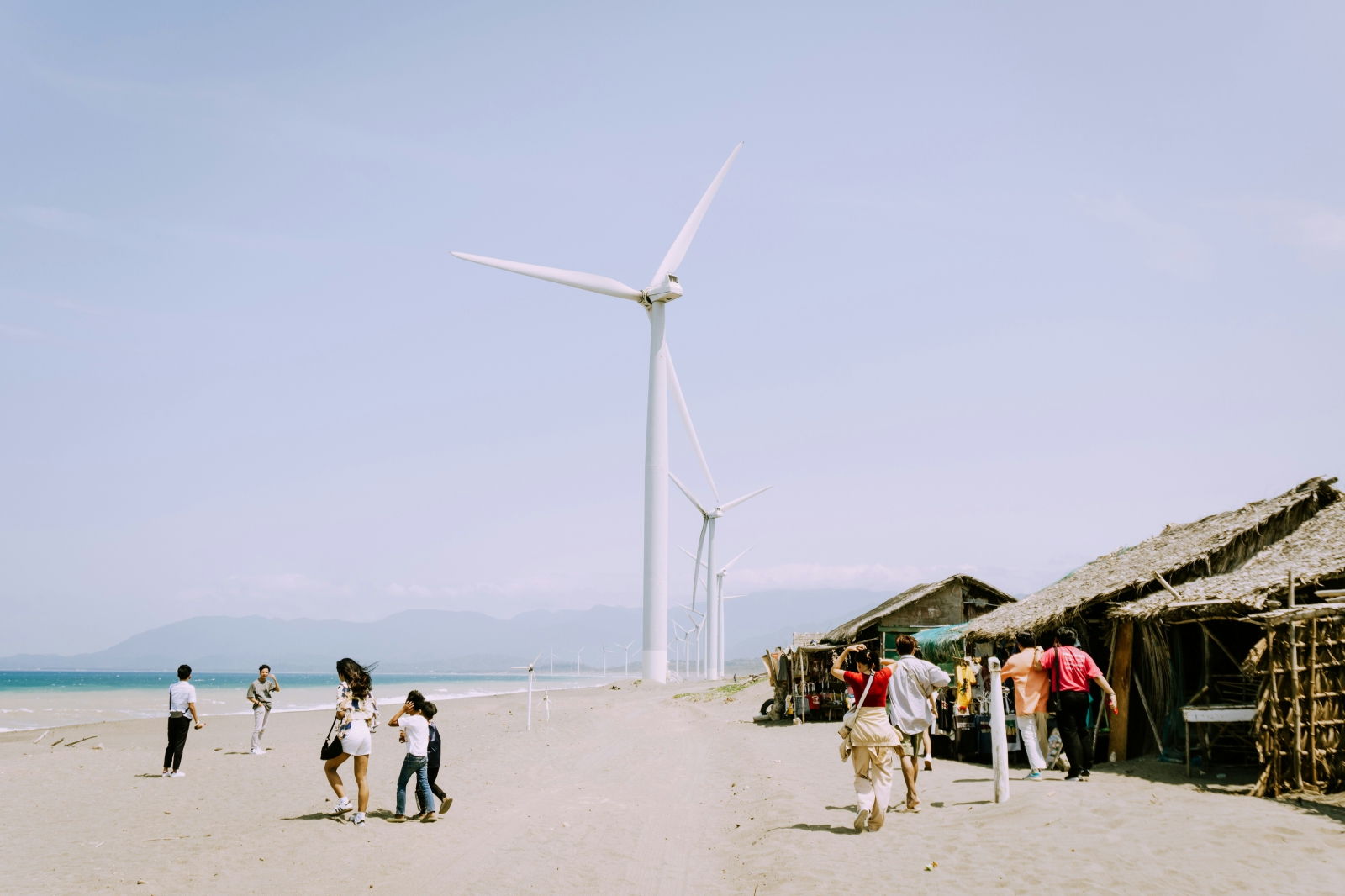
 The Philippines offshore wind relies on auctions and commercial financing.(Photo by Kristhea Mhae Saldo (@ksaldo) via Unsplash)
As the country faces rising energy demand, fuel import dependence, and climate risk, offshore wind offers a long-term pathway to stronger energy security, industrial growth, and system resilience
Imagine the Philippines in 2040.
The power system is more stable. Global fuel price shocks no longer hit electricity bills as sharply. A meaningful share of the country’s energy comes from domestic renewable sources. Ports in Batangas, Subic, Ilocos, Bicol, Negros, and Mindoro support specialized vessels serving a growing offshore wind sector. Filipino engineers, welders, technicians, and logistics workers help power a maritime industry that barely existed two decades earlier.
Energy security feels less fragile. But that future will not happen on its own. It depends on the decisions the country makes today.
“Offshore wind should not be judged only by what it costs at the starting line, but by what it enables over time,” said Ann Francisco, APAC Director of Global Wind Energy Council. “For the Philippines, this is about building long-term energy security, reducing exposure to imported fuel volatility, and creating the foundations of a new domestic industry that can deliver economic value for decades.”
Electricity affordability matters to every Filipino. Yet major infrastructure decisions should not be judged solely by their initial price tag. They should also be evaluated by the kind of long-term energy system they are meant to build.
A capital-intensive start, built for the long term
Offshore wind requires substantial upfront investment. Around 70 to 80 percent of a project’s lifetime cost is incurred before a single kilowatt-hour is generated. These costs include turbines, foundations, subsea cables, transmission systems, port upgrades, and installation vessels.
These are not short-term expenses. They are long-life infrastructure investments designed to operate for 25 to 30 years. Viewed over that horizon, offshore wind is not simply a power project. It is a long-term investment in stable domestic generation and lower exposure to imported fuel costs and global price volatility.
In the Philippines, offshore wind is being pursued largely through competitive auctions and commercial financing. There are no major capital grants underwriting construction, and no broad sovereign guarantees absorbing project risk. Developers must raise financing under prevailing market conditions.
Within this framework, government sets the reserve price and auction design as part of broader energy planning. The pricing that emerges reflects the realities of financing large-scale infrastructure in a new sector. It is not dictated by any one developer, but shaped by a competitive process designed by the Department of Energy to help the industry take root under Philippine market conditions.
This is a fiscally prudent approach. It preserves market discipline. But it also means that early-stage pricing will naturally reflect the financing and infrastructure constraints of a new industry.
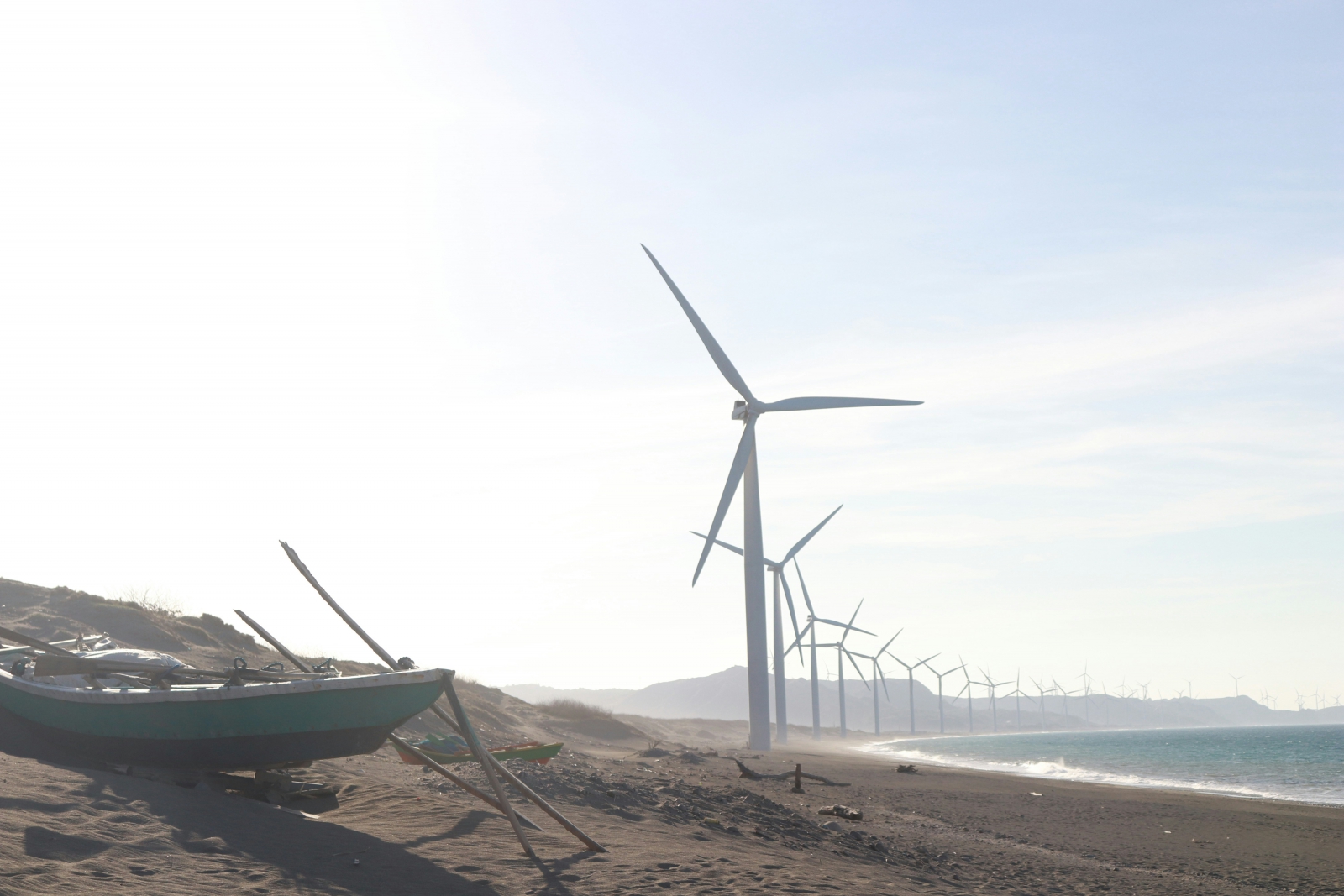 Offshore wind development in the Philippines can reduce exposure to fuel import volatility.(Photo by Danica Ezra Edem (@nika04) via Unsplash)
Context matters in early-stage markets
Some observers have described Philippine offshore wind as among the most expensive in the world. When it comes to pricing, we should look at the historical context.
When the United Kingdom began scaling offshore wind in the early 2000s, initial projects were contracted at prices equivalent to more than PHP 11 to PHP 13 per kilowatt-hour in today’s Philippine peso terms. As auctions matured, supply chains expanded, and the market scaled, costs fell significantly. Even with more recent inflation and supply chain pressures, the UK’s latest auction round still cleared at roughly PHP 6 to PHP 7 per kilowatt-hour.
Taiwan’s first commercial offshore wind round in 2018 also carried feed-in tariffs equivalent to around PHP 10 to PHP 11 per kilowatt-hour in today’s peso terms. Those early projects reflected greenfield risk, limited domestic infrastructure, and a developing regulatory environment. Later rounds became more competitive as the market matured. South Korea and Japan offshore wind sector remain in an earlier stage of development, with pricing still influenced by constraints that are common in emerging markets.
Seen in that context, the Philippine reserve price of PHP 11 per kilowatt-hour falls within the range observed in other markets during their early commercial stages. The more relevant question is not whether first projects are cheaper than mature markets today, but whether the country is creating the conditions for costs to decline over time.
That is typically how offshore wind industries evolve. Early projects establish the infrastructure, regulatory certainty, technical capability, and investor confidence that later projects build upon. Over time, those foundations help reduce costs and improve competitiveness.
Energy security is also about risk
Energy policy is not only about price. It is also about exposure.
The Philippines imports a significant share of its coal and fuel needs. That leaves the country vulnerable to global commodity swings, currency movements, supply disruptions, and geopolitical tensions, all of which can drive up domestic power costs.
That vulnerability remains embedded in the current system.
Offshore wind changes that equation. Once operational, it does not depend on imported fuel or just-in-time supply chains. Its resource is domestic. Its operating costs are more stable and predictable over decades.
That is why the conversation should go beyond a single tariff figure. It should also consider the long-term cost of continued dependence on imported fuels versus the long-term value of building domestic energy infrastructure.
Environmental stewardship and community impact
Offshore wind generates electricity without fuel combustion, air pollutants, or greenhouse gas emissions during operation. For a country highly vulnerable to climate impacts, reducing dependence on fossil fuels is not only an energy issue. It is also a resilience imperative.
Environmental safeguards are also evolving alongside the sector.
The Department of Energy and the Department of Environment and Natural Resources have signed a memorandum of understanding to strengthen coordination on offshore wind permitting and environmental oversight. Meanwhile, DENR is advancing Marine Spatial Planning Version 2 to better map ocean uses and help ensure that offshore wind development is aligned with fisheries, biodiversity protection, shipping routes, and coastal livelihoods.
International experience shows that when projects are properly sited and regulated, offshore wind can coexist with marine ecosystems and local livelihoods. In some parts of Europe, safety zones around turbine foundations have reduced trawling pressure, allowing fish populations to recover. Over time, submerged foundations can also function as artificial reef structures that attract shellfish and smaller marine species.
In more established markets, fishing groups are consulted early to map routes, seasonal fishing grounds, and navigational concerns. Ports that once faced decline have gained new economic purpose through offshore wind activity.
For the Philippines, responsible development will require early consultation with coastal communities, transparent environmental safeguards, and robust marine spatial planning. Community engagement will be essential in the Philippine context. This March, Global Wind Energy Council (GWEC) will be releasing its report, The Offshore Wind for Coastal Development Socio-Economic Impact Study, which translates global experience into site-specific evidence to ensure that offshore wind delivers long-term, inclusive, and locally anchored benefits for the Philippines.
Indeed, Offshore wind is not just an energy project. If managed well, it can support environmental protection, industrial development, and coastal economic opportunity at the same time.
Why the long view matters
The PHP 11 per kilowatt-hour reserve price does not define the end state of offshore wind in the Philippines. It marks the beginning of a structured effort to launch a new industry under competitive conditions.
Scrutiny is fair. Public debate is healthy. These strengthen policymaking.
But the country is at the beginning of a multi-decade transition. The decisions made now will shape what the Philippine energy system looks like in 2040. Greater domestic generation, less exposure to imported fuels, upgraded ports, stronger technical capability, and a more resilient power system all require early commitment.
Offshore wind is not a short-term fix. It is a long-term investment in energy security, economic resilience, and national capability.
If the Philippines wants a more stable and self-reliant energy future, the groundwork must begin today.
This article is a guest contribution from Ann Francisco. The opinions expressed are those of the author(s) and do not necessarily reflect the views of RECCESSARY.
Have insights on energy or carbon issues? Share your perspective with us! Send your submission to reccessary@gmail.com for a chance to be featured. Submissions may be edited for clarity and style.