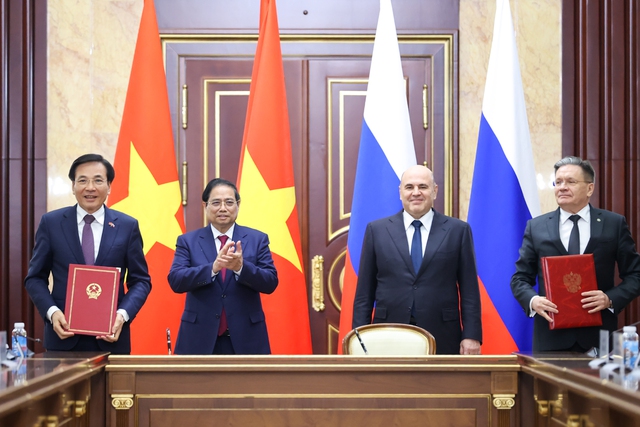
On March 23, Vietnam and Russia signed a deal to build a nuclear power plant in Vietnam. (Photo: VGP)
Vietnam’s return to nuclear power comes at a more complex moment than earlier policy cycles may have anticipated.
Globally, nuclear energy is regaining political support as governments seek firm, low-carbon sources of electricity. From China to the United Kingdom and the United States, countries are extending the life of existing reactors while planning new capacity. For Vietnam, where electricity demand is rising rapidly and decarbonisation pressure is mounting, the appeal of nuclear power is clear.
Yet the global context has shifted. Vietnam is no longer entering a dormant market — it is entering one that is tightening.
A nuclear revival reshaping the uranium market
The renewed push for nuclear energy is increasingly translating into concrete procurement strategies. Utilities are moving to secure long-term uranium supply in anticipation of stronger demand over the coming decades. However, supply remains structurally constrained.
Global uranium production is highly concentrated, with companies such as Kazatomprom and Cameco accounting for a significant share of output. Years of underinvestment following the post-Fukushima downturn have limited the development of new mining capacity. As a result, the market is tightening just as demand expectations rise.
For established nuclear operators, this is prompting earlier contract positioning. For new entrants such as Vietnam, it implies entry into a seller’s market, where access to long-term fuel supply may become more competitive and potentially more expensive.
Fuel risk is becoming strategic
Historically, uranium costs have represented only a small share of total nuclear generation costs. This has often led to the assumption that fuel availability is a secondary concern. That assumption may no longer hold.
Concentrated supply introduces geopolitical exposure, while intensifying competition for long-term contracts could disadvantage late entrants. In a tighter market, even modest increases in fuel costs or volatility can affect the long-term economics of nuclear projects, particularly over multi-decade lifecycles.
Beyond fuel risks, nuclear economics further complicate the picture. Recent projects in Europe and North America suggest that capital costs for large-scale nuclear plants can exceed USD 6,000–10,000 per kW, often accompanied by delays and cost overruns. By comparison, utility-scale solar and onshore wind are being deployed at significantly lower cost levels in many markets.
While uranium has traditionally been a minor cost component, a tightening fuel market adds another layer of uncertainty to projects that are already capital-intensive and financially complex.
Emerging nuclear programmes therefore face a dual challenge: securing financing and technology, while also ensuring stable access to fuel under increasingly uncertain market conditions.
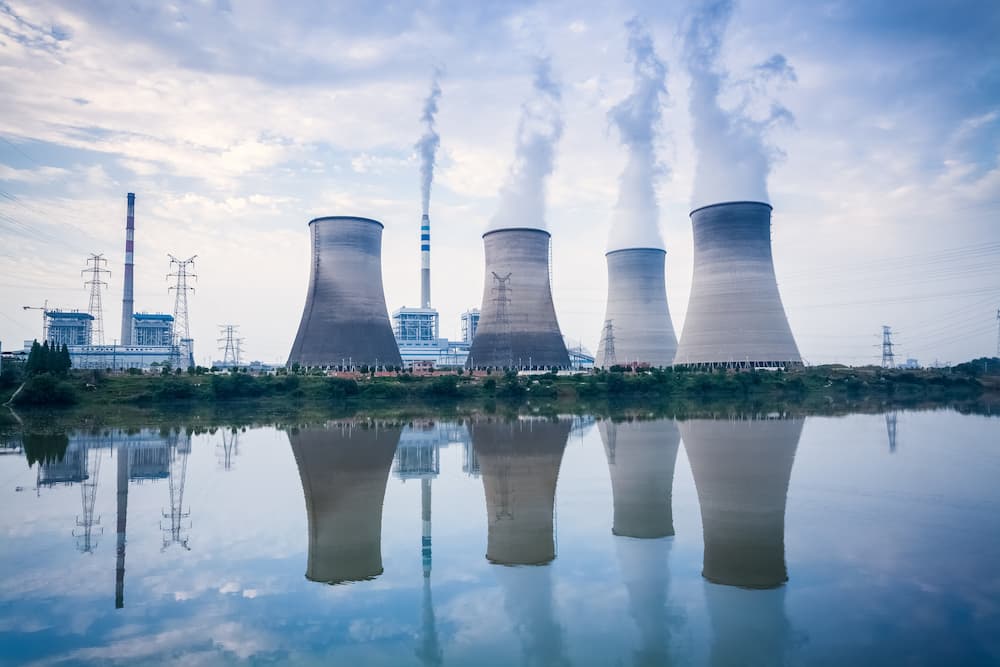
Recent projects in Europe and North America suggest that capital costs for large-scale nuclear plants can exceed USD 6,000–10,000 per kW.(Image: iStock)
SMRs: Promising, but not yet proven
Much of the current optimism around nuclear expansion — particularly in emerging markets — is centred on small modular reactors (SMRs).
Their value proposition is compelling. Smaller unit sizes, modular construction and the potential for factory-based manufacturing could, in principle, reduce upfront capital requirements and shorten project timelines. Vendors including Rosatom, Westinghouse Electric Company and Korea Hydro & Nuclear Power are actively promoting SMRs as export-ready solutions.
In practice, however, the technology remains at an early commercial stage. Only a limited number of projects have progressed beyond demonstration, and cost estimates remain highly uncertain. There is not yet sufficient empirical evidence to confirm whether SMRs can deliver the expected reductions in construction risk or overall project cost.
Moreover, SMRs do not remove the structural challenges associated with nuclear power. They still require robust regulatory frameworks, long-term fuel supply arrangements and credible financing structures, particularly in first-of-a-kind deployments.
For countries without prior nuclear experience, this introduces an additional layer of technology risk on top of existing financial and supply constraints.
Growing scepticism in mature markets
These uncertainties are increasingly reflected in parts of Europe’s energy policy debate.
Analysts such as Claudia Kemfert argue that nuclear power continues to struggle with cost competitiveness relative to rapidly declining renewable and storage technologies. At the same time, researchers including Maximilian Fichtner have highlighted the risk that uranium supply could become a binding constraint if global nuclear deployment accelerates.
These perspectives are not universally shared. However, they point to a broader shift in how nuclear expansion is being assessed — not only in terms of decarbonisation potential, but also cost, scalability and resource constraints.
Vietnam’s latest energy strategy projects nuclear power to account for approximately 6–8% of total electricity generation by 2050. In absolute terms, this is significant. In relative terms, however, it remains modest within a system that could exceed 500 GW of installed capacity by mid-century.
This creates a strategic asymmetry. Nuclear power requires large, long-term commitments, including capital investment, technology partnerships, and fuel supply chains, yet contributes a relatively limited share of total generation.
For a fast-growing system, this raises important questions about capital allocation and system flexibility. Investments in grid infrastructure, renewable generation and storage may offer more scalable and adaptive pathways, particularly as costs continue to decline.
A narrower window for new entrants
Taken together, these dynamics suggest that the global nuclear revival may not be equally accessible to all countries.
Those with existing nuclear fleets benefit from established supply relationships, regulatory experience and procurement scale. Late entrants, by contrast, may face higher costs, greater uncertainty and weaker bargaining power.
For Vietnam, this does not rule out nuclear development. But it does imply a narrower margin for error than in previous decades.
Outlook
Vietnam’s interest in nuclear energy reflects a rational and forward-looking response to long-term energy security and decarbonisation challenges. As electricity demand continues to grow, maintaining a diversified and reliable power mix will be increasingly important.
At the same time, the external conditions shaping nuclear deployment are becoming more complex. A tightening uranium market, high capital costs and the uncertain commercial maturity of SMR technology all point to a development pathway that is more constrained — and potentially more costly — than earlier assumptions may have suggested.
In this context, nuclear power may play a valuable role in Vietnam’s future energy system, but likely as a selective and carefully timed component rather than a central pillar.
The strategic challenge, therefore, is not whether to pursue nuclear energy, but how to position it appropriately — balancing long-term security benefits against cost, flexibility and evolving market risks.
For countries entering the nuclear sector today, success will depend as much on timing, sequencing and supply chain strategy as on policy ambition itself.
Source: IDEAS, DIW Weekly Report
This column is a collaboration between RECCESSARY, Vietnam Clean Energy Association (VCEA), and Truong Nhu Tung. All rights reserved. Reproduction without permission is strictly prohibited.
Have insights on energy or carbon issues? Share your perspective with us! Send your submission to reccessary@gmail.com for a chance to be featured. Submissions may be edited for clarity and style.
