(2).jpg)
For enterprises, particularly exporters, accessing renewable energy is becoming an increasingly urgent mandate. (Image: iStock)
The Direct Power Purchase Agreement (DPPA) mechanism is expected to play a pivotal role in Vietnam’s roadmap toward achieving Net Zero by 2050. Instead of selling electricity exclusively to Vietnam Electricity (EVN), Power Generation Units (GENCOs) can sell electricity directly to buyers, thereby fostering the development of a competitive renewable energy market.
However, during implementation, the Cost Structure must be carefully scrutinized when applying DPPA concurrently with the two-part electricity tariff, as this may directly affect the mechanism's commercial feasibility. The core issue is the risk of double fee calculation, as the capacity charge component in the two-part retail electricity tariff already includes grid system costs, while Decree 57/2025/ND-CP (“Decree 57”) separately stipulates service charges for use of the grid system. This article will analyze the relevant formulas and propose specific legal solutions to ensure the viability of DPPA.
I. Introduction of DPPA mechanism and two-component tariff for off-takers
For enterprises, particularly exporters, accessing renewable energy is becoming an increasingly urgent mandate. Major markets like the EU and US are enforcing stricter environmental standards, such as the Carbon Border Adjustment Mechanism (CBAM) and Renewable Energy Certificates (RECs). DPPA allows enterprises to secure clean energy at predictable costs, maintaining their global competitiveness.
For the power system, DPPA helps alleviate the financial burden on EVN, which currently must purchase electricity at competitive market prices but sell at State-regulated retail prices. When enterprises participate in DPPA, they assume the price risks themselves, reducing the systemic pressure on EVN.
To clearly understand the issue, it is first necessary to identify the legal status of the parties in the DPPA model under current regulations. Decree 57 stipulates two models of direct power purchase:
(i) The first model is direct connection, in which the enterprise invests in building its own separate transmission line. This model is suitable for large-scale enterprises with strong financial capacity.
(ii) The second model is DPPA via the national grid, assessed to have the ability to be applied more widely because it does not require private infrastructure investment. In this model, the renewable power plant sells output into the Vietnam Wholesale Electricity Market (VWEM); the enterprise buys electricity from the national grid, and at the same time, both parties sign a price hedging contract to stabilize the price level.
The potential double‑charging issue discussed in this article mainly arises in relation to the second model (DPPA via the national grid), where the DPPA cost components interact with the new two‑part electricity tariff.
From October 2025, EVN started piloting the calculation of the two-part electricity tariff for Large Electricity Consumers under Decree 57. This is an advanced trend applied by many countries; however, when applied simultaneously with the DPPA mechanism via the national grid, appropriate adjustment is needed to avoid overlapping regarding costs.
- DPPA mechanism cost structure
According to regulations at Article 16 of Decree 57, the total electricity cost of an enterprise participating in DPPA via the national grid is determined according to the formula:
CKH = CĐN + CDPPA + CCL + CBL
In which:
- CKH: Total cost of electricity purchased by Large Consumers or Authorized Retailers from Power Corporations in each payment period.
- CĐN : Energy cost settled at market electricity prices, determined based on the spot market electricity price during the trading cycle and the customer's adjusted electricity consumption.
- CDPPA : Service charge for use of the grid system (VND), including total service costs for: electricity transmission, distribution-retail, system operation dispatch, electricity market transaction operation, and sector management-administration costs.
- CCL: Compensation payment for differences (VND), determined based on allocated price and volume differences according to competitive wholesale electricity market operation regulations.
- CBL: Supplementary electricity purchase cost from Power Corporations (VND), applicable to the difference in electricity volume between actual consumption demand and purchased renewable energy electricity volume, calculated according to current retail electricity prices corresponding to customer categories.
In which, CDPPA (power system service fee) includes costs for transmission, distribution, system operation, and market management. According to the interpretation at Article 15 of Decree 57, regarding economic nature, CDPPA includes costs for using services: power transmission, distribution - electricity retail, power system operation dispatch, electricity market transaction administration, industry administration - management and is determined by the total cost and profit of the stages of power transmission, distribution - electricity retail, power system operation dispatch and electricity market transaction administration, industry administration - management divided by the total domestic commercial electricity output of the Power Corporations.
- Two-part tariff calculation
According to EVN's Announcement, currently, the two-part tariff has the formula:
TC = CP × PMAX + CA × AP
In which:
- (Cp × Pmax): Capacity Charge component:
- Cp: Capacity unit price, calculated in VND/kW/month
- Pmax: Customer's maximum capacity during the month (kW) determined by metering equipment (the average capacity during the integration period with the highest value of the month; the current integration period is 30 minutes). In cases where the electricity purchaser signs one Contract for multiple electricity meters at one location, Pmax is calculated according to the measured value of each meter.
- (Ca × Ap): Energy Charge component:
- Ca: Energy unit price, calculated in VND/kWh. This unit price may be designed according to different time blocks such as peak, normal, and off-peak hours.
- Ap: Active energy during the meter reading cycle (kWh).
Thus, based on the above formula, it can be seen that the Two-part Electricity Tariff includes:
(i) Capacity Charge (VND/kW): Reflects the fixed costs of the system, primarily fuel costs and consumable materials to produce each kWh of electricity that customers actually consume.
(ii) Energy Charge (VND/kWh): Reflects variable costs (fuel, operation).
According to the interpretation of the Electricity Regulatory Authority of Vietnam, the capacity fee is the Fixed Part (capacity price and other fixed costs) - which is the amount the customer pays based on the maximum capacity (kW) that they register, or actually use in the period. This amount reflects the cost of investment and maintaining the supply capacity of the system (power plants, transmission grid…), while the energy fee is the Variable Part (electric energy price) - calculated according to electricity consumption output (kWh), reflecting fuel, operation, and loss costs. Thus, the nature of the two-part electricity price transaction is that the Customer not only buys “electric energy” (kWh) but also buys “the right to be supplied capacity” (kW) from the power system. Customers commit to a maximum usage capacity level and the electricity seller (EVN) commits to be ready to supply that capacity 24/7 and the customer pays money for this readiness whether using it or not.
- Analysis of cost overlap
The issue arises from the fact that power system infrastructure costs have been calculated in CDPPA, but may be calculated an additional time in the capacity fee of the two-part electricity price calculated for Large Electricity Consumers. This leads to the situation where enterprises may have to pay twice for the same type of infrastructure cost. To more clearly illustrate the extent of this cost overlap between the two mechanisms, the infrastructure and operational cost components can be compared as follows:
Comparison of infrastructure and operational components:
| Cost Component | DPPA Mechanism (CDPPA) | Two-part Tariff (CP) | Overlap Status |
| Fixed / Infrastructure | Already embedded in the CDPPA unit price in order to recover grid infrastructure investment costs. | Capacity Charge (CP × PMAX) is designed to recover the fixed investment (CAPEX) of the power supply system, including grid infrastructure. | A single grid asset may effectively be depreciated twice - once through CDPPA charged per kWh and once through the fixed capacity fee. |
| Variable / Operation | Includes system operation, dispatch, electricity market transaction administration, and sector management costs. | Energy Charge (CA × AP) reflects variable fuel, generation operation, and loss costs. | These operating costs can be separately allocated based on actual energy consumption (kWh). |
As the table above shows, the same category of grid infrastructure costs is effectively allocated both into the CDPPA unit price and into the Capacity Charge component of the two-part tariff, creating a risk that enterprises pay twice for the same grid asset. By contrast, the variable/operational components can, in principle, be separately allocated based on actual kWh consumption, and are therefore less prone to overlap.
Similarly, the enterprise has committed to paying for the investment cost of the renewable plant through the electricity price in the DPPA contract. Meanwhile, the capacity fee in the two-part tariff is designed to ensure EVN has resources to invest for the entire national power system, including backup power sources.
The cost structure as currently stands may affect the decision of the enterprise when participating in DPPA. If the total cost of participating in DPPA is higher than or equivalent to buying electricity at the normal retail price, the enterprise may reconsider the conversion decision.
The lack of participating customers may affect the ability to deploy new renewable energy projects, because investors often require long-term power purchase contracts to ensure the financial feasibility of the project. In the long term, this may affect the progress of reaching the Net Zero 2050 goal.
Accordingly, on December 31, 2025, the Ministry of Industry and Trade issued Document No. 10387/BCT-DL sending to the Ministry of Justice to appraise the dossier of the Draft Decree amending and supplementing Decree No. 57/2025/ND-CP (“Draft”) according to simplified procedures. This move shows the effort of the management agency in removing practical obstacles.
In this Draft 3rd dated December 29, 2025, the drafting agency expanded the subjects participating in the direct power purchase mechanism. Specifically, Clause 2 Article 1 of the Draft added Electricity retail units in zone, cluster models (such as industrial parks, economic zones, export processing zones) into the applicable subjects. This regulation allows electricity retail units in industrial parks to directly sign power purchase contracts with Power Generation Companies (GENCOs) and participate in the electricity market. However, regarding the financial mechanism for calculating costs, the 3rd Draft has not adjusted issues related to the power grid infrastructure cost structure as analyzed above and we hope that this issue can be solved in the official legal document so that the DPPA mechanism via national grid and the two-part electricity mechanism become more attractive to investors in reality.
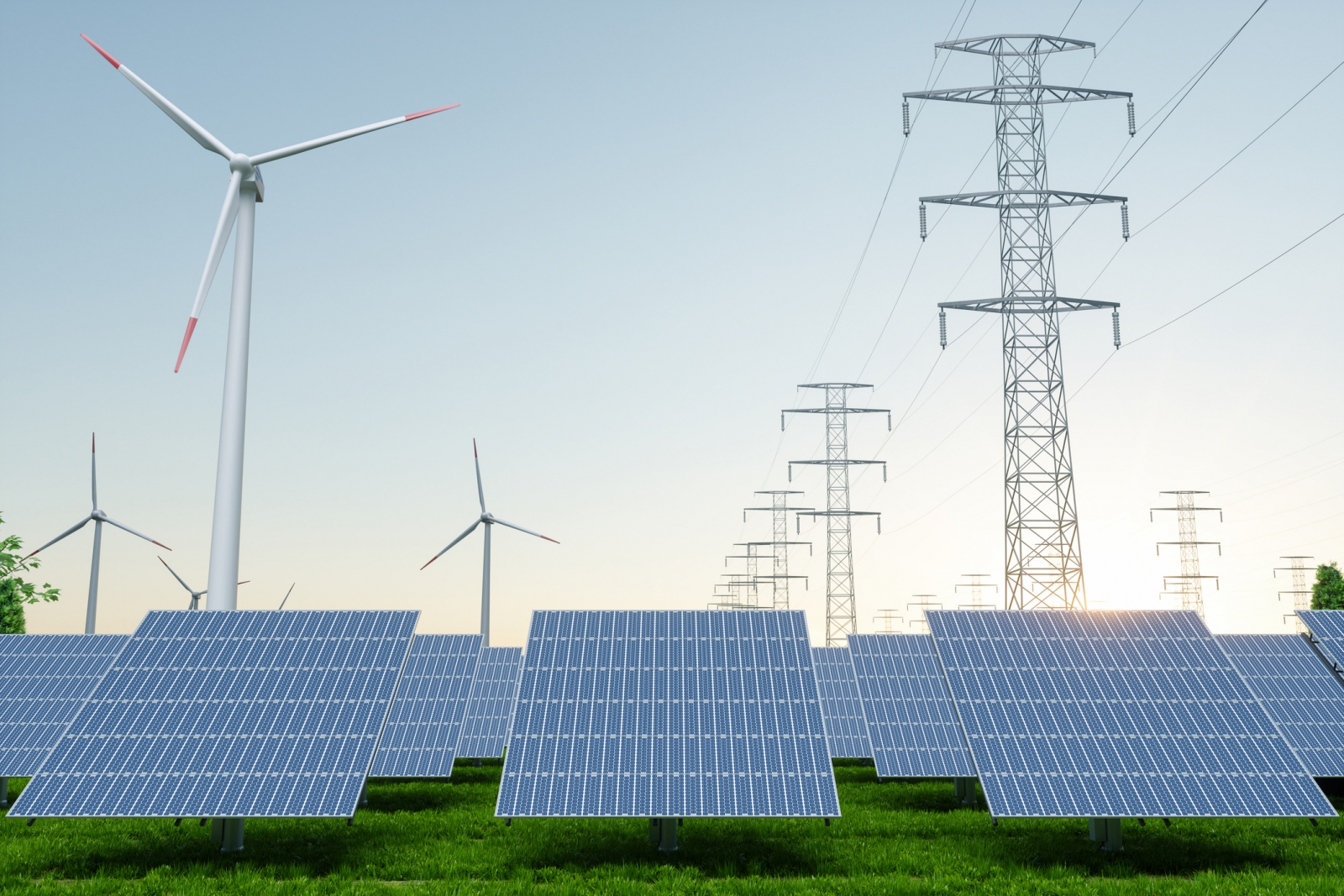
The capacity fee in the two-part tariff is designed to ensure EVN has resources to invest for the entire national power system, including backup power sources. (Image: iStock)
II. Some proposals to resolve double-charging matters
In the context that the Draft Decree is being appraised to submit to the Government for issuance, technical adjustment to handle the cost structure issue is necessary. To optimize the DPPA mechanism when operating simultaneously with the two-part electricity tariff, it is necessary to propose considering two options:
Option 1: Establishing a cost unbundling mechanism
First is establishing a cost separation mechanism. According to the basic principle of public service pricing, an infrastructure service should be priced only once. Therefore, can consider issuing separate guidance on the electricity price mechanism for enterprises participating in DPPA. Specifically, if applying the two-part tariff, can consider adjusting CDPPA by separating the grid cost component. Accordingly, the enterprise will pay the capacity fee for grid infrastructure, while CDPPA only includes operation costs such as system dispatch and market transaction fees.
Option 2: Implementing a capacity set-off (netting) mechanism
Second is applying a capacity netting mechanism. Currently, the capacity fee is calculated based on maximum capacity (PMAX) that the enterprise uses in the month. However, for enterprises participating in DPPA, they have committed to consuming electricity from the renewable plant, therefore the actual pressure on the national grid may be lower than the total consumption capacity. Can consider applying a netting mechanism, in which PMAX to calculate the capacity fee is only based on the difference between electricity output from the renewable plant and the actual consumption demand of the enterprise. The enterprise only uses the EVN grid as a backup source for the shortage part, therefore can only pay the capacity fee for this part.
The Ministry of Industry and Trade urgently submitting to the Government the Draft amending Decree 57 according to simplified procedures at the end of 2025 is a positive signal, showing the flexible reaction of policy before reality. However, for the DPPA mechanism to be truly effective and transparent, the legal framework needs to thoroughly solve the financial problem regarding infrastructure costs. Revising the pricing mechanism through cost separation and applying capacity netting will help eliminate the risk of cost duplication, ensuring the competitiveness of the electricity market according to the correct national energy development orientation.
This article is a guest contribution from Hoang Pham. The opinions expressed are those of the author(s) and do not necessarily reflect the views of RECCESSARY.
Have insights on energy or carbon issues? Share your perspective with us! Send your submission to reccessary@gmail.com for a chance to be featured. Submissions may be edited for clarity and style.
