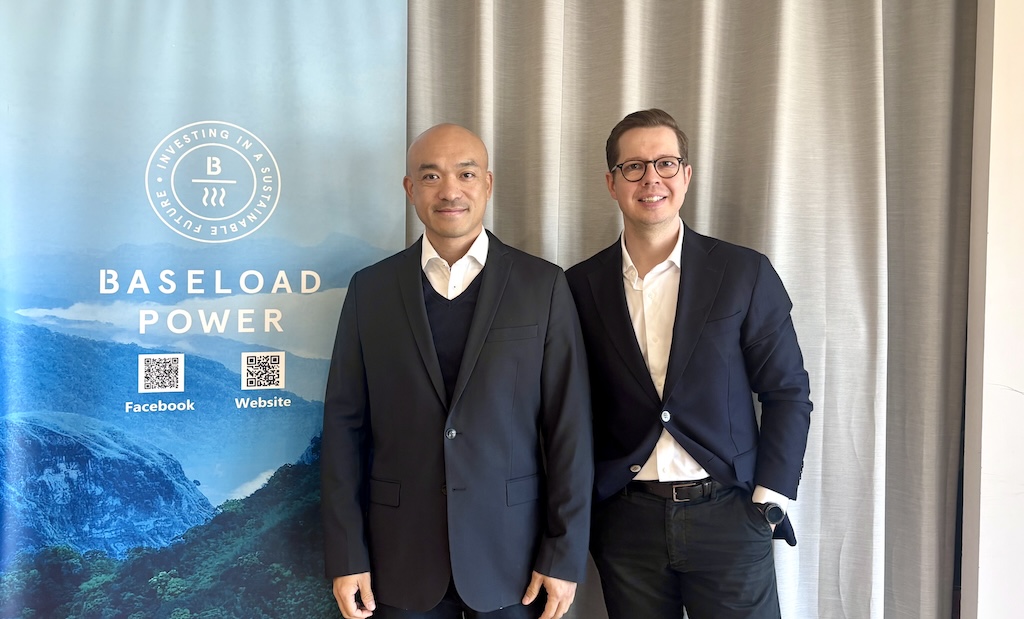
Van Hoang (黃天德), chairman and CEO of Baseload Power Taiwan, and Simon Westerlund, Baseload’s investment manager for Taiwan and Asia. (Photo: Daisy Chuang)
AI is driving up global demand for low-carbon electricity, prompting major tech companies such as Meta and Google to move into geothermal power to meet data center energy needs. In April 2025, Swedish geothermal developer Baseload and Google signed their first corporate power purchase agreement (CPPA) in the Asia-Pacific region. Under the agreement, Baseload will supply 10 MW of geothermal energy by 2029, marking a key milestone for geothermal development in Taiwan.
In an interview with RECCESSARY, Baseload said that while geothermal development costs in Taiwan are higher than in mature markets, the island benefits from attractive feed-in tariffs and strong demand for renewable power. With leading companies beginning to adopt geothermal energy, scaling up the sector will require targeted improvements in regulation, resource data and the supply chain.
AI growth drives demand for baseload renewables
In recent years, interest in geothermal energy has been growing in Taiwan, and the resource now plays a significant role in the country’s Energy Transition 2.0 strategy. Van Hoang (黃天德), chairman and CEO of Baseload Taiwan, said the development of geothermal power in Taiwan has been a process of learning by doing.
He noted that early geothermal projects were constrained by the Hot Springs Act and the Mining Act, both of which set permit terms that did not align with the long lifespan of geothermal facilities, which can exceed 20 years. As geothermal energy has gained attention, Taiwan amended its Renewable Energy Development Act in 2023 to include geothermal resources, and in 2024 introduced a dedicated permitting framework for geothermal exploration and development. The new system gives the central authorities clear responsibility for managing and issuing geothermal permits.