.jpg)
Taiwan Fertilizer’s Taichung plant is a key fertilizer production base and a focus of the company’s decarbonization efforts. (Photo: Chi Jen-yu, director of the nitric acid and utilities plant at Taiwan Fertilizer’s Taichung facility. Source: Taiwan Fertilizer)
Around 80% of Taiwan’s fertilizers are produced at the Taiwan Fertilizer Taichung plant, making it an indispensable pillar of the country’s agricultural development. However, fertilizer manufacturing relies heavily on chemical reactions and high temperature operations, which also makes Taiwan Fertilizer a major carbon emitter and subject to Taiwan’s carbon fee starting in 2026.
As the company faces the dual pressure of the net zero transition and policies aimed at reducing chemical fertilizer use, Taiwan Fertilizer has begun transforming its operations step by step. RECCESSARY visited the Taichung plant to take a closer look at how the long-established fertilizer manufacturer is advancing its decarbonization efforts.
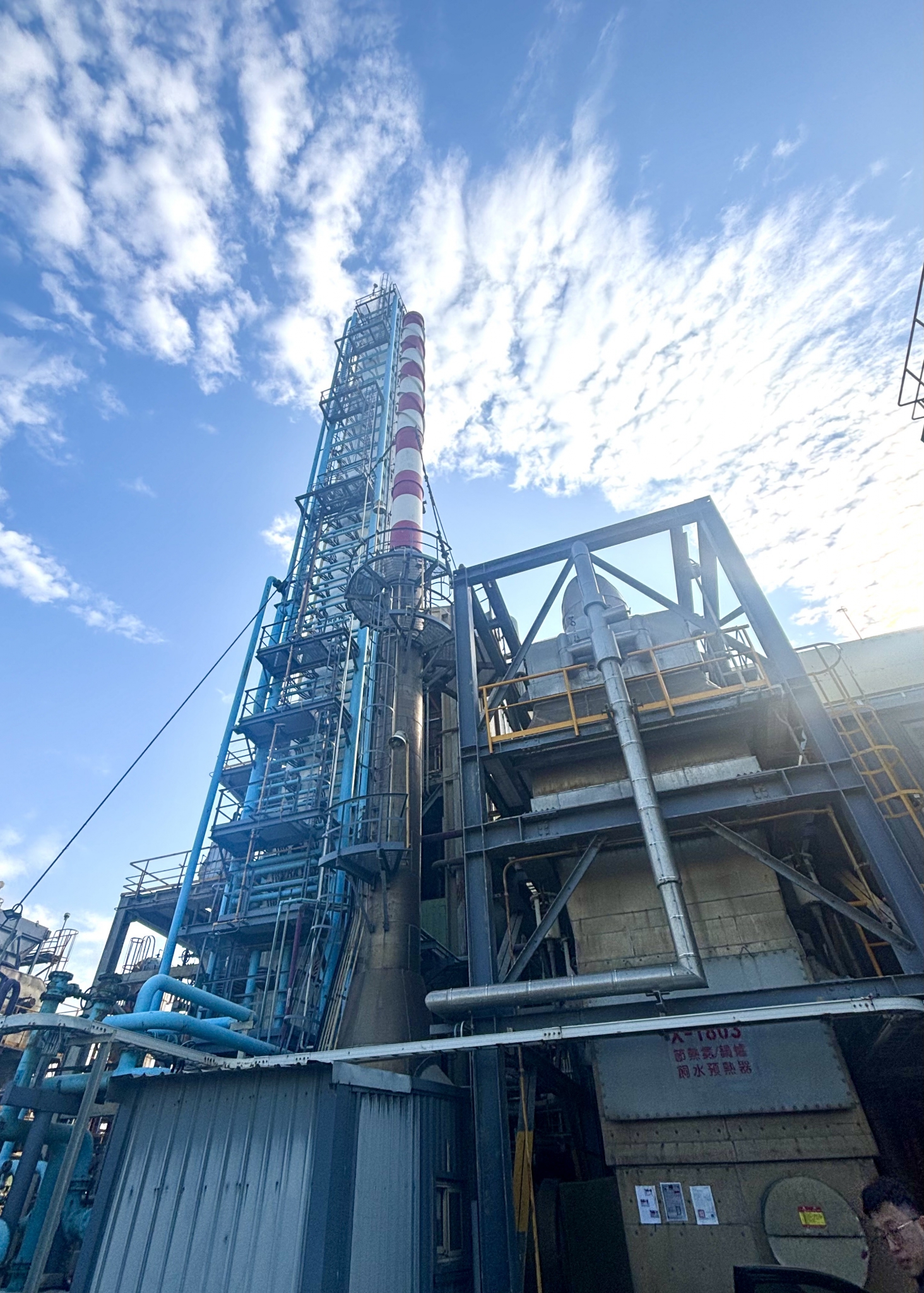
The nitric acid plant at Taiwan Fertilizer’s Taichung facility accounts for about 90% of the plant’s total emissions. (Photo: Daisy Chuang)
Taiwan Fertilizer invests NT$300 million in abatement technology to reduce nitrous oxide emissions
Taiwan Fertilizer’s main products are chemical compound fertilizers, which combine nitrogen (N), phosphorus (P), and potassium (K) in specific ratios and add organic materials to create different fertilizer formulations. As the company’s primary fertilizer chemical production base, the Taichung plant houses one nitric acid plant, two nitrophosphate fertilizer plants, one phosphate fertilizer plant, one ammonium phosphate plant, and one ammonium sulfate plant. Through chemical reactions between different acids and ammonia, as well as varying NPK ratios, the facility produces a wide range of fertilizers.
This also makes the Taichung plant the key source of Taiwan Fertilizer’s carbon emissions. The nitric acid plant accounts for about 90% of emissions at the facility. Hsieh Cheng-chang (謝政璋), deputy director of the Taichung plant, said the main greenhouse gas emitted from the nitric acid process is nitrous oxide (N2O), commonly known as laughing gas. The gas has a global warming potential 265 times that of carbon dioxide.
“Taiwan Fertilizer is one of the largest emitters of nitrous oxide in Taiwan, ranking 69th in total emissions nationwide and widely regarded as a major carbon emitter,” he said.
Unlock this interview to learn three key takeaways:
- Taiwan Fertilizer is deploying NT$300 million in technology to curb high-impact nitrous oxide emissions.
- Low-carbon ammonia imports are helping chipmakers lower supply chain footprints.
- Recycling spent mushroom substrate expands the use of organic fertilizers.