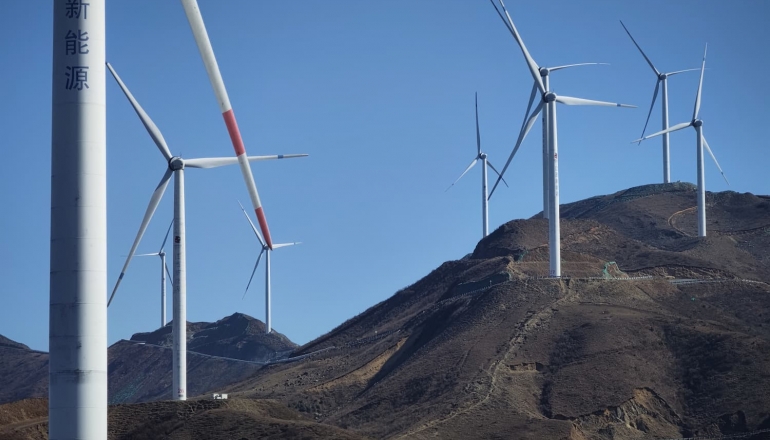
As a leading investor in the region’s energy sector, China can provide significant support for renewable energy projects.
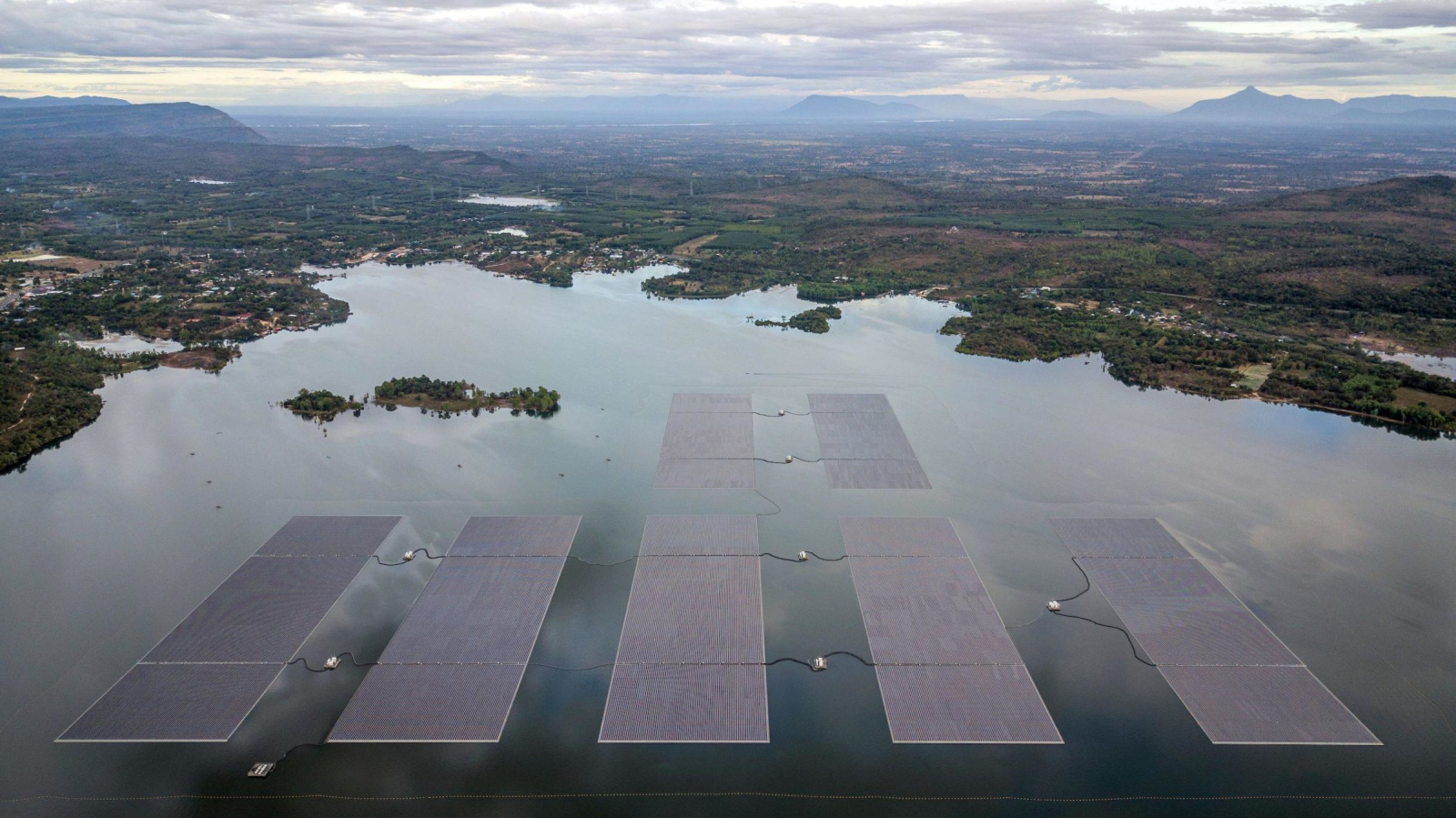
A floating solar farm at the Sirindhorn dam in Ubon Ratchatani, Thailand. (Image: Wang Teng / Alamy)
"Accelerating just and inclusive energy transition" was a key action given by leaders in their statement at the 43rd summit of the Association of Southeast Asian Nations (ASEAN) in September 2023. It was adopted to put ASEAN at the heart of Asia’s economic growth.
The statement demonstrates member countries’ commitment to driving the low-carbon transition in pursuit of green development. Major energy-consuming countries in ASEAN, including Indonesia and Vietnam, have now made “carbon neutrality” pledges and significantly increased the share of renewables in their national power plans.
Effecting this transition is no simple matter, however. Large-scale deployment of renewables requires enormous investment. Yet in ASEAN, as in developing countries elsewhere, such projects face a range of problems. Private investors are less enthusiastic, and it is difficult to get projects off the ground.
Global energy-related investment is expected to reach US$2.8 trillion this year, according to the latest World Energy Investment report from the International Energy Agency (IEA). More than half of that total will be spent on deploying clean-energy technologies, including electric vehicles, renewable-energy plants and energy storage. Clean-energy investment, however, is concentrated within a select pool of countries and regions: China, the European Union, the United States and Japan. Over 90% of the increase in such investment since 2021 has taken place in advance economies and China.
Private investment is key
To meet the Paris Agreement temperature targets, the world needs to cut greenhouse gas emissions by nearly half by 2030. The power sector, as a major carbon emitter, is crucial to realising this goal. According to the IEA’s 2021 report, Net zero by 2050: a roadmap for the global energy sector, annual energy-related CO2 emissions must fall to 21.1 billion tonnes by 2030 – 38% less than in 2020. Of that reduction, 60% will come from the power sector. However, this sector’s transition appears to be straying from the IEA’s pathway. In 2022, CO2 emissions from it reached an all-time high of 14.6 billion tonnes, up 1.8% from 2021.
This means there is a need to boost investment in clean energy and, while ensuring stable and secure electricity supply, accelerate the replacement of traditional fossil energy. A report from BloombergNEF found that worldwide investments related to the energy transition hit a record $1.1 trillion in 2022. For the first time ever, this figure was on par with fossil-energy investments. Renewable energy experienced the largest annual increase. The report also noted, however, that transition-related investment must rise sharply to a $4.55 trillion annual average by 2030. If not, the world will not be on track for net-zero emissions by 2050, a crucial step for mitigating the worst impacts of climate change.