Microfinance institutions in Cambodia, accused of predatory lending, are pivoting to green bonds while borrowers, burdened by debt and climate impacts, struggle to survive.
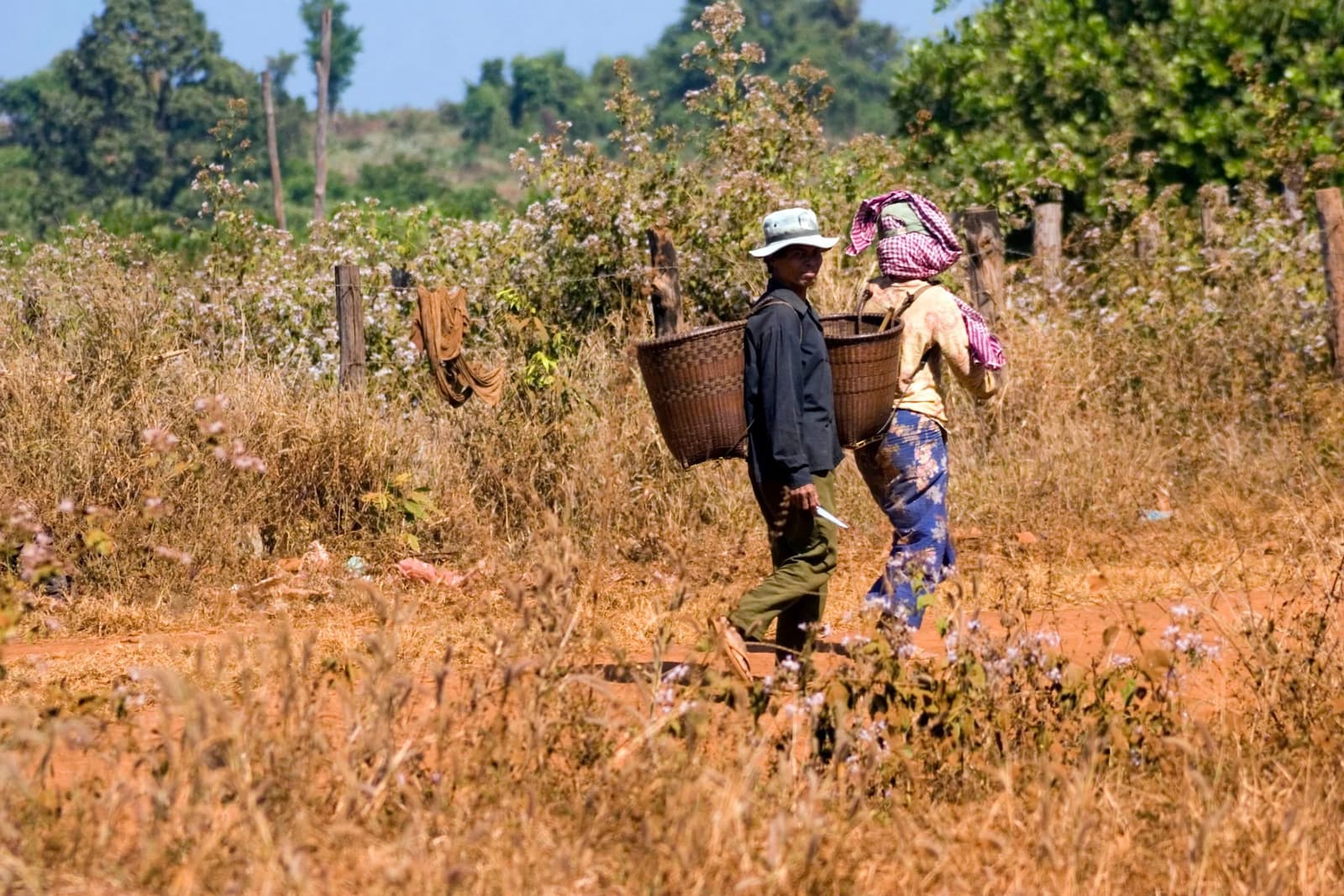
Farmers in Ratanakiri province, Cambodia, face widespread debt from microfinance loans, with borrowers reporting intimidation by loan officers from institutions like LOLC Cambodia (Image: John Brown / Alamy)
When Davuth fell behind on his microfinance loan earlier this year, a credit officer visited his home in Ratanakiri province almost daily. The officer pressured him to borrow from neighbourhood lenders or sell his farmland – his main source of income and livelihood, he said.
“I replied that if I sold my land, which includes my cashew and cassava crops, I’d rather die,” Davuth, a Kachok Indigenous man, said in August. He requested a pseudonym, fearing reprisals.
He claimed the credit officer, representing microfinance institution LOLC Cambodia, threatened and intimidated him until his first suicide attempt in March. His wife intervened just in time to save his life.
Davuth is not the first to report such threats. LOLC is currently under investigation by the International Finance Corporation (IFC)’s watchdog over unethical lending practices, as previously reported by Dialogue Earth.
Despite these allegations, in June, LOLC was selected for the Cambodia Sustainable Bond Accelerator programme, designed to assist with issuing sustainability bonds on the Cambodian Stock Exchange. Green bonds issued through the programme – now in its second phase – are intended to fund projects such as solar plants and green buildings.
LOLC plans to issue a USD 50 million sustainability bond for “green” and “social” projects, backed by partners like the UN Economic and Social Commission for Asia and the Pacific (UNESCAP). UNESCAP, which has previously tried to alleviate the debt burden of Cambodian borrowers, is now supporting the very institutions accused of exacerbating it.


