The country should approach gas-fired power development with caution, write the authors of a new report from the Institute for Energy Economics and Financial Analysis
.jpg)
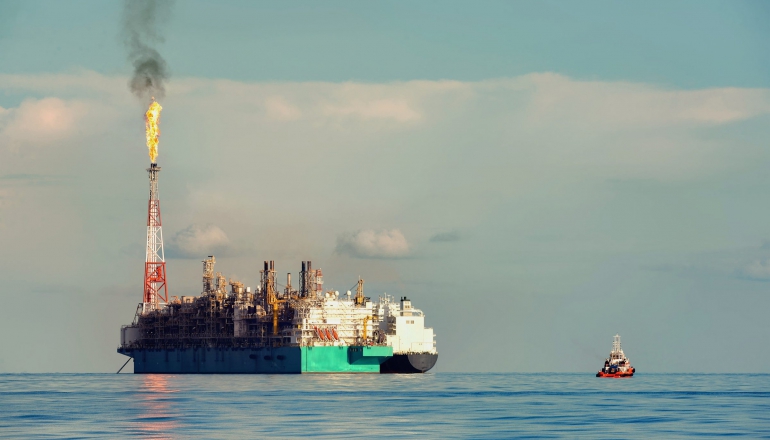
As a new market entrant with limited bargaining power, Cambodia may pay a premium for shipments of liquified natural gas (Image: James Buttenshaw / Alamy)
In October, the Cambodian conglomerate Royal Group broke ground on a 900-megawatt (MW) electricity generation project in the Botum Sakor district, on the country’s south-western coast. If it’s completed and running by 2027, the project would become the country’s largest operational power plant, and its first to run on gas.
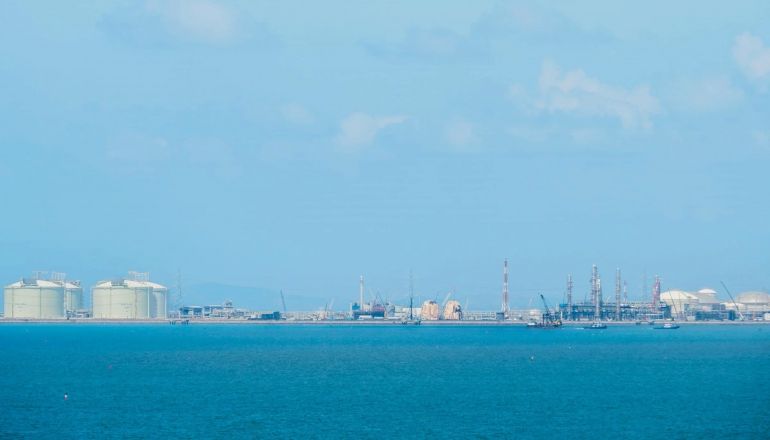
Cambodia does not produce its own gas, so the project requires the infrastructure to import the fuel in its cold, liquid form, then reheat it for combustion in the plant. A 2023 report by the Economic Research Institute for ASEAN and East Asia (ERIA) advocates for liquefied natural gas (LNG) to play a major role in Cambodia’s energy future.
This is a risky proposition. In recent years, other countries in the region that rely on imported LNG have struggled to maintain energy security and affordability. This has been due to global market disruptions and skyrocketing costs. Cambodia’s foray into LNG markets will therefore require careful strategic foresight and planning to reduce energy costs, improve reliability and support economic growth.