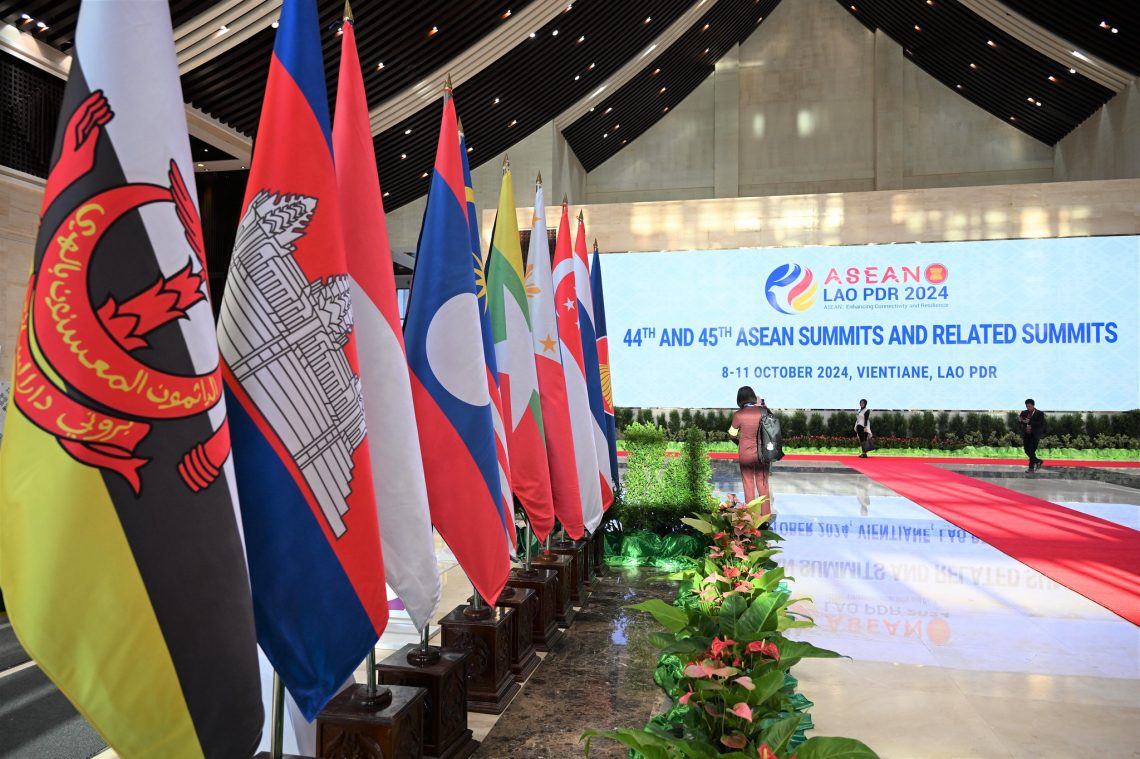
The 2024 ASEAN Summit is held in Vientiane, Laos. (Photo: ASEAN Summit)
As countries strive toward net-zero emissions, renewable energy development alone is insufficient. Enhancing the flexibility and reliability of power grids is equally critical. According to the International Energy Agency (IEA), the world needs to add or upgrade over 80 million kilometers of power grids by 2040 to facilitate the energy transition. Taiwan, too, is part of this global challenge, particularly with recent discussions about importing green energy from the Philippines, which have put cross-border grids in the spotlight.
ASEAN power grid: A work in progress
Cross-border grids are not a new concept. ASEAN has been nurturing this idea for decades, aiming to increase renewable energy’s share to 23% by 2025. Regional grids are considered essential to achieving this goal. However, despite nearly 30 years of effort, the ASEAN Power Grid (APG) remains incomplete, with only half of the 18 proposed interconnection projects realized. Taiwan can glean valuable insights from ASEAN’s journey toward an integrated power grid.
The benefits of cross-border grids
The idea of linking ASEAN member states’ power grids emerged in 1997 during the region’s second informal summit. The plan aimed to interconnect electricity systems to foster regional power development and trade, including clean energy. By 2040, the 18 projects envision increasing cross-border transmission capacity to 17.6 GW.