.jpg)
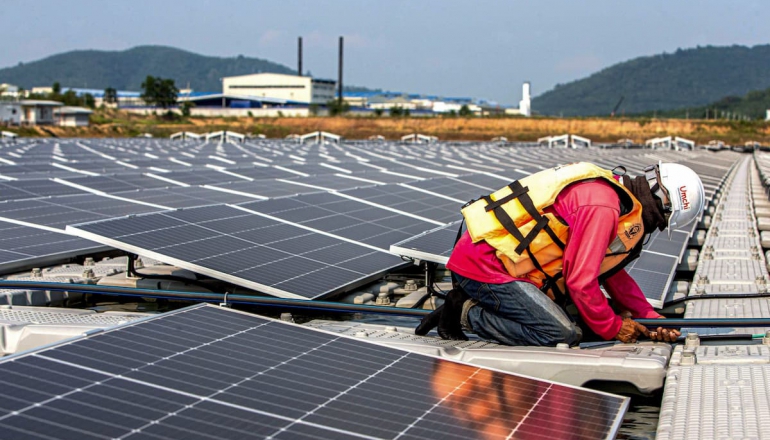
With U.S. tariffs shaking solar exports, ASEAN nations face a pivotal choice between dependence and domestic energy resilience. (Photo: iStock)
China's solar industry, facing a saturated domestic market and U.S. trade restrictions, is increasingly looking to Southeast Asia as a destination for its surplus capacity. This dynamic could make clean energy technologies more affordable for ASEAN countries, potentially speeding up their energy transition. However, avoiding over-reliance on Chinese products remains a key challenge for the region.
Heavy U.S. tariffs undermine ASEAN’s re-export advantage
Last year, the U.S. imported approximately 55 gigawatts (GW) of solar panels, with 88% coming from Southeast Asia—primarily Thailand, Malaysia, Cambodia, and Vietnam. If the U.S. “anti-dumping and countervailing duties” take effect as scheduled on June 9, these four countries could face tariffs as high as 3,251%.