A look at Southeast Asia’s evolving landscape of solar energy adoption, from achievements to hurdles and future aspirations.
.jpg)
A solar engineer at work in Laindeha, Indonesia (Image: Dita Alangkara / AP / Alamy)
Sunny Southeast Asia has made significant strides in solar energy, with solar farm capacity exceeding 20GW across ASEAN countries. Despite this rapid growth and ambitious renewable goals, nations in the region face diverse challenges. These range from supply chain disruptions and political dynamics to issues like anti-dumping tariffs and internal instability. Dialogue Earth explores the successes and obstacles faced by Southeast Asian nations in their journey towards sustainable energy solutions.
Cambodia
Solar energy in Cambodia, comprising only 7% of the country’s energy capacity, has emerged as the fastest-growing energy source, expanding over 14% in 2023.
Cambodia aims to achieve 70% of renewable energy generation by 2030, with hydropower expected to contribute 55%. Current solar capacity stands at 432MW set to more than double to 1GW, with projections reaching 3.2GW by 2040.
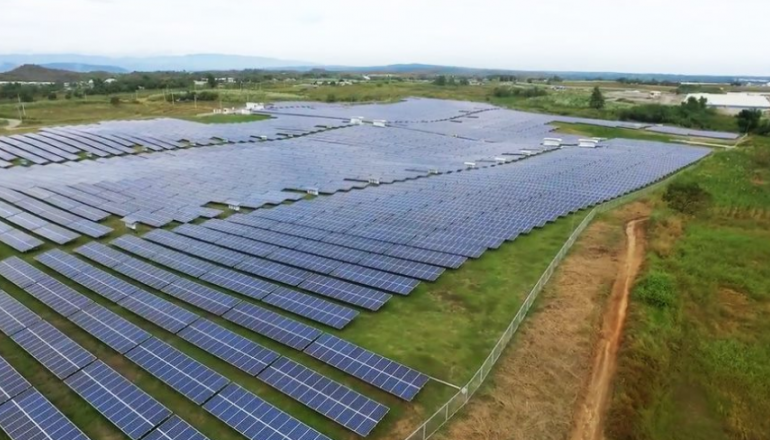
The Kingdom operates eight small solar farms, ranging from 5-80MW each, with three more under construction and three others planned, the largest of which is a 225MW farm in Kampong Speu.
While Cambodia plans to expand its portfolio with large-scale solar farms, the growth of small-scale rooftop and industrial solar has been sluggish due to policy challenges. The country prohibits net metering and net billing, though recent regulatory changes aim to replace capacity charges with new tariffs in an effort to boost rooftop solar initiatives.
Despite plans to achieve carbon neutrality by 2050, Cambodia has experienced severe power shortages in recent years, affecting as many as 43% of businesses. Rooftop solar could provide a solution for industries and help transform the lives of residents across the 245 villages yet to be connected.
Chinese companies play a key role in Cambodia’s solar development. In 2018, Hengtong Optic-Electric secured the rights to build the country’s second-largest solar farm, which has a capacity of 200MW. Additionally, late last year, the China Datang Corporation announced a $600 million investment in solar and wind projects in Cambodia.