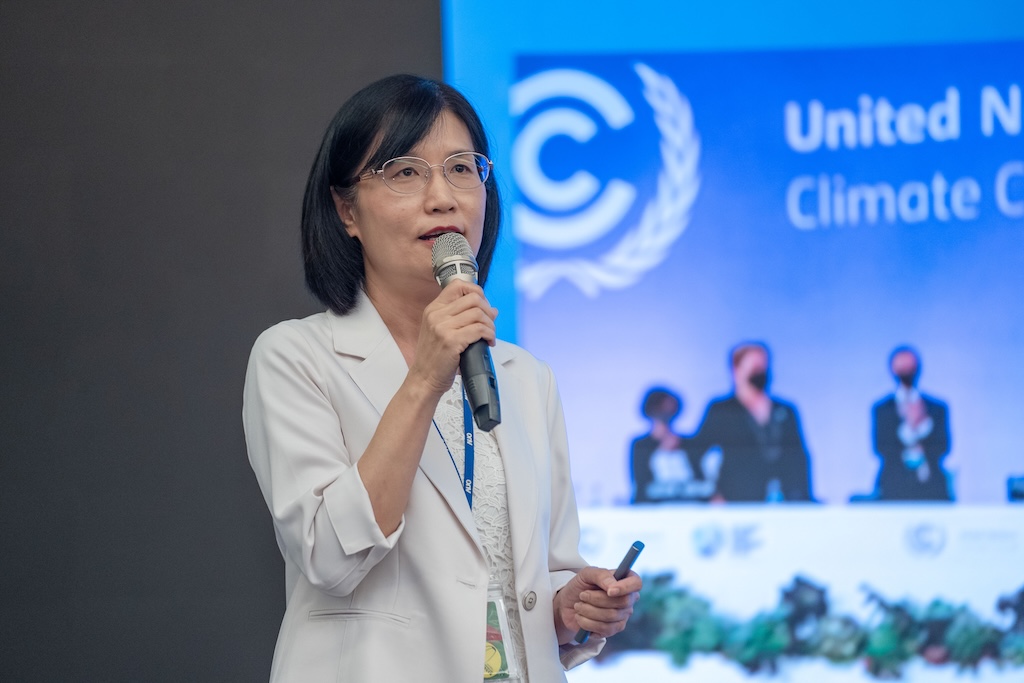
AUO Chief Sustainability Officer Amy Ku said ESG requires more than passion. Building a strong foundation of skills is essential. (Photo: AUO)
As the net zero transition accelerates, green skills are no longer limited to niche sustainability roles. Much like AI, they are becoming a core competency across industries and job functions. As sustainability evolves into a long-term business imperative, what skills will job seekers need to stay competitive?
In this “Green talent playbook” feature series, RECCESSARY explores in-demand courses, corporate training programs, and emerging green roles, providing practical guidance for professionals navigating the evolving green job market.
As international sustainability standards and regulations continue to take effect, green skills are rapidly shifting from a competitive advantage to a business necessity in Taiwan. Before placing orders, global brands are evaluating suppliers on criteria such as RE100 commitments and participation in the Science Based Targets initiative (SBTi). Starting this year, Taiwan’s listed companies must also align with the international sustainability disclosure standards IFRS S1 and IFRS S2.
In interviews with RECCESSARY, sustainability executives from display maker AUO and power management company Delta said ESG has evolved from the responsibility of a single department into a company-wide capability spanning R&D, manufacturing, procurement, finance, and other business functions. Both companies have established internal sustainability academies and training systems to build ESG expertise.
“Green talent is an ecosystem,” said Amy Ku (古秀華), chief sustainability officer at AUO. She emphasized that ESG requires more than passion, adding that solid fundamentals are essential. In her view, sustainability can be a lifelong career path, provided companies treat it as a serious profession and invest in developing the necessary expertise.
Unlock the full article to explore three key takeaways:
- ESG is expanding beyond dedicated sustainability teams, creating demand for talent in governance, carbon management, supply chains, and sustainability disclosure.
- AUO and Delta have established internal sustainability academies and training programs to embed ESG capabilities across R&D, manufacturing, and management functions.
- Future demand for green talent will extend to focus on supply chain decarbonization, the circular economy, and biodiversity, making cross disciplinary expertise a key advantage.