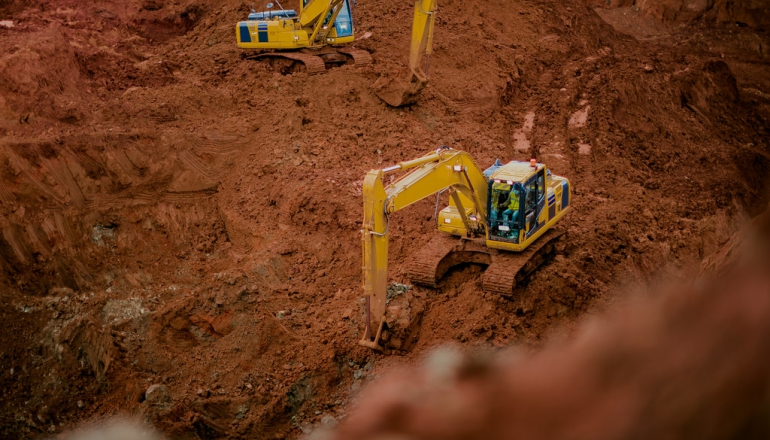
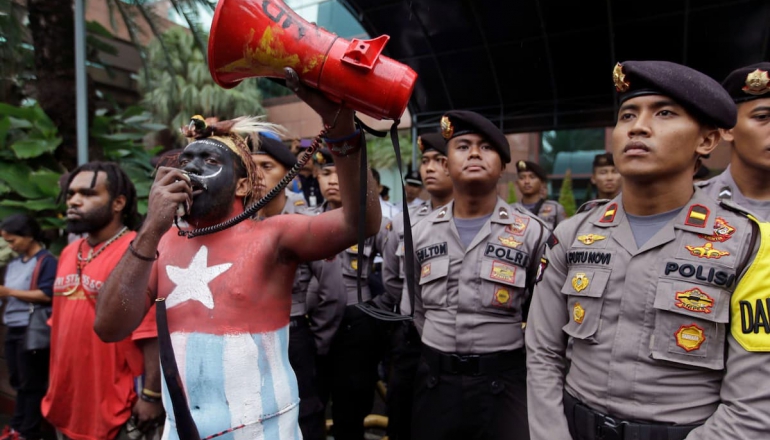
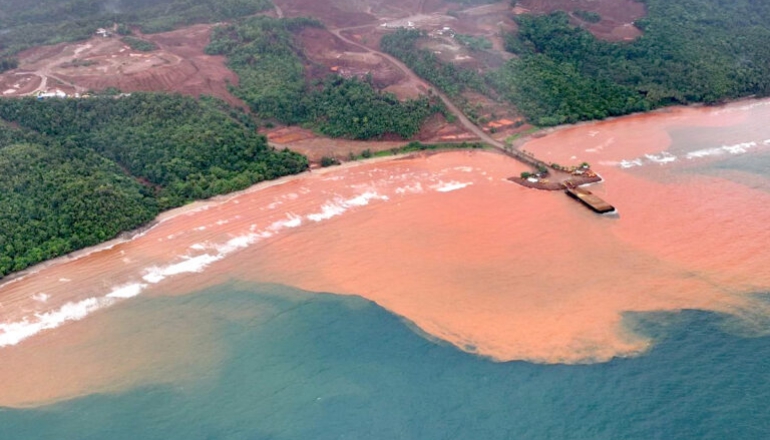
Independent journalism collective, Project Multatuli, traces the struggles faced by communities being threatened by mining companies – from water supply and health issues, to loss of land and livelihoods
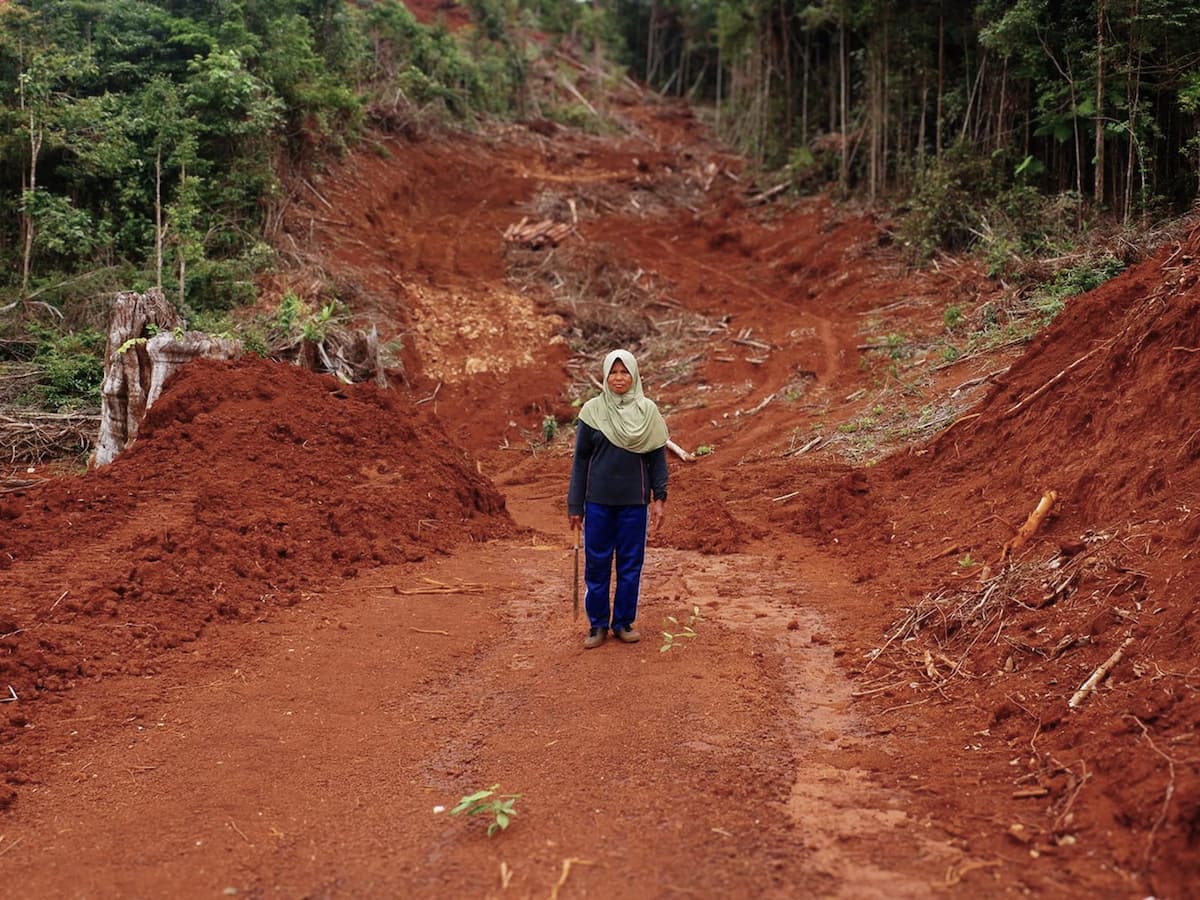
Royani, a resident of Mosolo village in south-east Sulawesi, Indonesia, stands on her land, which has been stripped bare. Three hundred of her clove trees have been cut down by a mining company, which is now planning to push ahead with excavations (Image: Yuli Z / Project Multatuli)
Nickel companies are destroying the environment on Indonesia’s small islands and threatening local livelihoods. As ecosystems are compromised, communities struggle to survive.
Indonesia is home to the world’s largest nickel reserves. With this resource, the government aims to position the country as a leading battery producer for the global electric vehicle (EV) industry. This ambition has fuelled a surge in nickel mining and smelting activities that often bypass regulations, threatening fragile ecosystems unique to small islands.
Under Indonesian law, mining on islands smaller than 2,000 square kilometres is prohibited. One mining company tried to overturn the protection by submitting a case to the Constitutional Court, which in March this year rejected the request. But even after the court’s ruling, several companies continue their operations, causing extensive environmental damage, particularly on small islands like Kabaena (873 sq km), Wawonii (715 sq km) and Gebe (224 sq km).
Beyond ecological damage, these nickel mining and smelting operations have also disrupted the livelihoods of people who depend on the natural resources. The companies deny responsibility for damaging the environment, often attributing issues like water pollution to natural causes such as heavy rainfall.
We share the struggles and resistance of these communities.
The struggle of women on Wawonii Island
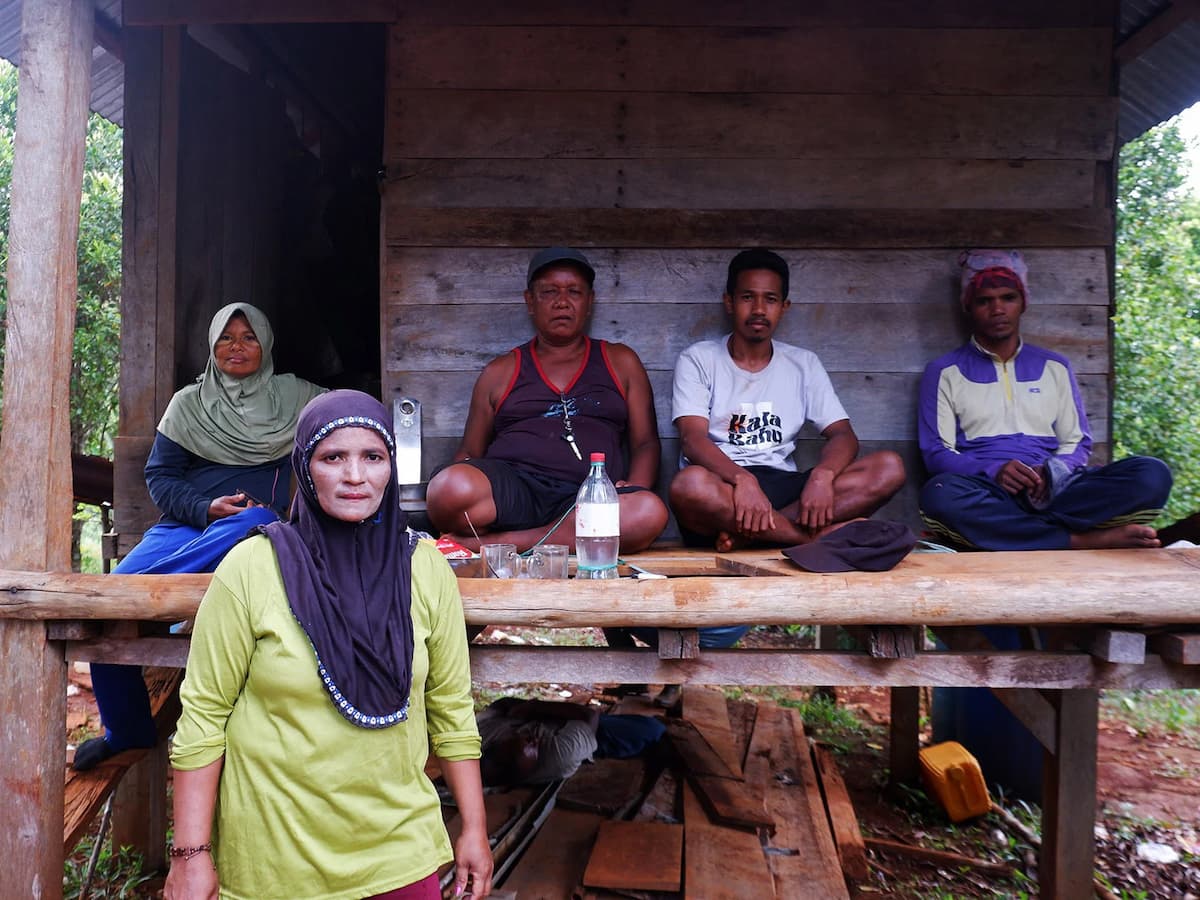
Wa Muita (front left) and the residents of Sinaulu Jaya and Mosolo villages stand guard in the community’s garden to prevent land intrusion by a mining company (Image: Yuli Z / Project Multatuli)
Hastati, 45, a resident of Sukarela Jaya village on Wawonii Island, is a farmer. She grows coconuts, nutmeg, cloves and cashews on the family’s two-hectare plantation.
In recent years, however, life on her plantation has grown challenging. Clean water, once readily available from wells, has become scarce. For daily water use, including cooking, Hastati must now collect it from a river.
Project Multatuli found that the Banda Spring, which supplies five villages including Hastati’s, has turned murky due to mining by PT Gema Kreasi Perdana, a subsidiary of the Harita Group, an Indonesian natural resources conglomerate. The nickel company offers them clean water, but Hastati and some other residents refuse to accept it in protest.