During our workshop in Bali, experts from both nations found common ground when comparing the hurdles to sustainable coastal communities
.jpg)
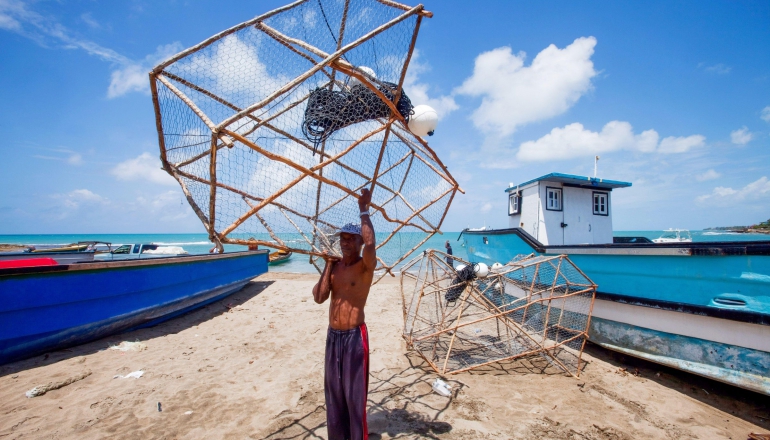
Fishers like these in Bali, Indonesia, face many of the same problems as those working from the Chinese island of Hainan, thousands of kilometres to the north (Image: Peter Fischer / imageBROKER / Alamy)
Hainan and Bali are separated by approximately 3,000 kilometres. The two islands are parts of very different countries. But Indonesian fishing communities and NGOs discovered a lot of common ground with their Chinese counterparts at a recent workshop. Together, they discussed small-scale fisheries, climate change and coastal communities.
The workshop was convened in Bali, Indonesia, by Dialogue Earth with China Blue, a Hainan-based sustainable fisheries NGO. It provided an opportunity to talk about coastal fishing communities in terms of climate change, conservation and sustainable livelihoods.
The meeting was held under the Chatham House Rule, which bars attendees from revealing the identity or affiliation of participants. For that reason, Dialogue Earth will not identify individual speakers in this article.
Differences (and similarities)
China has traditionally seen itself as an agrarian society, focused on farming over its huge central land mass. By contrast, Indonesia is an archipelagic nation, made up of around 17,000 islands. Both, though, have coastal communities dependent on fishing.
Despite its focus on farming, China has a long history of maritime fishing and boasts the world’s largest fishing fleet by some estimates: perhaps two million small-scale fishers working 170,000 boats, in addition to larger vessels. Indonesia also has a major industry, with an estimated 2.5 million households involved in small-scale fishing.