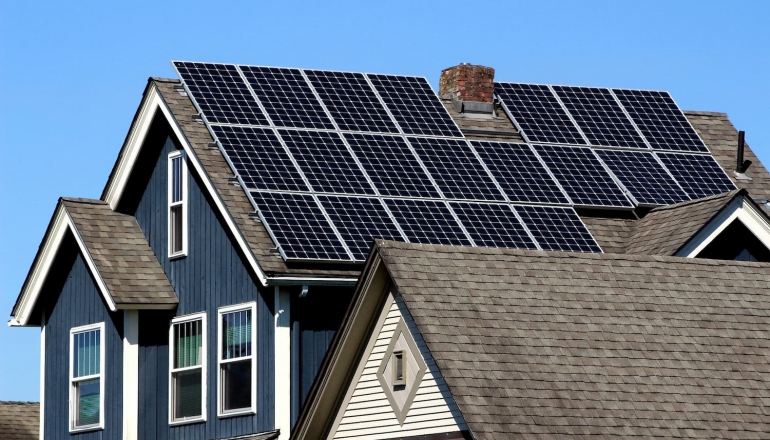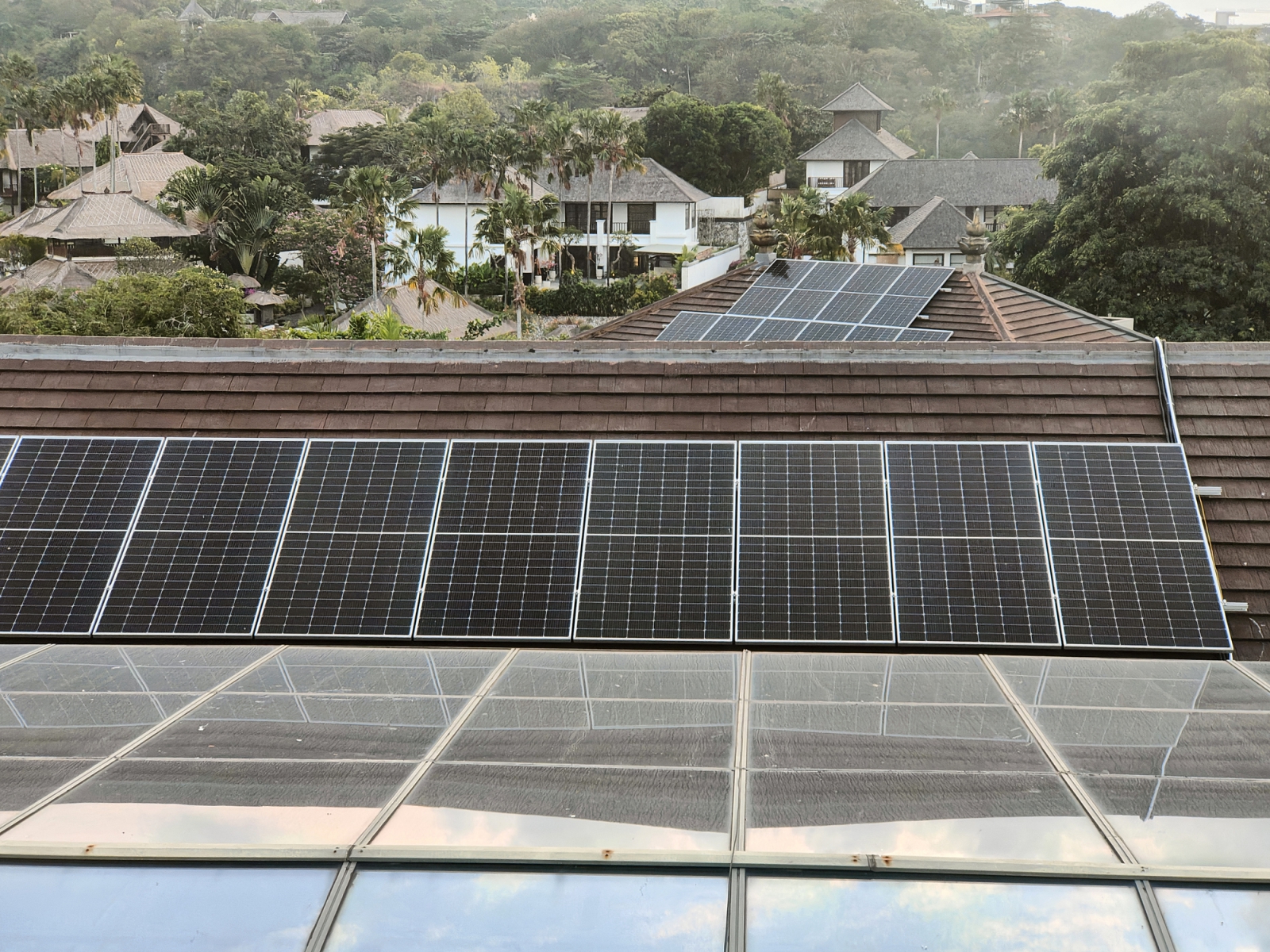
Rooftop solar panels of a tourist resort in Bali. (Photo: iStock)
The Indonesian government has announced a national rooftop solar power quota plan, allocating a total of 901 MW for this year in 11 regulated regions, with annual increases planned to reach a total capacity of 5,746 MW within five years. However, the quota system has affected the willingness of non-large enterprises to install solar panels, raising concerns among local think tanks that it may hinder the country's renewable energy transition.
How is solar quota system implemented?
To account for the intermittency of solar power and maintain the balance of electricity supply and demand, the Indonesian Ministry of Energy and Mineral Resources (ESDM) implemented a rooftop photovoltaic quota system at the end of January this year. Under this system, electricity producers can only obtain a power generation business license (IUPTLU) according to their quota and must sell the electricity to the state-owned electricity company (PLN). Quotas will be distributed on a clustering basis, covering 11 regions including Sumatra and West Kalimantan.