.jpg)
Indonesian president Prabowo Subianto meets with Indian prime minister Narendra Modi at the G20 summit in Brazil, November 2024. During the gathering of the world’s largest economies, the Indonesian leader promised to phase-out coal by 2040 (Image: MEAphotogallery, CC BY-NC-ND 2.0)
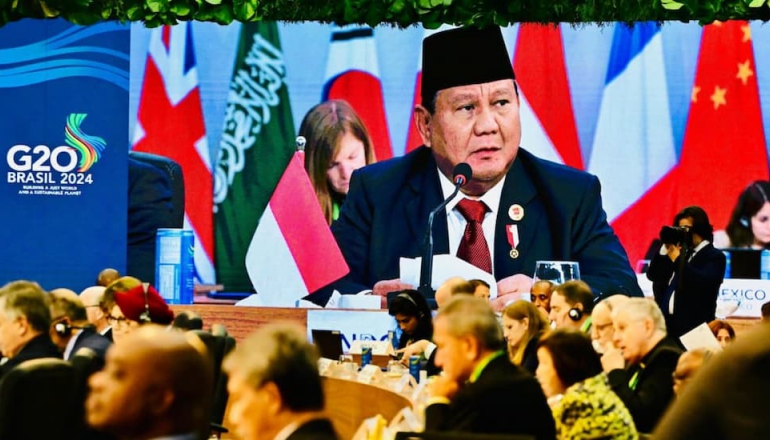
During the G20 Summit in Rio De Janeiro in November, Indonesia’s new president, Prabowo Subianto, issued a bold statement: Indonesia will retire all coal-fired power plants within the next 15 years and build over 75 GW of renewable energy capacity by 2040. The announcement, aimed at showcasing Indonesia’s climate leadership, comes at a time when the country remains heavily reliant on coal. Analysts point out that achieving Prabowo’s 15-year energy transition goal will demand comprehensive policy reforms, such as regulatory streamlining, as well as major investments in renewable energy infrastructure and financial frameworks.
Novita Indri Pratiwi, a fossil fuel campaigner at Trend Asia, said the statement suggests there is political will to address Indonesia’s coal dependence. She warns, however, that “promises made on the global stage won’t mean much without real implementation at home.” In 2023, coal accounted for 61.8% of Indonesia’s energy mix – a record high – according to Ember, a global energy think tank. This makes Indonesia one of the most coal-dependent countries in Southeast Asia, alongside the Philippines. Indonesia’s current renewable target is 23% by 2025. The Ministry of Energy and Mineral Resources (MEMR) predicts that it will achieve only 14% by 2024, however.