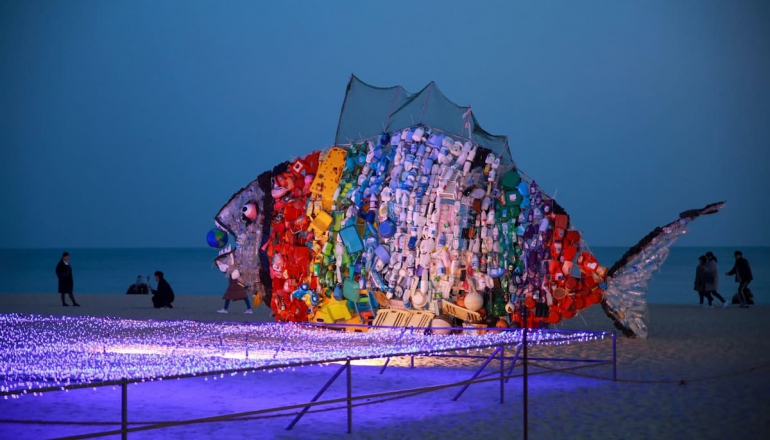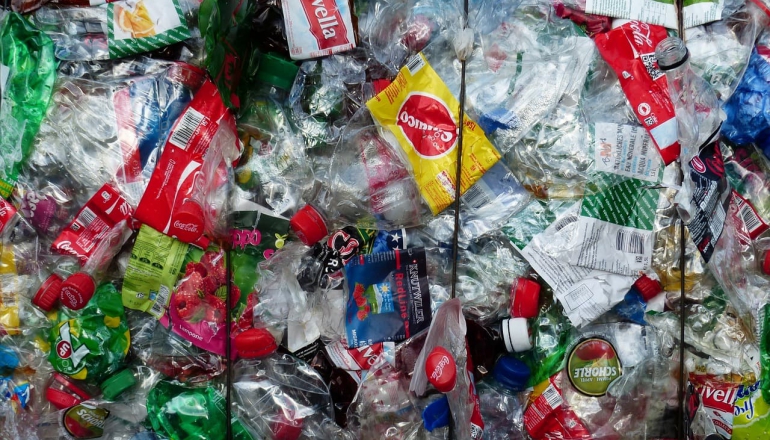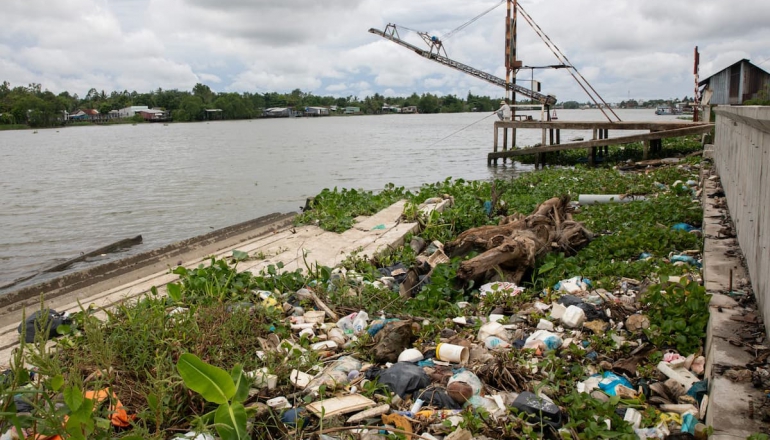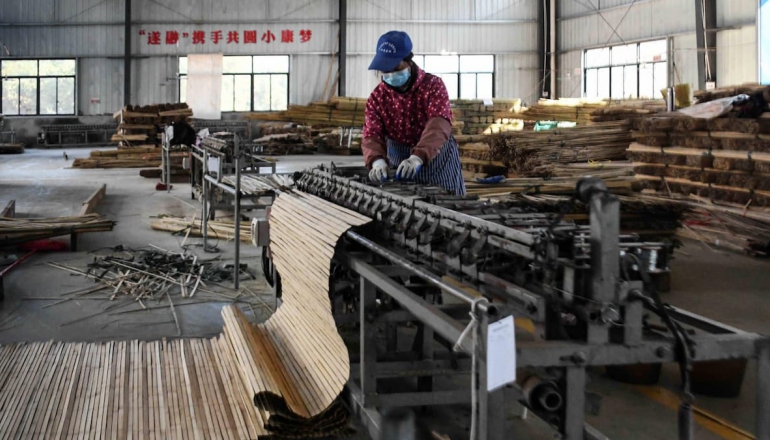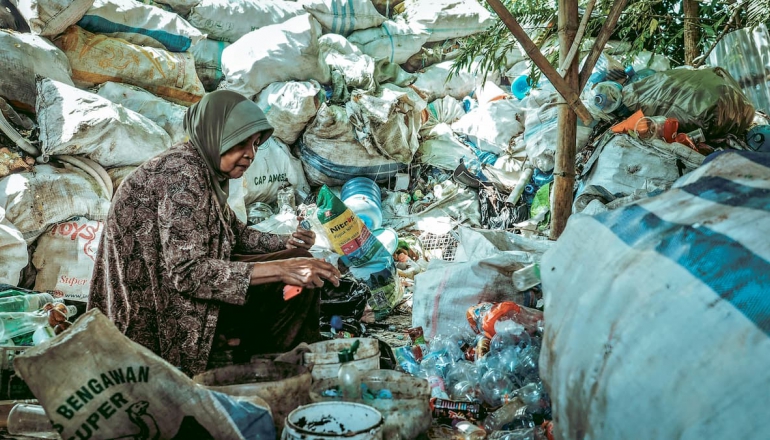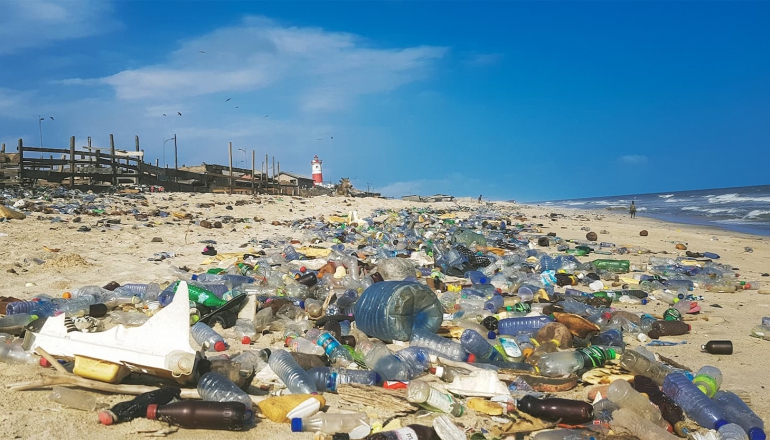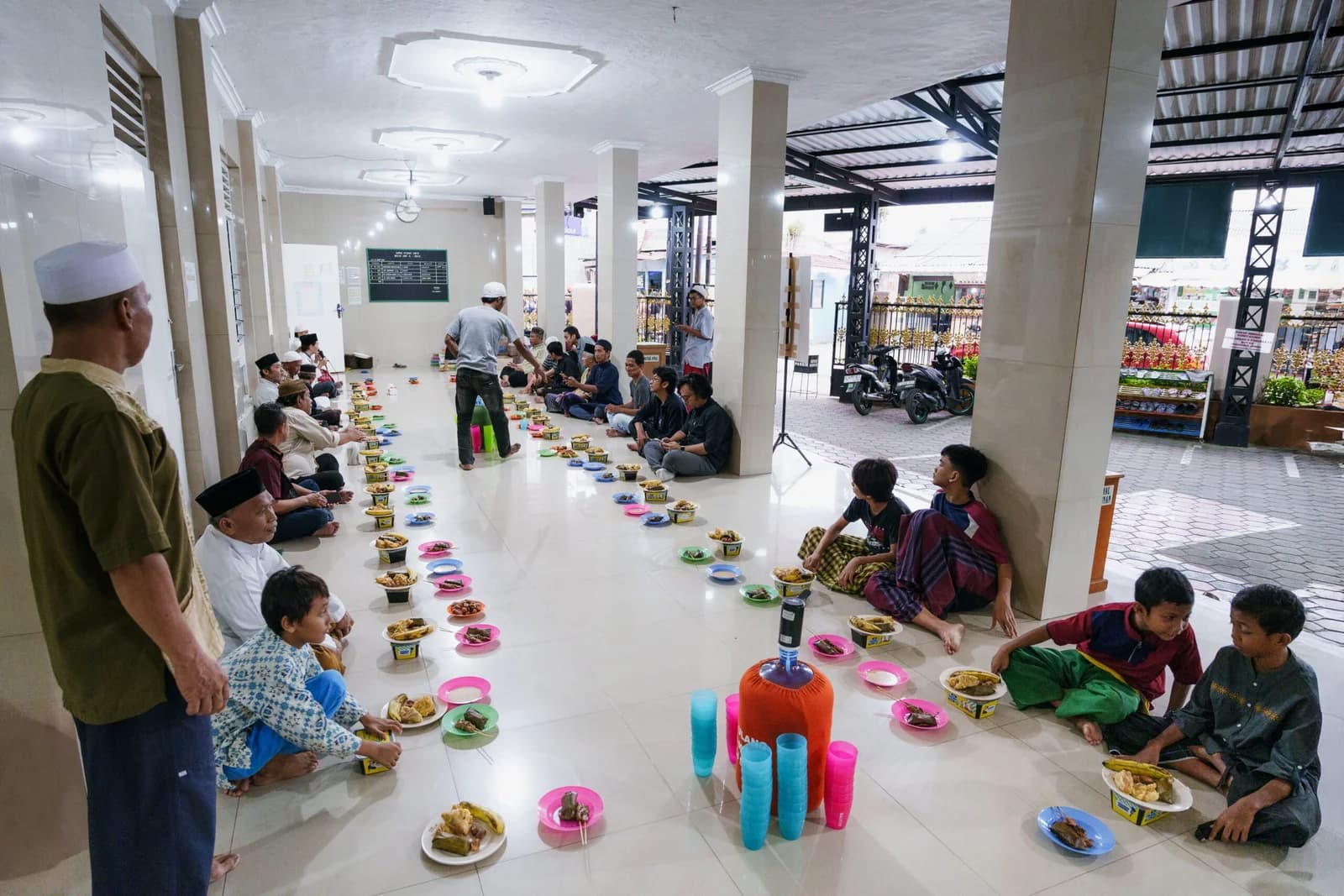
People practice reuse by using reusable containers during fasting month in a mosque in Jakarta. Image courtesy of Dietplastik Indonesia.
With the Islamic month of Ramadan now over, a familiar sight has returned to the streets of daytime Jakarta: street vendors serving up chicken porridge, and everyone from office workers to delivery drivers perched on plastic stools around the steaming carts, digging into a bowl of the congee-like breakfast staple.
As with most other street food in the bustling Indonesian capital, bubur ayam, as it’s known, is served in a ceramic bowl with a stainless steel spoon, which are washed after use for the next customer. Get it to go, however, and it’s ladled into a Styrofoam container lined with a plastic sheet, bundled into a plastic bag with a plastic spoon.
Played out countless times every morning throughout the country, this familiar vignette is a good illustration of how Indonesia has the capacity to go big on the least-practiced aspect of the “3 Rs,” said Tiza Mafira: the “reuse” part of the “reduce-reuse-recycle” mantra.
Tiza is the director of the Indonesia Plastic Bag Diet Movement, a civil society initiative that aims to get people to cut back on their plastic use through the 3 Rs.
“In reality, reuse is already a part of Indonesia’s traditional wisdom,” she said, pointing to the people who take the time to have their bubur ayam on the sidewalk.
.jpg)
Chicken porridge served in a ceramic bowl with a stainless steel spoon from a street vendor in Jakarta in 2024. Image courtesy of David Wadie Fisher-Freberg/Wikimedia Commons.
She also cited the example of the water gallons used in coolers in homes and offices. There’s a thriving market in the country of vendors collecting empty gallons, cleaning them and refilling them with drinking water, then selling them at a lower price than a new, factory-filled gallon.
These and myriad other examples are already familiar to the public in Indonesia, yet the concept of reuse in waste reduction is the least understood compared to reducing and recycling, Tiza said.