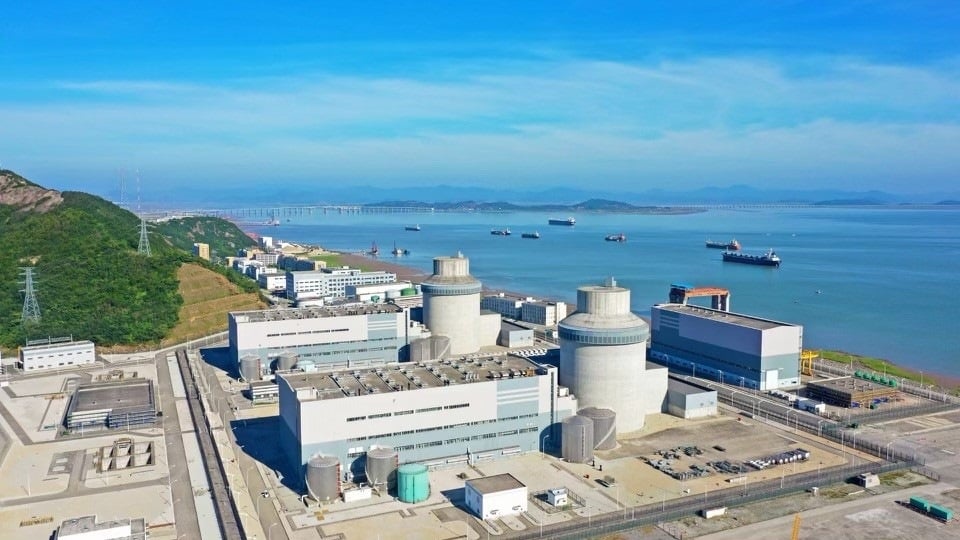
Small modular reactors are emerging as an option as the world faces growing pressure to secure stable, low-carbon electricity. (Photo: Westinghouse)
Taiwanese president Lai Ching-te (賴清德) has signaled that new nuclear technologies may be considered in the island’s future energy mix, allocating about USD 3 million (NTD 1 billion) for small modular reactor (SMR) research amid rising pressure to secure stable, low-carbon electricity.
At the International Forum on Advanced Nuclear Technologies on Dec. 9, experts and industry representatives from the United States, France, and South Korea showcased the latest developments shaping the next wave of nuclear innovation.
Across the sessions, speakers repeatedly underscored safety, operability, and compatibility with renewables as defining advantages of advanced nuclear systems. While noting that public acceptance remains limited, they emphasized that credibility hinges on delivering designs that prevent past accidents from happening again.
“The public is getting more comfortable with the idea of nuclear power, but they haven’t fully accepted it yet,” said Scott Roberts, Chief Engineer at Westinghouse Electric Company. He stressed that industry players must advance cautiously and collectively. “One mistake could set public acceptance back two decades in a heartbeat,” he noted.
Westinghouse: Scaling proven designs and accelerating delivery
Westinghouse emphasized its expanding collaborations with global partners, including Taiwan’s National Tsing Hua University (NTHU), which has selected the company’s eVinci microreactor as the target design for its next research reactor. These partnerships, said Tsung-Kuang Yeh (葉宗洸), professor at NTHU’s Department of Engineering and System Science, illustrate how future nuclear development will increasingly rely on shared learning and standardized technology pathways.