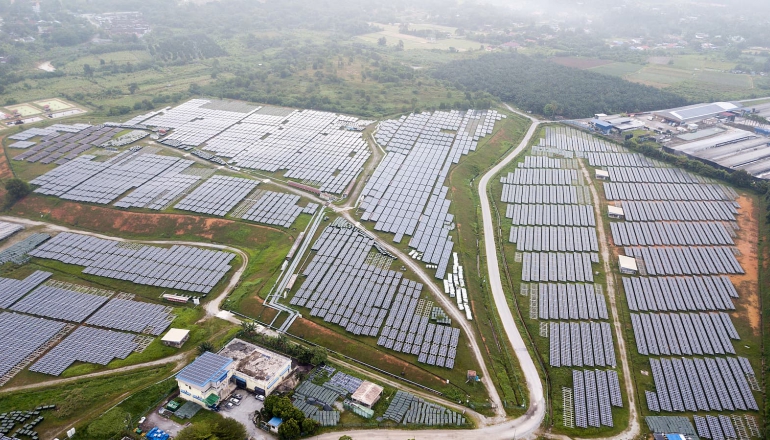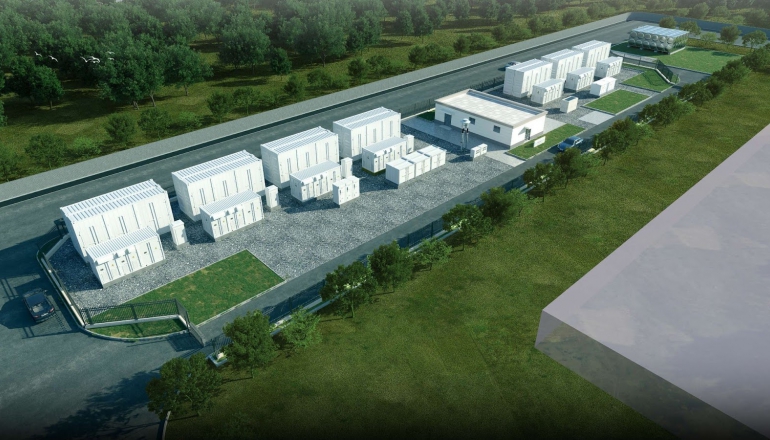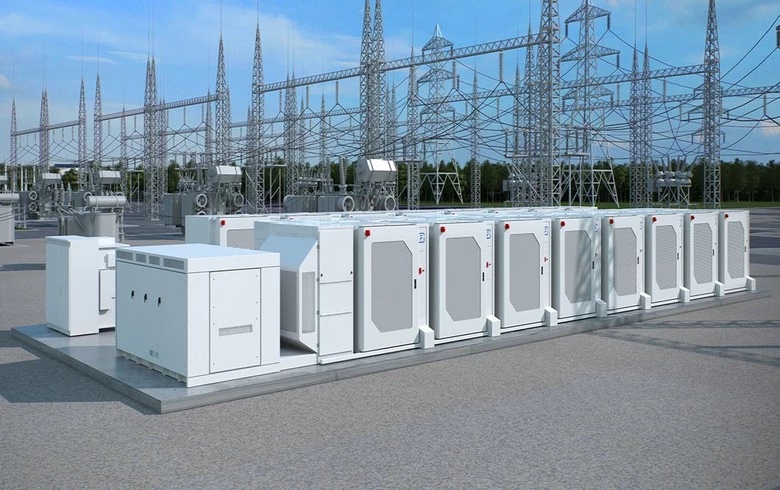
The Philippines is making battery storage a standard component of renewable energy projects through new mandates, auction rules, and regulatory reforms. (Photo: Fluence)
Energy storage is becoming a required component of renewable energy projects in the Philippines.
In recent months, the Department of Energy (DOE) has introduced a set of measures that directly shape how projects are designed. A new circular requires all variable renewable energy projects above 10 MW to install energy storage systems equivalent to at least 20% of plant capacity. The Energy Storage Systems Act establishes a national framework for storage deployment, while the upcoming seventh Green Energy Auction will require battery storage for all ground-mounted solar projects.
These changes are already influencing market behavior. Fluence operates 22 projects in the Philippines and expects further expansion over the next three to five years. ACEN has also identified storage as part of its forward investment strategy alongside continued renewable capacity growth.
How mandatory storage reshapes project economics
The introduction of a minimum storage requirement alters the financial structure of renewable energy projects. Under DOE Circular DC2026-02-0008, developers must install storage capacity equivalent to at least 20% of installed renewable capacity.
Unlock the full article to explore three key takeaways:
- The 20% storage requirement increases upfront costs and adds new revenue modeling challenges, while pricing and cost recovery mechanisms remain under development.
- For industrial users and data center operators, storage enables evening power delivery and helps manage exposure to electricity price volatility.
- Southeast Asian markets are moving in the same direction through different approaches. The Philippines has formalized deployment requirements, Malaysia has signaled similar measures, and Vietnam has focused on revenue design through a two-part tariff.