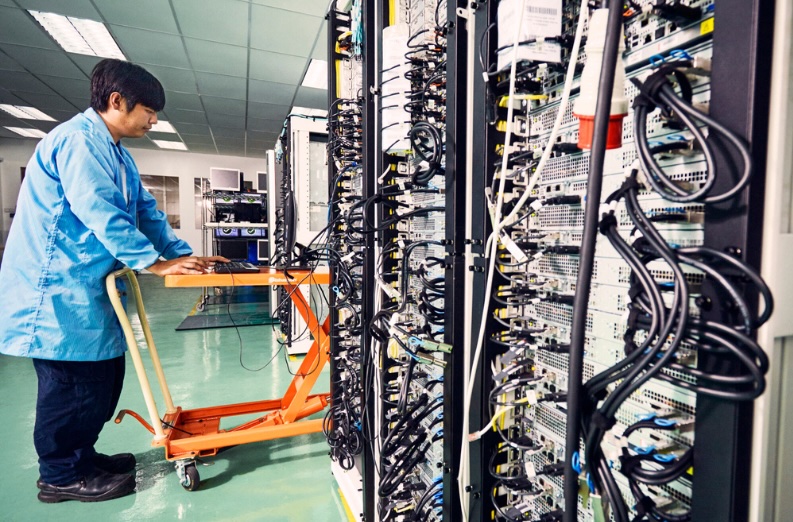
Southeast Asia’s AI infrastructure boom is accelerating demand for servers, but systems for refurbishment, redeployment, and recycling remain less developed. (Photo: SK Tes)
When the Asia Pacific Data Centre Association (APDCA) launched its Sustainable Digital Infrastructure Accord (SDIA) in March 2026, the framework covered water stewardship, embodied carbon, waste heat reuse, and sustainable backup fuels. What it did not address was what happens to the IT equipment inside those facilities once it is retired.
That omission reflects a broader blind spot across Southeast Asia’s data center boom. Industry analysts project that manufacturing emissions from AI GPU production could increase more than tenfold globally by 2030 as deployment accelerates. At the same time, AI hardware is being replaced more frequently as operators upgrade to newer generations of chips with higher performance and greater energy efficiency.
Once that equipment reaches the end of its first phase of use, the environmental impact is no longer determined by manufacturing alone. Whether hardware is reused, refurbished, dismantled for parts, or recycled influences how much value can be recovered from the materials, energy, and emissions already embedded in the device, with critical implications for how data centers manage their Scope 3 emissions.
For Southeast Asia’s data center sector, however, the conversation about what happens next remains largely forward-looking. Billions of dollars are flowing into AI infrastructure across Singapore, Malaysia, Indonesia, and Thailand. Yet the systems needed to manage that hardware at the end of its first life, including testing, refurbishment, secure redeployment, and recycling, are developing far more slowly than the facilities themselves.
“Infrastructure is growing at a rapid pace, but recycling systems, refurbishment systems, circular infrastructure, they’re not in place at the levels and scale they should be,” Alvin Piadasa, Group Sustainability Director at SK Tes, told RECCESSARY.
Unlock the full article to explore three key takeaways:
- AI servers are being replaced after as little as 10 to 18 months, creating a growing stream of high-value hardware that requires more than traditional e-waste recycling.
- Southeast Asia’s data center buildout is outpacing the circular economy infrastructure needed to refurbish, redeploy, and recycle retired AI equipment.
- While hyperscalers have developed increasingly sophisticated hardware recovery programs, much of the broader market remains focused on deployment rather than retirement.