%20(1).jpg)
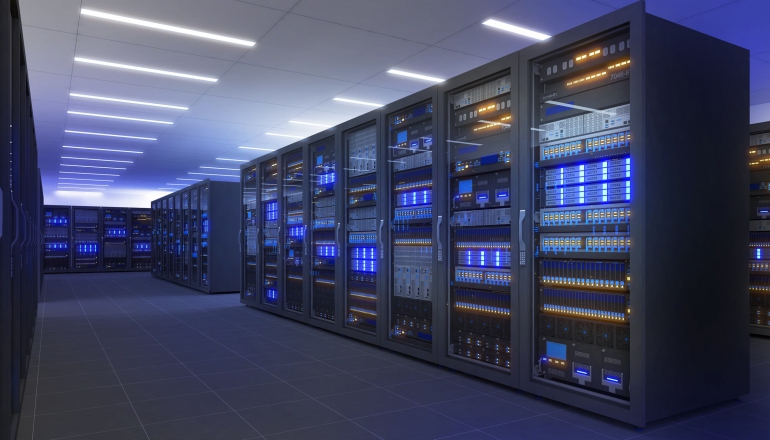
The Sustainable Digital Infrastructure Accord is the first Asia-Pacific framework to set data center sustainability standards covering energy, water, embodied carbon, and circularity. (Photo: Pixabay)
The Sustainable Digital Infrastructure Accord (SDIA), launched in March 2026 with 11 major operators as founding signatories, establishes the first Asia-Pacific-wide sustainability framework for data centers. Yet while energy efficiency and renewable electricity procurement are already familiar territory for the industry, the Accord's commitments on water stewardship, embodied carbon, and circularity highlight a more fundamental challenge: does Southeast Asia have the infrastructure, supply chains, and operational capacity needed to turn those commitments into reality?
RECCESSARY presents the special series “Beyond Energy: Southeast Asia’s data center challenges,” drawing on interviews with construction material suppliers, recycling companies, technology providers, and industry experts. Across five articles, the series examines whether the systems needed to support the next generation of sustainable data centers are developing as quickly as the facilities themselves, from water management and hardware circularity to the low-carbon cement and steel supply chains required to reduce embodied carbon.
Southeast Asia accounts for the largest share of under-construction data center capacity in Asia-Pacific at 31%. The expansion is being driven by major hyperscalers including Google, which has committed USD 2 billion in Malaysia; Amazon Web Services, which plans to invest USD 6.2 billion in the country; and Microsoft, which is expanding its cloud infrastructure across Malaysia and Thailand. Other global operators such as Equinix and Digital Realty have also been increasing their presence in the region..
Until recently, discussions about whether that growth is sustainable have focused almost entirely on electricity: how much power data centers consume, how much can be sourced from renewables, and how efficiently electricity is converted into computing output.
Launched in March 2026, the Asia Pacific Data Centre Association’s Sustainable Digital Infrastructure Accord (SDIA) marks the first attempt by a regional industry body to establish a common sustainability baseline that goes beyond power. The 11 operators that have signed the Accord, including Equinix, Digital Realty, STT GDC, and AirTrunk, collectively account for a substantial share of the region’s operating capacity.
The Accord is built around four pillars: energy efficiency, clean energy, water stewardship, and circular economy. In a written statement, Microsoft, one of the signatories, described the framework as an important step toward greater regional alignment and more consistent sustainability practices across Asia-Pacific, particularly in areas such as energy efficiency and water management.
Unlock the full article to explore three key takeaways:
- The SDIA’s water stewardship pillar sets a water use efficiency (WUE) target of 1.8 to 2.0 liters per kilowatt-hour by 2030. However, outside Singapore and Malaysia, most Southeast Asian markets have yet to introduce formal water-efficiency requirements for data centers.
- The Accord calls on signatories to conduct Whole Building Life Cycle Assessments for new developments, but the regional supply chain for verified low-carbon construction materials remains at an early stage.
- IT equipment end-of-life management falls outside the SDIA’s current commitments, yet the volume of retiring hardware is set to grow rapidly alongside Southeast Asia's expanding data center footprint. At the same time, much of the certified IT asset disposition infrastructure needed to manage that equipment remains concentrated in Singapore.