Meadows reduced to blackened stubs have pushed authorities and researchers into crisis mode
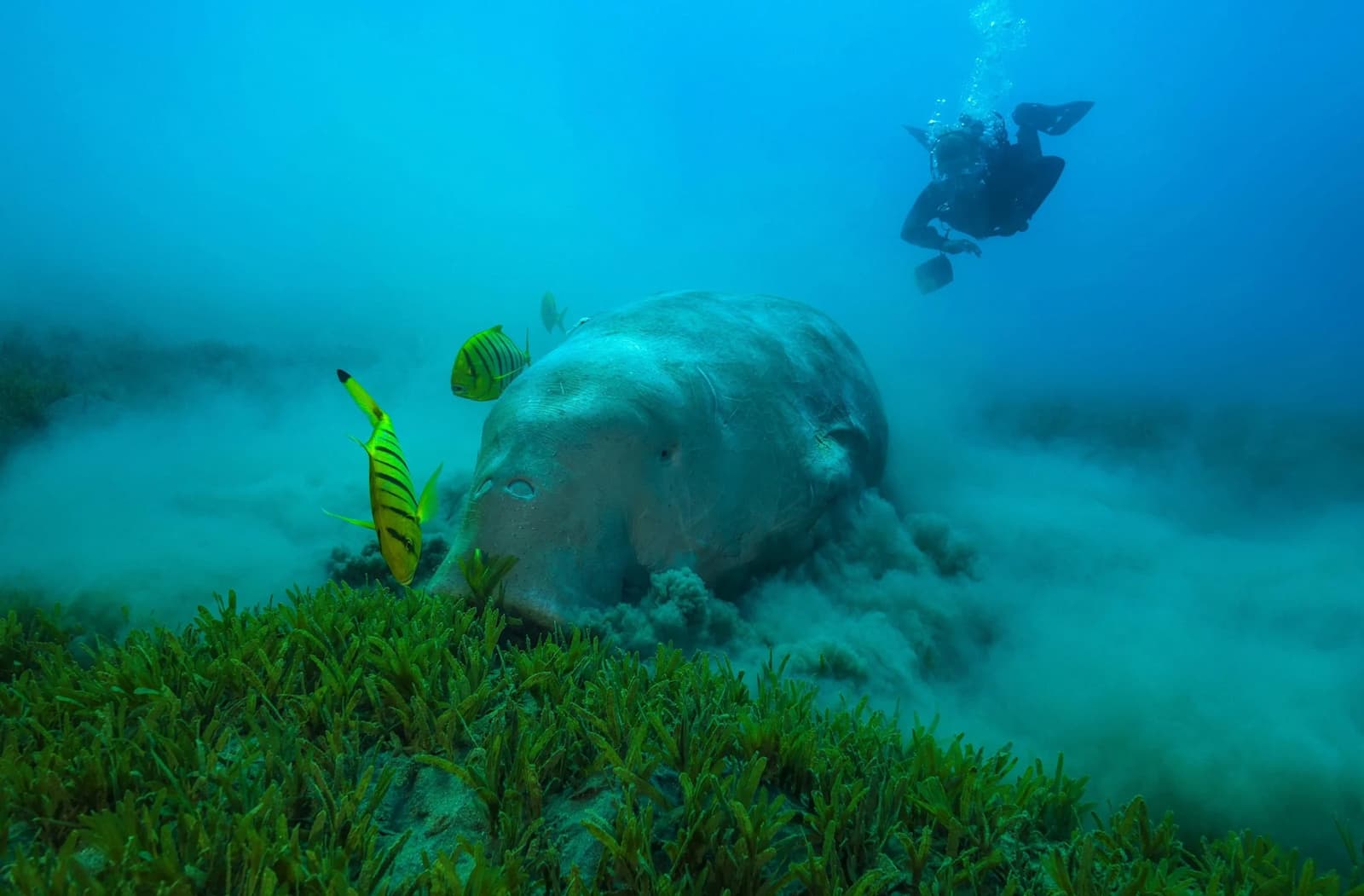
A dugong eating seagrass in the Red Sea, Egypt (Image: Andrey Nekrasov / Zuma Press / Alamy)
When Piyarat Khumraksa started combing through five years of Thai government data on dugong deaths, she did not anticipate uncovering a crisis of national significance. The Department of Marine and Coastal Resources (DMCR) had recorded far more deaths in 2023 and 2024 than previous years, but the reason was not clear.
Khumraksa is a marine veterinarian who works along southern Thailand’s coastal provinces of Krabi, Trang and Satun. She is based at the Marine and Coastal Resources Research Centre, overlooking the lower Andaman Sea. Here, once-thriving seagrass meadows have been disappearing, along with the dugongs that rely on them for sustenance.
“We first noticed problems with the seagrass five years ago, but it became critical in 2023 and 2024,” Khumraksa says. “The dugongs that were living in this area have now migrated to find seagrass along the west coast in Phuket, Phang Nga and Ranong provinces. This is the first time we have witnessed such a thing happening.”
When dugongs are washed ashore in Thailand, they are rarely alive. A deceased animal that washed up in Krabi province on 30 December brought the total death count to 45 last year. In 2023, there were 40 deaths. In October 2024, the minister for natural resources and the environment, Chalermchai Srion, stated that dugong mortality in Thailand usually averages 13 per year.
Stranding hotspots are concentrated in Trang province, especially around Mook and Libong islands. Khumraksa says this is where previously vast seagrass beds have vanished. Dialogue Earth spoke to Milica Stankovic, who works in the lab at the Seaweed and Seagrass Research Unit at southern Thailand’s Prince of Songkla University. She shares the example of Krabi’s Ao Nammao Bay, where seagrass coverage has plummeted from a healthy 60%, to 1% in 2024.


