Entrenched gas interests and domestic issues put a strain on Thailand’s solar potential, writes renewable energy expert Chalie Charoenlarpnopparut
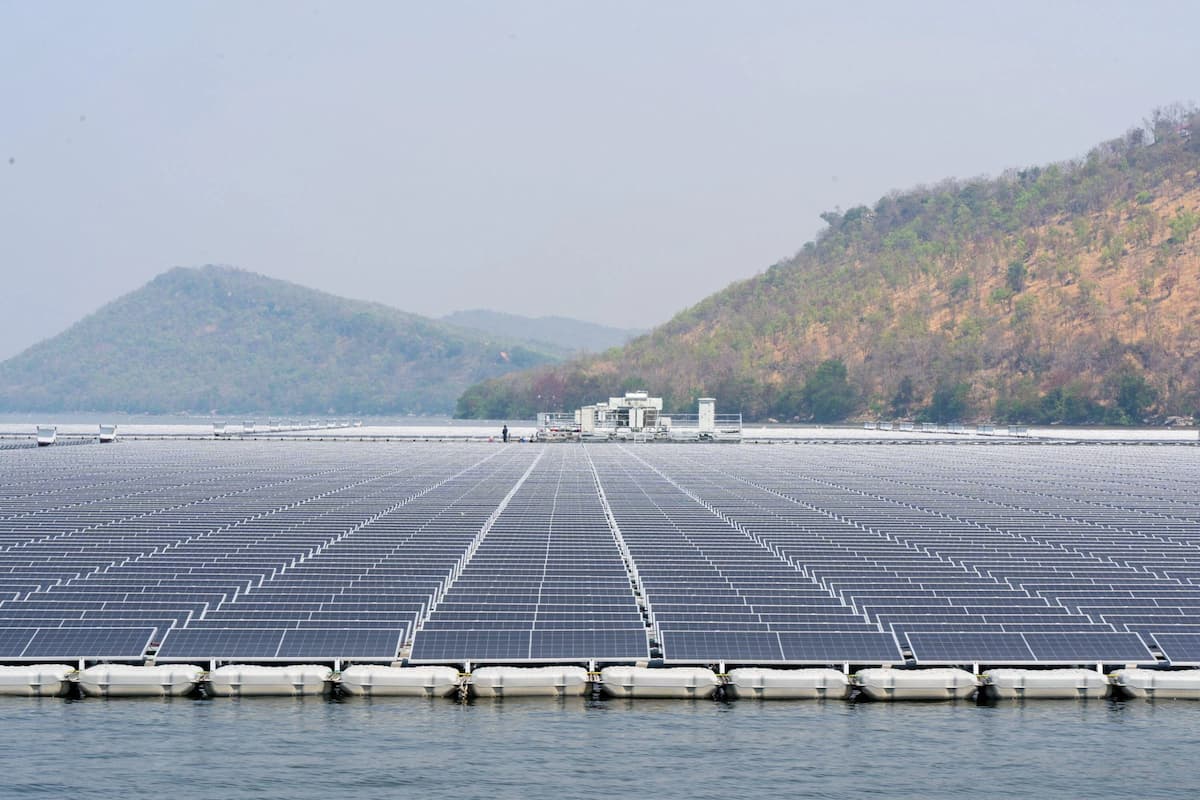
The Ubolratana Dam hydro-floating solar hybrid power plant in Khon Kaen, Thailand. The country needs to rapidly scale up solar power to hit its 2050 net zero target, experts say (Image: Lin Hao / Xinhua / Alamy)
Over the last decade, Thailand has been very aggressive on solar power development. There was a time when anyone who produced solar electricity would get a buyback, so we saw a lot of solar farms getting built, reaching a capacity of around 3 gigawatts (GW) at the time.
Thailand then changed the system to a feed-in tariff, in which renewable energy producers are given fixed prices to feed the grid, which is still a very attractive offer per contract. But now the price of solar panels and solar systems is much cheaper and the feed-in tariff no longer applies.
Solar panels can be made in Thailand, they can be made in China, but the most important point is whether or not Thailand can install enough of them to reduce its carbon footprint fast enough to meet net zero carbon by the year 2050. With the current plan, this seems impossible.
For Thailand to go net zero by 2050, it needs around 250 GW of solar power. That number currently stands at just 3.78GW [and projected to reach 6.97 GW by 2030], so to reach this goal, Thailand needs to start early and very aggressively.