.jpg)
(Photo: Unsplash)
China’s “new energy vehicles” (NEVs) have been the centre of media and geopolitical attention in recent months.
NEVs is a Chinese term and includes battery-electric (BEVs), plug-in hybrid vehicles (PHEVs) as well as fuel-cell electric vehicles (FCEVs).
According to data from China Customs and industry associations, the vast majority of Chinese NEVs being produced, sold and exported are BEVs and PHEVs. In this article, BEVs and PHEVs are referred together to as “EVs”.
In 2023, more than half of the EVs on the world’s roads were in China, pushing China to be the world’s largest EV market and producer. This rapid growth has largely been fuelled by the Chinese government’s support.
From 2009-2023 – in addition to strong policy support – the Chinese government poured an estimated US$230 billion into the industry, with this rate accelerating nearly three-fold over the past five years, even as some subsidies ended.
As a result, NEVs accounted for around 51% of all cars sold in China in July 2024, according to industry data. Carbon Brief’s analysis finds that 88% of China-made NEVs were sold domestically in 2023.
However, production has outpaced demand. The Paper, a state-affiliated newspaper, says that, except for a few leading brands, such as BYD, most Chinese EV makers produced a lot more cars than they could sell last year.
Meanwhile, EV exports from China – including foreign brands, such as Tesla – have increased 160-fold from 2019 to 2023, triggering fears of “overcapacity”.
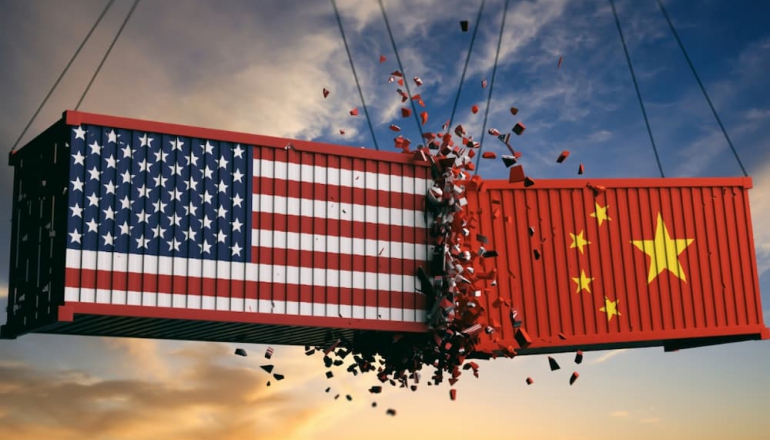
In response, the EU, US and Canada have announced tariffs on China-made EVs, in what some publications have described as a “trade war”. To date, the UK – a leading importer of Chinese EVs since 2019 – has not announced any tariffs.
Chinese officials have strongly opposed these trade barriers, and launched “tit-for-tat” investigations into EU products. However, some in the industry have argued they will only be a “temporary setback” that will push firms to focus on other markets, such as Africa.
In this Q&A, Carbon Brief looks at the Chinese EV industry, the history of its rapid growth as well as the support it received from the government. The article also explores whether it has an “overcapacity” problem, where the exports end up as well as why the US, EU and UK have adopted different trade strategies.
How did Chinese EV grow so fast?
The Chinese EV industry is booming. In 2018, only 1.27m EVs were produced in China, according to data from China Association of Automobile Manufacturers (CAAM), but production in the month of October 2023 alone reached 2.8 million.
There is a clear link between this rapid growth and Beijing’s national strategy to develop the EV industry.
According to a joint report by the International Council on Clean Transportation and China EV100, in the 1990s and early 2000s, there was a general recognition among China’s policymakers that, despite the growing demand for vehicles in China, the nation’s automakers were lagging behind their foreign counterparts. Becoming early innovators of EVs was seen as a way to establish a foothold in the industry.
In the 10th “five-year-plan for science, technology and education development” – a high-level development initiative for the period 2001-2005 – lithium-ion batteries and EVs are identified as the new development “focuses”:
“[China should] improve the overall technological level of industry…focusing on the development of raw materials and ancillary parts for lithium-ion batteries, lithium polymer batteries, and nickel-metal hydride batteries…focusing on the development of EV…[and] select a number of cities to implement clean fuel vehicle demonstration projects.”
The enthusiasm coincided with a broader push in the early 2000s for China to become an “innovation-oriented country” by 2020.
In 2008 and 2009, a number of local governments started to roll out electric buses across China and purchase EV fleets instead of combustion-engine cars. Some cities, such as Hefei and Changzhou, made it easier for EV buyers to get licence plates – making purchasing EV more appealing to the general public.
Meanwhile, global competition and cooperation also assisted the rise of Chinese EVs. A 2023 report by the Center for Strategic and International Studies (CSIS), a US-based thinktank, notes that some Chinese EV makers had purchased western brands and increased their presence in the markets by using these western brands’ established reputations. For instance, state-owned company SAIC purchased Britain’s MG and Geely acquired Volvo via a deal with Ford.
By now, these Chinese firms were providing some of the key technologies for their western partners. Mercedes-Benz, for example, relied on Geely to “completely revamp” its Smart brand – one of the latest European brands to shift production to China – whose new electric sport utility vehicle (SUV) model is produced in Zhejiang province, says CSIS.