(1).jpg)
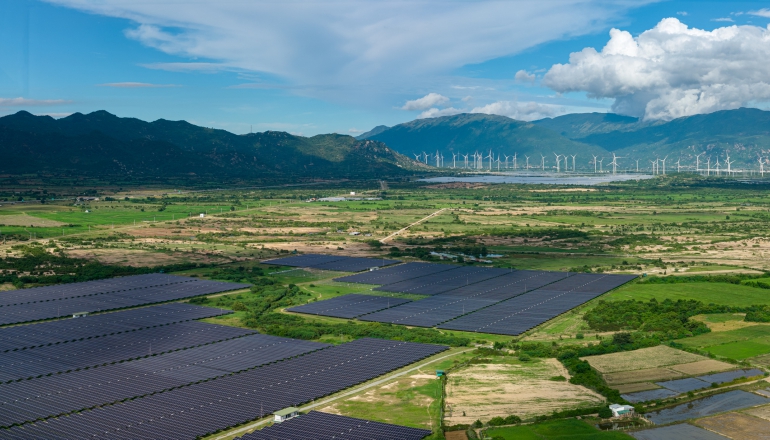
Complex DPPA procedures backed by ground-mounted solar projects have dampened interest among corporate buyers. (Photo: iStock)
Vietnam’s power market is moving toward greater liberalization and transparency as the government loosens regulations to let supply and demand play a bigger role in determining electricity prices, a shift aimed at boosting the country’s international competitiveness. The reforms have not only given rise to a direct power purchase agreement (DPPA) framework that could accelerate the energy transition, but will also introduce a two-component electricity pricing mechanism designed to reflect actual power costs more accurately.
In this feature series, RECCESSARY examines the rollout of Vietnam’s two major electricity reforms, market response, and their impact on renewable energy developers, corporate power users, and the national power system.
“Off-takers want renewable energy, but they also want it at a reasonable cost,” Nguyen Huu Quang, portfolio manager of clean investments at Dragon Capital, told RECCESSARY. He noted that the renewable energy demand of multinational corporations may not be as urgent as it appears, with cost remaining a key consideration.
For corporate buyers, Vietnam’s DPPA framework still lacks sufficient clarity at this stage. Combined with the introduction of the two-component electricity pricing mechanism, many companies are now reassessing their green power procurement strategies.
Two-component tariffs disrupt the market as buyers struggle to assess DPPA value
Vietnam’s power mix still relies heavily on fossil fuels. Under the upcoming two-component electricity pricing mechanism, companies that adjust electricity consumption in line with government policy could lower their overall power costs, potentially weakening demand for renewable energy and reducing incentives to sign DPPAs.
Two-component tariffs disrupt the market as buyers struggle to assess DPPA value
Vietnam’s power mix still relies heavily on fossil fuels. Under the upcoming two-component electricity pricing mechanism, companies that adjust electricity consumption in line with government policy could lower their overall power costs, potentially weakening demand for renewable energy and reducing incentives to sign DPPAs.
Quang, who has experience in corporate green power trading, said that even companies with RE100 or 24/7 Carbon-Free Energy commitments are not rushing to procure green power. Instead, they are seeking lower prices.
“We want to understand how urgent their demand really is and what price ceiling they are willing to accept for green power, but we still don’t have that information,” he said.
Unlock this article to learn three key takeaways
- Even when companies in Vietnam commit to RE100 or CFE 24/7, cost considerations remain the top priority, leading many to take a wait-and-see approach toward renewable electricity procurement.
- Two-component tariffs split power prices into two components, which may reduce electricity costs for companies that adjust consumption in line with policy incentives, thereby weakening their motivation to procure renewable energy.
- Rooftop solar installed by major precision manufacturing companies in Taiwan cannot meet high RE targets, typically achieving only RE6 to RE8, prompting Taiwanese firms to seek more innovative solutions.