.jpg)
(Photo: Flickr/USGS)
“Fragmented governance” between biodiversity, climate change, food, water and health is putting all of those systems at risk, according to a major new report from the Intergovernmental Science-Policy Platform on Biodiversity and Ecosystem Services (IPBES).
The report, known as the “nexus assessment”, explores the interlinkages between climate change, biodiversity, food, water and human health.
It says that focusing on a single element of the nexus at the expense of the others will have negative impacts for both humans and the planet.
At the same time, many of the actions that can be taken to address nature loss will have co-benefits for the climate.
The report also finds that funding for nature is dwarfed by both public and private finance that goes towards nature-harming activities.
However, it says, reforming global financial systems could help address the “funding gap” needed to effectively protect nature.
These conclusions form part of a “summary for policymakers”, a 57-page document that explains the key messages of the report. The full report will be published sometime next year.
IPBES is an independent body that provides scientific advice around biodiversity and biodiversity loss to policymakers, including through the Convention on Biological Diversity. It was modelled after the Intergovernmental Panel on Climate Change and functions in much the same way.
Prof Pam McElwee, co-chair of the report and a professor at Rutgers University, told a press briefing that biodiversity, climate, food, water and health should not be treated as “single-issue crises”. She added:
“These are interlinked crises. They are compounding each other. They are making things worse, and the current business as usual approach is not only failing to tackle the drivers of these problems, [but] in some cases, we are wasting money because we’re duplicating policies, when in fact, we could be treating them as issues that need to be dealt with together.”
Here, Carbon Brief explains five key takeaways from the IPBES “nexus” assessment report.
1. Biodiversity loss puts food and water systems, human health and the climate at risk
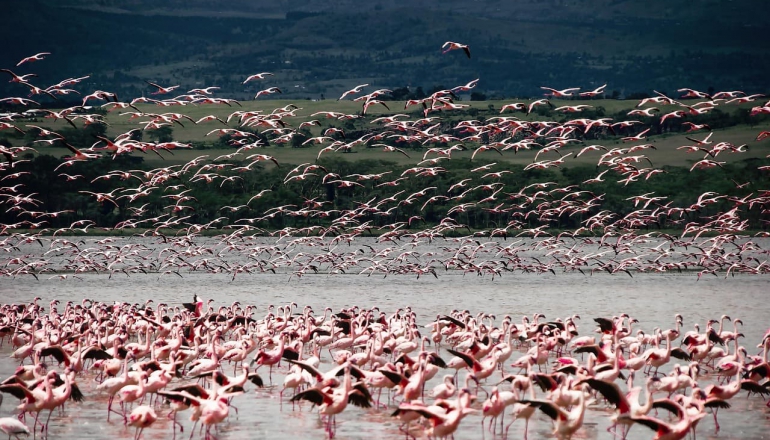
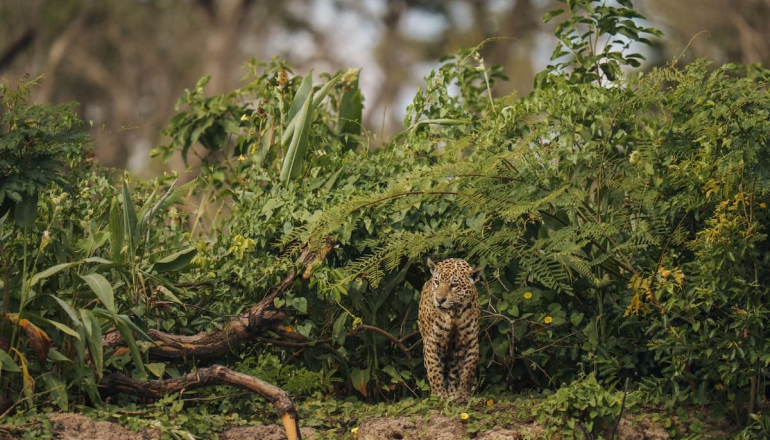
The report explores how the decline of biodiversity in “all regions of the world” has serious consequences for food, water, health and climate change.
It stresses that biodiversity is “essential” to human existence, because it supports water and food supplies, underpins public health and contributes to the stability of the climate.
But over the last 30-50 years, biodiversity has declined by an average of 2-6% each decade across “all of the assessed indicators”, according to the report.
It notes that the ongoing decline has been caused by an intensification of the direct drivers of biodiversity loss: land- and sea-use change, climate change, overexploitation of resources, invasive alien species and pollution.
These trends have, in turn, been caused by “a wide range of indirect drivers”, including economic, demographic, cultural and technological changes, the report argues.
When these “direct” and “indirect” drivers of biodiversity loss interact with each other, they cause “cascading impacts among the nexus elements”, the report warns. In particular, it notes that climate change and biodiversity loss “interact and compound each other to negatively impact ecosystem resilience and all the other nexus elements”.
The document points to “fragmented governance” of biodiversity, water, food, health and climate change as a major obstacle preventing effective action on the issues.
While environmental regulations have been “partially successful”, they are “unlikely to be fully effective without more concerted efforts to address interlinkages among the nexus elements and their direct and indirect drivers”, it warns.
Prof Paula Harrison, co-chair of the report and a scientist at the UK Centre for Ecology & Hydrology, says that governance systems need to reflect the interconnections between biodiversity, food, health, water and climate change. She told a press briefing on 16 December: