.jpg)
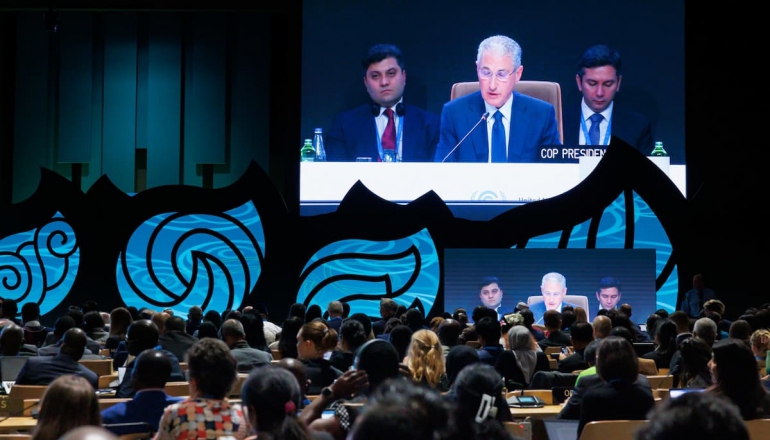
The Chinese Vice Premier Ding Xuexiang speaking at COP29. He said China has provided and mobilised over CNY 177 billion for projects to support action on climate change in developing countries since 2016 (Image: Kamran Guliyev / UN Climate Change, CC BY-NC-SA 2.0)
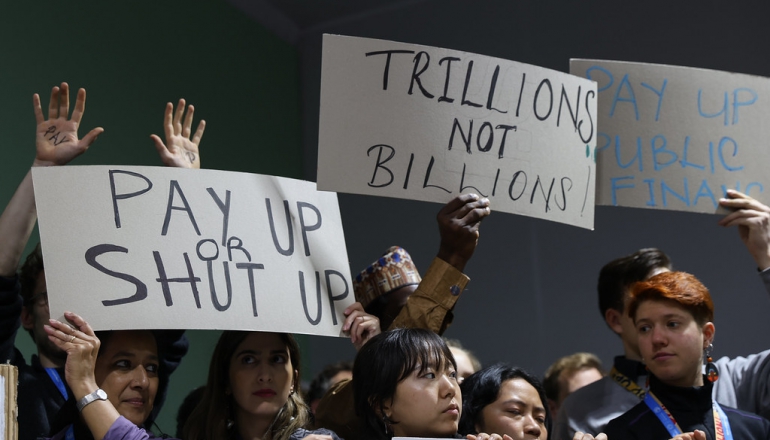
Climate finance is high on the agenda at COP29, which is currently taking place in Baku, Azerbaijan. The escalating climate crisis has led the UN to estimate that developing countries need approximately USD 6 trillion to enact their climate change action plans by 2030.
The talks in Baku are centred around the New Collective Quantified Goal on Climate Finance (NCQG), which will be a critical measure of the conference’s success. The NCQG builds on a 2009 commitment made by developed countries at COP15, to provide USD 100 billion in climate finance to poorer nations annually by 2020. Key issues under discussion at COP29 include the ultimate funding targets, developing countries’ priorities and needs, and the design of financing mechanisms.
So far, developed countries including Switzerland and Canada have used COP29 to propose expanding the contributor base, mobilising more nations to join. Emerging economies such as China, the United Arab Emirates and South Korea (not included in COP15’s USD 100 billion commitment) are now seen by the international society as capable and responsible for making more significant contributions to climate finance.
China is under the brightest spotlight. Recent studies by several thinktanks indicate that since its Belt and Road Initiative was launched, China has contributed over USD 30 billion to global climate finance. According to the World Resources Institute, this puts China on a par with the United Kingdom, to become the joint fifth-largest provider of climate finance after Japan, Germany, the United States and France.
Speaking in Baku on 12 November, the Chinese Vice Premier Ding Xuexiang highlighted that, since 2016, China has provided and mobilised over CNY 177 billion (approximately USD 24.5 billion) in project funding to support other developing countries in addressing climate change. He also called for developed countries to increase their financial support and technology transfers to developing countries. However, this figure was absent from Chinese official media reports the following day, sparking speculation that China might be wary of its statements being taken out of context, and potentially misrepresenting its stance on NCQG.
What is China’s position on the NCQG negotiations? What role does it play in global climate finance? And, to avoid a zero-sum game underpinned by China-US tensions regarding the scope of contributors, what considerations should guide the NCQG design? This article seeks to clarify these questions.