Though they have only just set sail, battery-powered ships have huge potential for cutting transport emissions, writes Ted Zhang.
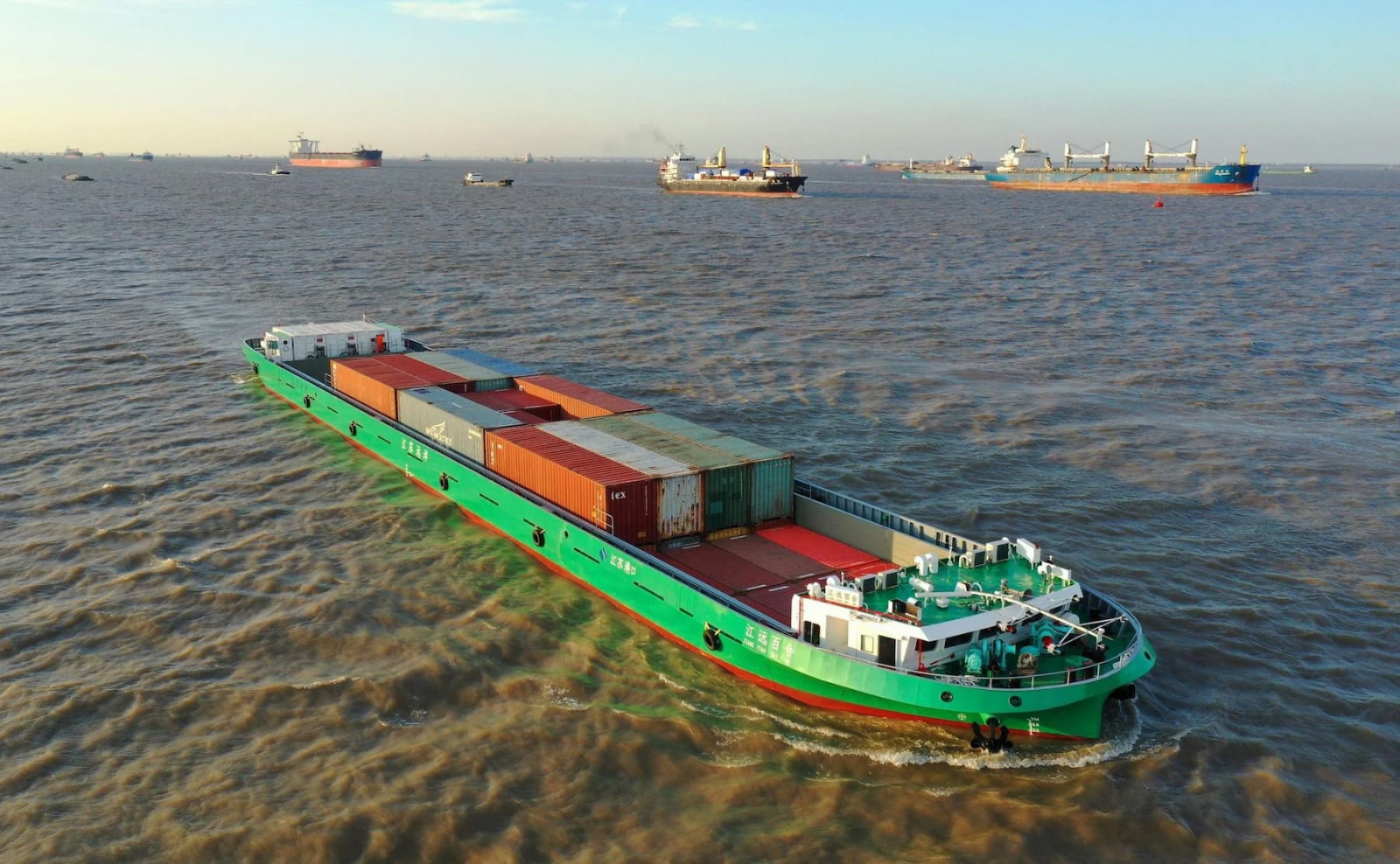
China’s first all-electric domestic cargo vessel, the Jiangyuan Baihe, embarked on its maiden voyage from Taicang port near Shanghai in 2022 (Image: Cynthia Lee / Alamy)
As the world’s biggest shipper and commodity trader, China could establish a mature business model for constructing electric ships. It could also build out better recharging infrastructure, bringing further climate, environmental and economic benefits.
This will require adequate government support. The country’s 15th five-year economic plan will soon be upon us. Covering 2026-2030, it will be the last before China’s 2030 deadline for peaking national carbon emissions.
The huge potential of e-ships
On 22 April, the world’s largest all-electric container ship arrived at Shanghai’s Yangshan port. Lv Shui 01 is 120 metres long and fitted with batteries of 50 megawatt-hours, which can be swapped out at ports. COSCO Shipping, which owns and operates the vessel, claims it will avoid almost 3,000 tonnes of carbon emissions over the course of a year – equivalent to taking more than 2,000 cars off the road for a year.
The vessel is a good example of how far electric ships can reduce shipping emissions. Last summer, the International Maritime Organization – the UN body responsible for controlling atmospheric pollution by ships – revised its strategy for cutting emissions from global shipping. According to a press release, the new strategy includes “an enhanced common ambition to reach net-zero … from international shipping by or around, ie close to, 2050”. Shipping’s green transition must gather speed.
Given that battery-powered vessels are set to be a part of global shipping’s green transition, there is huge potential for electric ships in China, both in terms of emissions reduction and economic success.
Climate, environmental and economic benefits
About 15% of China’s emissions are from transportation, with shipping accounting for 6%. Domestic shipping emitted 15 million tonnes of carbon dioxide in 2020, according to estimates from the China Waterborne Transport Research Institute, a part of the Ministry of Transport.