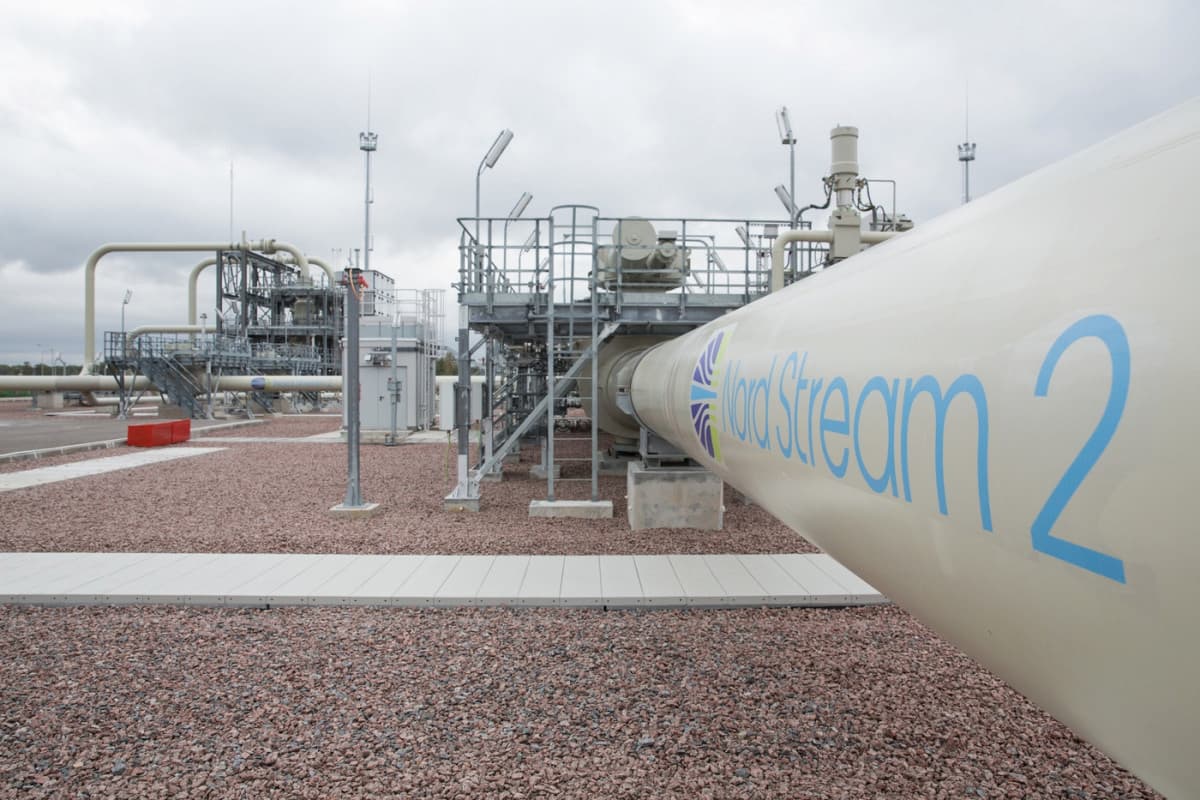
Renewables are set to mitigate dependencies such as Europe's reliance on Russian fossil gas. Photo: Nord Stream 2 AG.
Geopolitical disruption through events like Russia’s war on Ukraine or a new transatlantic rift can speed up the rapid build-up of renewable energies, says Francesco La Camera, director-general of the International Renewable Energy Agency (IRENA).
An accelerated global energy transition would lead to a more distributed market with many sellers – for example of the relevant critical minerals – opening the door for more collaboration and preventing concentrated power. Reaching the global target of tripling renewables capacity by 2030 is possible, but requires full engagement and the necessary political will, La Camera told Clean Energy Wire.
Clean Energy Wire: The geopolitical upheaval of recent months and years – especially the energy crisis, Russia’s war against Ukraine and the actions by re-elected US president Donald Trump – have put energy security front and centre of the debate. What does it mean for renewable energies like wind and solar electricity if the world increasingly worries about having a sufficient uninterrupted energy supply?
Francesco La Camera: These events are pushing the market to go for renewables. The war against Ukraine has not slowed down the transition, but it has accelerated it in some way. When the war started more than three years ago, it became evident that the old energy system was very vulnerable.
A more distributed system with many actors ensures more resilience, and shocks are better absorbed. This has been reflected in the amazing growth of renewables, even though it is still not sufficient compared with what we need for fighting climate change. Last year, the world installed 585 gigawatts of new renewable energy capacity.