A new deal could boost the economy in Bhutan and Nepal while helping India and Bangladesh – but it is based on increasingly precarious hydro
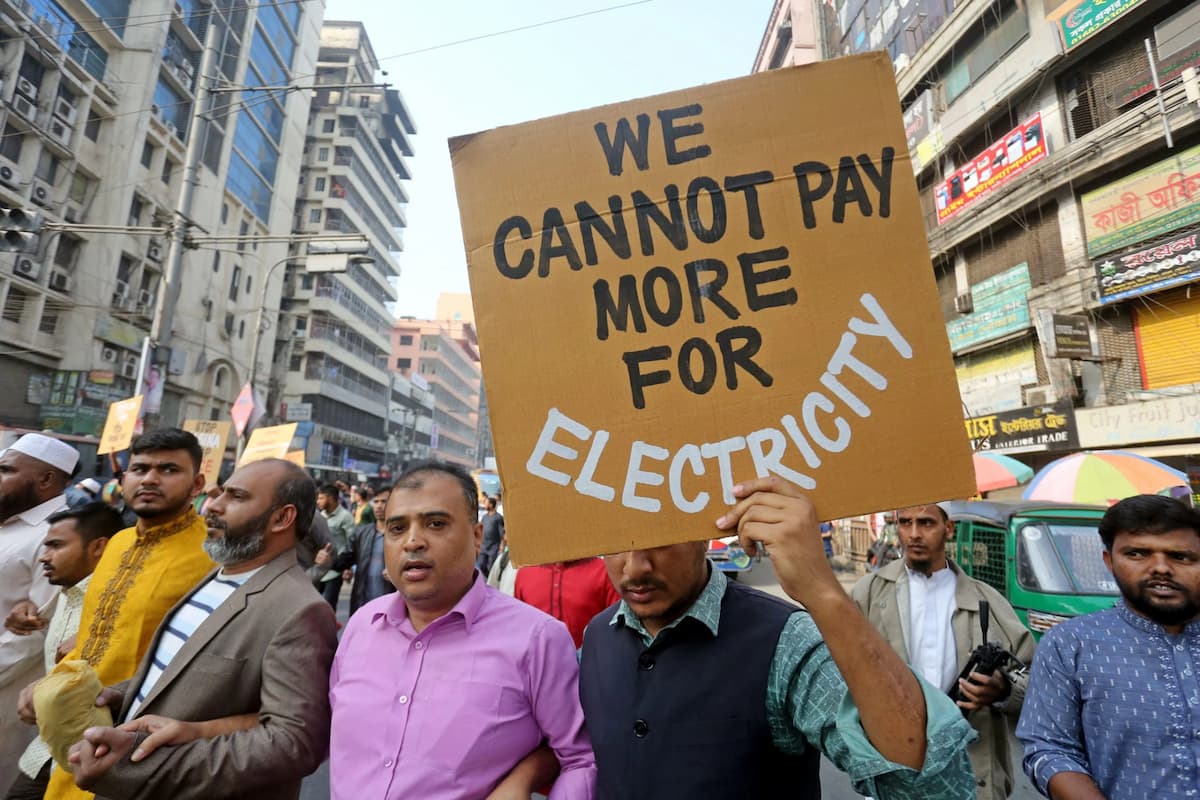
Activists protest a hike in energy prices at a demonstration in Dhaka, Bangladesh, February 2023. It is hoped a new hydropower supply agreement with Nepal and Bhutan will ease the country’s electricity shortfalls (Image: Habibur Rahman / Abaca Press / Alamy)
For the past few years, the countries of Bhutan, Bangladesh, India and Nepal have been slowly working towards cross-border energy trade.
On 3 October, this cooperation achieved a major milestone. Bangladesh’s new regime signed a tripartite agreement to import 40 megawatts (MW) of hydropower from Nepal, via Indian territory. The hydropower potential of Nepal and Bhutan, estimated to be more than 100 gigawatts (GW), will strengthen this energy cooperation.
Experts suggest, however, that this scramble for hydropower ignores the impact of climate change upon the Himalayan region.
India had been the lone electricity trading partner for Nepal and Bhutan for decades. This agreement gives the landlocked nations an opportunity to sell their surplus, monsoon-generated hydropower beyond India for the first time.
Dasho Chhewang Rinzin, the managing director of Druk Green Power Corporation Limited in Bhutan, commented on this situation in 2022 at a virtual World Bank event: “Many times, we are questioned about keeping all our eggs [hydropower] in one basket [India], and I retort by saying we have only one egg and one basket.” He said an agreement for regional electricity trade would help Bhutan diversify its basket.