Compared to its other export industries, China’s cleantech is much less vulnerable to Trump administration trade measures
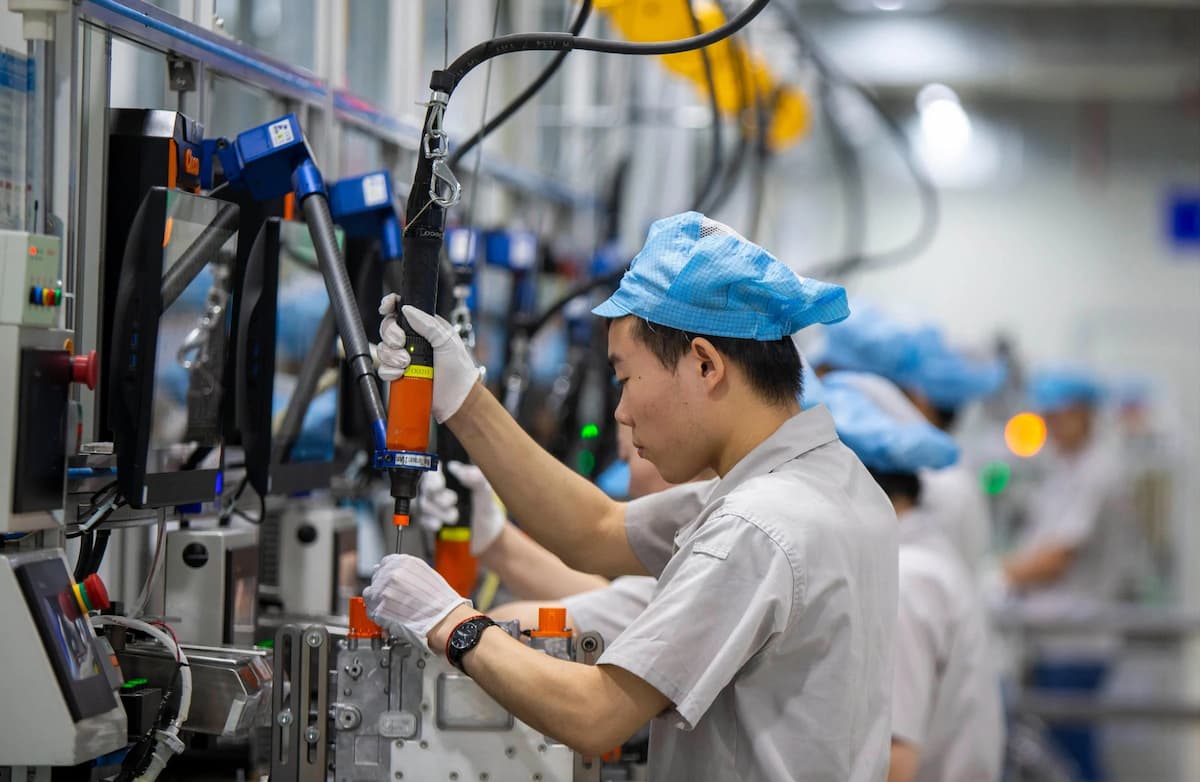
Assembling batteries for electric vehicles in Suzhou, Jiangsu province (Image: Cynthia Lee / Alamy )
Clean energy technology, particularly the “new three” of solar power, batteries and electric vehicles, emerged as an important source of growth in China’s exports in 2023. Thanks to booming markets at home and abroad, clean energy has become a key driver of economic growth.
A lot of media and policymaker attention is focused on possible US and European tariffs on China’s cleantech exports, with the perception that these could be a major blow to the industry.
What is missing from this picture is that half of all China’s exports of solar and wind power equipment and electric vehicles (EVs) now go to the Global South, according to UN Comtrade data. Emerging and developing countries have driven most of the recent growth in export volumes.
In 2024, the value of EV exports from China to the Global South overtook those to the EU, with China’s exports to developed markets falling and those to developing markets posting strong growth.
As we will see, Global South countries collectively have been the largest importer of solar and wind power equipment from China since at least 2015, but the gap widened in 2023, when the volume of these solar imports from China grew 70% year-on-year.
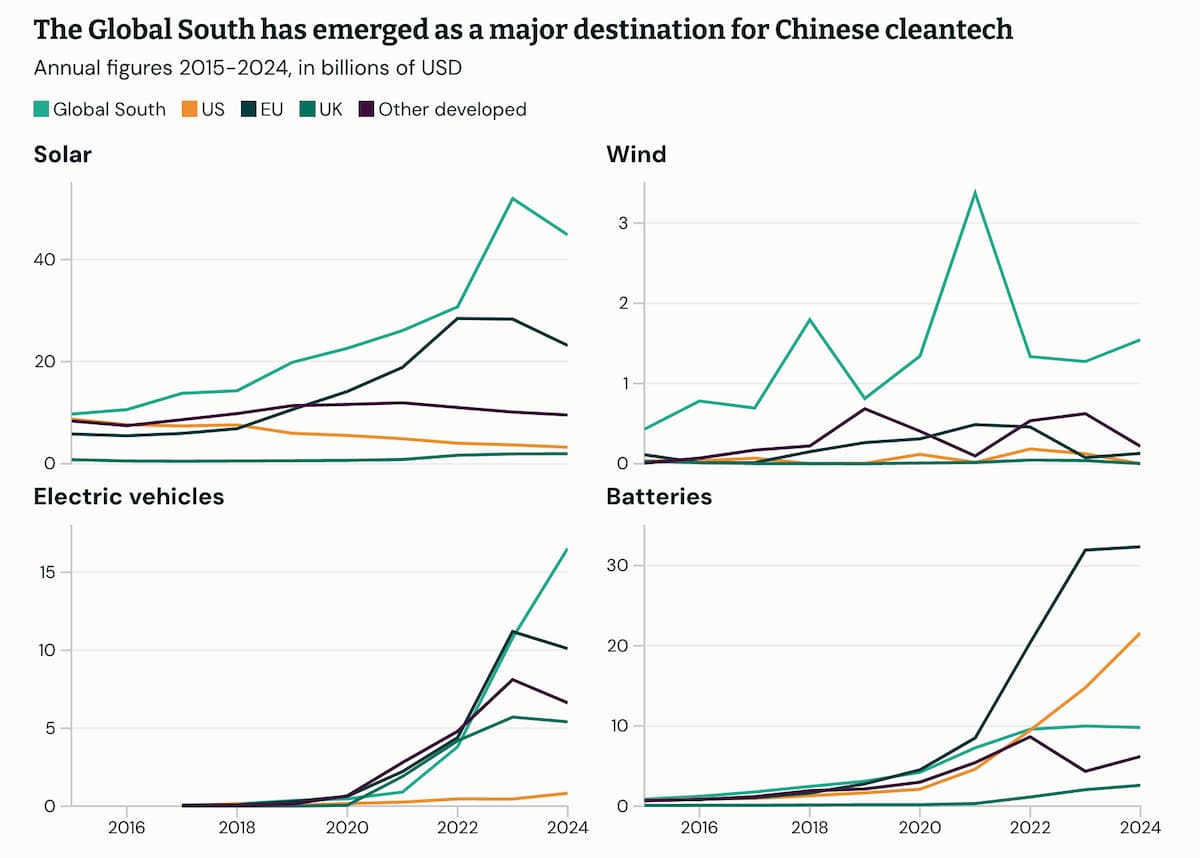
Data source: Comtrade • Graphic: Dialogue Earth
The US is a niche market for China’s cleantech
Solar and other clean energy have gone global in the past decade. In 2010-2015, 70% of solar and 50% of global wind installation occurred in developed economies. By 2023, these shares had fallen to just over 20%.