A charge on emissions for cargo vessels would become the first global carbon price, but disagreements on system design and starting prices remain.
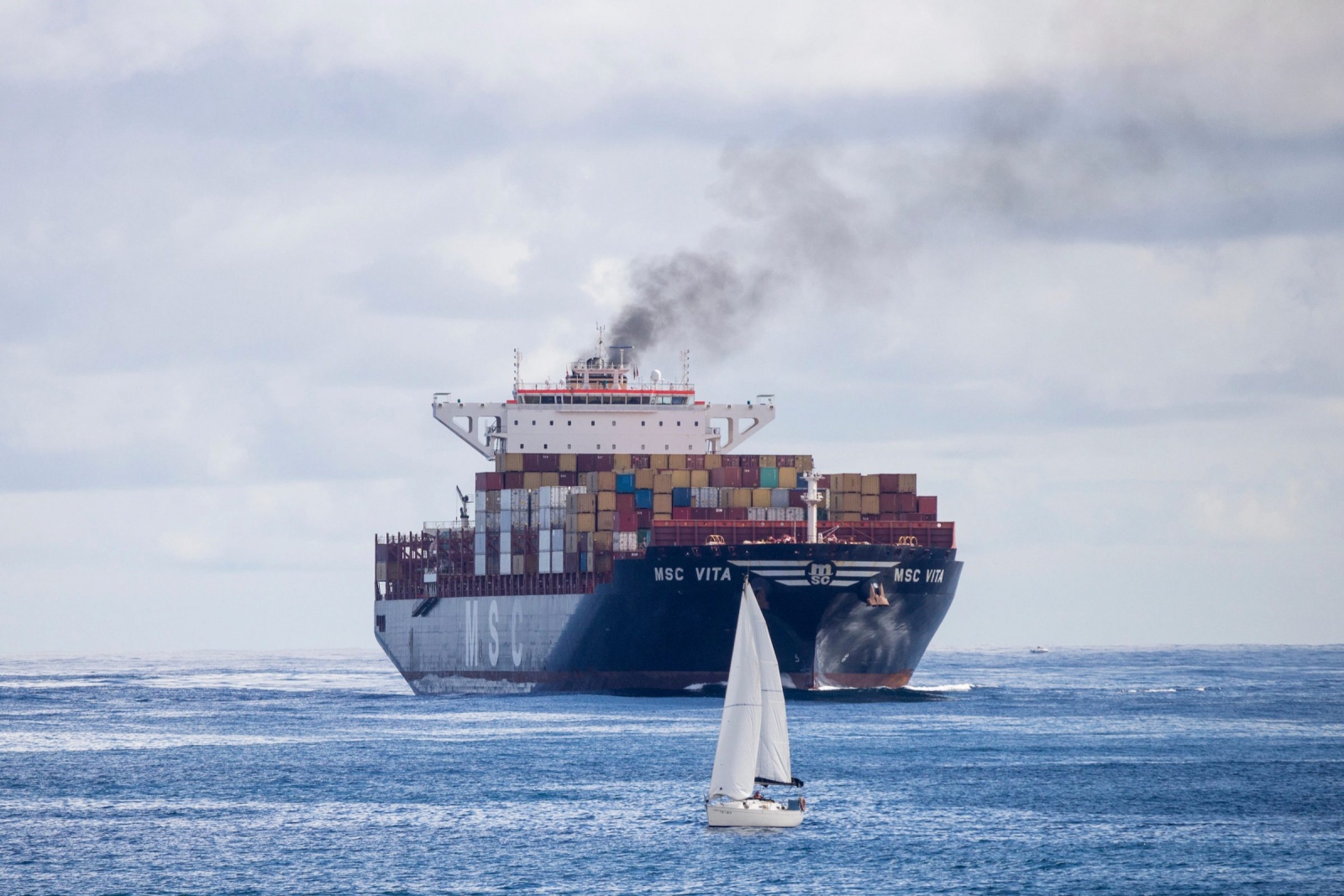
The MSC Vita container ship entering Las Palmas Port in Gran Canaria, Spain. Shipping gulps up 5% of global oil demand and emits greenhouse gases equivalent to more than a billion tonnes of CO2 every year. (Image: Rory Hailes / Alamy)
The world’s first global carbon price is getting closer to becoming a reality.
At a March meeting of the UN International Maritime Organisation (IMO) in London, a majority of member states expressed support for a levy on greenhouse gases emitted by the global shipping industry.
This fee – along with a fuel standard mandating that ships must increase the proportion of green energy they are using over time – could upgrade the backbone of global trade to zero-carbon technology. But first, it must make it safely through some challenging political waters at the UN agency.
In a statement issued by the civil society group Clean Shipping Coalition after the IMO meeting, Sandra Chiri of the Ocean Conservancy said: “The UN is on the edge of adopting the world’s first-ever global emissions price, but the policy will only be as successful as countries make it to be.
“The March talks at the IMO gave us hope that a clear majority of countries – the Caribbean, the Pacific, Africa, but also the EU and Canada – understand the huge opportunity of pricing shipping emissions for the industry’s clean transition and for making sure this transition benefits all developing countries. It’s regrettable that a small but persistent minority strives to water down this vital climate measure.”
The IMO runs on a consensus basis, but the chair has the power to overrule holdouts if a large majority of countries are on board with a given decision.
Why shipping is a big deal for the climate
According to the UN, shipping carries about 80% of global trade: from containerships full of consumer goods, to oil tankers carrying crude and gasoline, and bulk cargo ships carrying coal, iron ore and grains. Shifting this much stuff around requires a lot of energy.
Approximately 60,000 cargo ships are operating in international waters. Currently, they all burn fossil fuels, and most of that is heavy fuel oil (HFO), made from the dregs of the oil refining process. Shipping gulps up 5% of global oil demand and emits greenhouse gases (GHG) equivalent to more than a billion tonnes of CO2 every year. If this industry was a country, it would be among the top 10 global emitters.