The purchase of blue carbon credits should only be considered if directly remediating environmental damage is not possible, experts say.
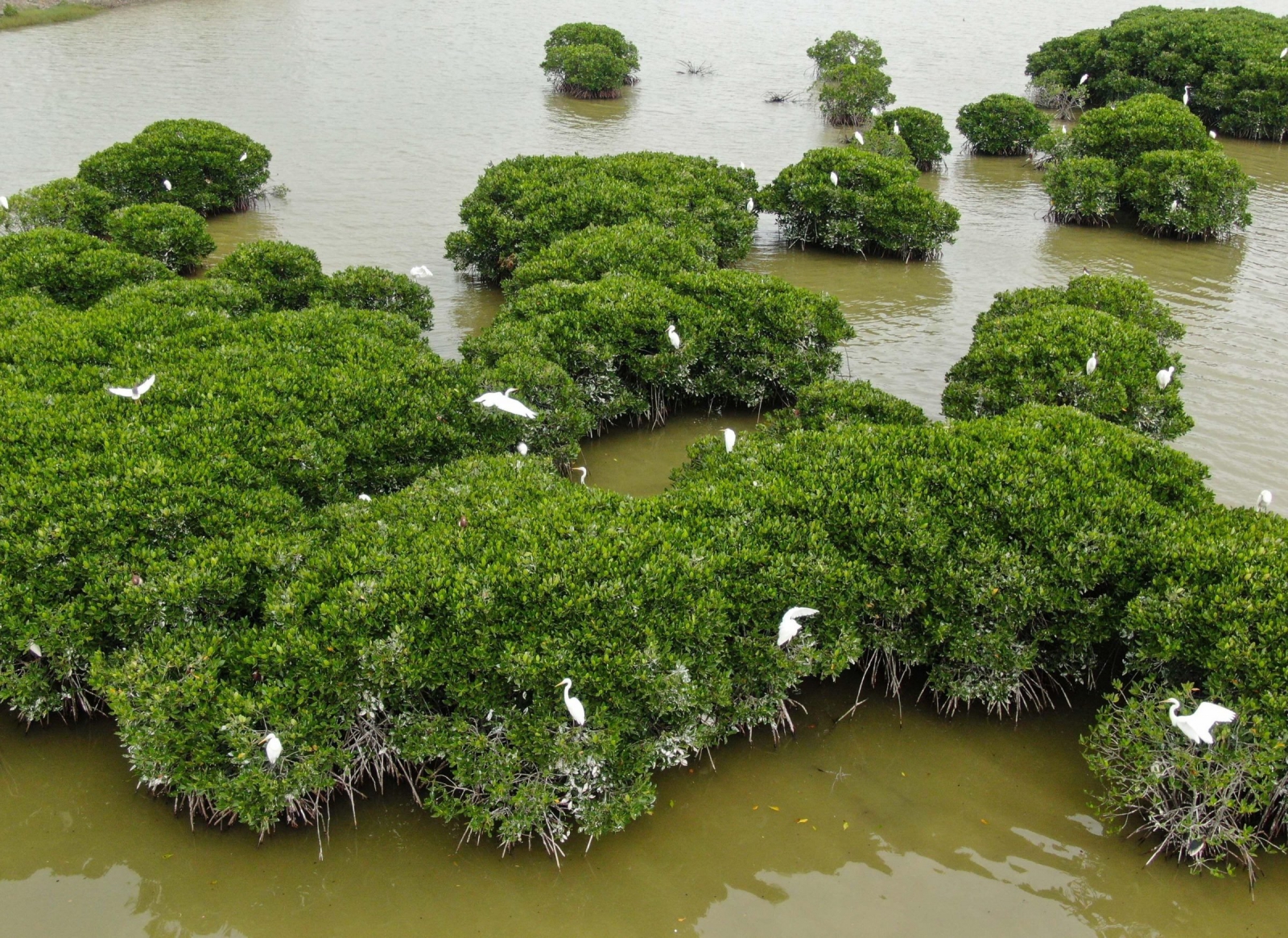
China’s first blue carbon trading project, involving mangrove afforestation in the southern city of Zhanjiang, Guangdong province (Image: Deng Hua / Xinhua / Alamy)
In March, a court in Xiangshan, Zhejiang province, sentenced two people to eight months in prison for fishing with prohibited gear during the closed season. Their trawl nets were confiscated, and they had to return the money earned and pay over CNY 56,000 (USD 7,700) in compensation for damaging ecosystem functions and fish stocks.
The judgement records that the defendants had already paid around CNY 19,000 (USD 2,600) of the compensation in the form of “blue carbon credits” supporting a commercial seaweed operation. Blue carbon refers to the carbon stored in oceanic and coastal ecosystems, and a credit usually represents a one-tonne net reduction in atmospheric CO2.
The Xiangshan case is one of China’s more recent legal cases involving blue carbon. The term “carbon credits” has appeared in a number of judgements concerning ecosystem damage since 2020, when China committed to its “dual carbon” goals of peaking emissions before 2030 and reaching carbon neutrality before 2060.
In 2021, China’s supreme court endorsed the purchase of forestry carbon credits as an alternative to paying compensation for damage to forest ecology. “Blue carbon justice”, however, is still mainly confined to the county- and municipal-level courts of coastal provinces and lacks a specialised legal basis. There is concern that the approach risks being overused, and that most of the credits being purchased involve the scientifically contentious matter of carbon sequestration by shellfish and seaweed.
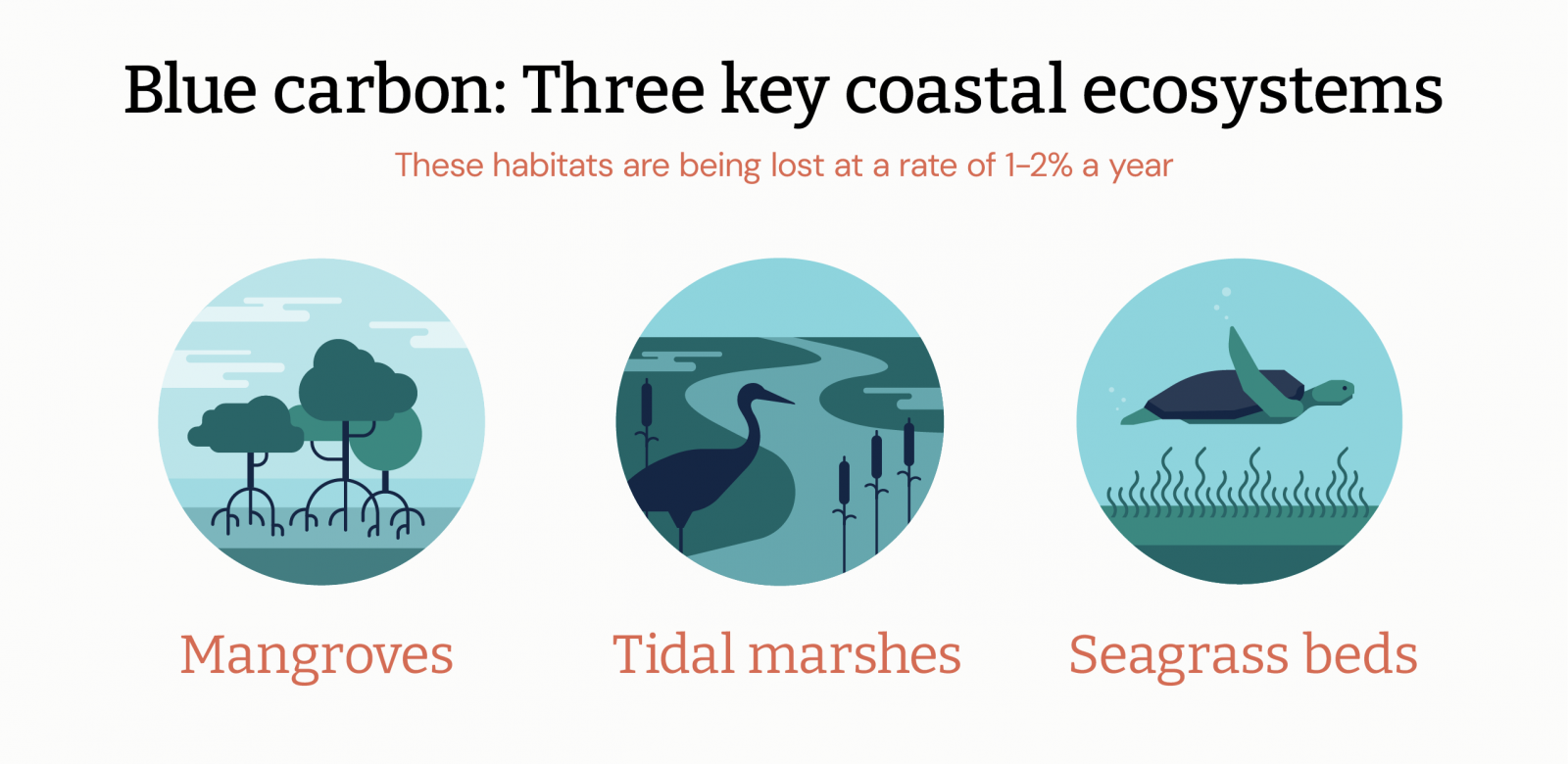
Graphic: Ed Harrison / Dialogue Earth
Blue carbon controversy
In June 2021, arrangements were finalised for China’s first blue carbon trading project, involving mangrove afforestation in Zhanjiang, Guangdong province. Since then, Qingdao, Xiamen, Hainan and Ningbo have also been looking into market-based approaches to trading blue carbon. Some experts expect blue carbon to be incorporated into the national carbon market in due course, spurring the market’s development.