.jpg)
Carbon Brief analysis finds that a Conservative victory over the Liberals could lead to nearly 800m extra tonnes of greenhouse gas emissions over the next decade. (Image: Jason Hafso / unsplash)
On 28 April, Canadians will go to the polls to vote for the next prime minister.
The election comes after Justin Trudeau stepped down as leader of the Liberal Party of Canada in January following nine years leading the party as prime minister.
Trudeau cited “internal battles” within the party for the decision, and stated that Canada “deserves a real choice in the next election”.
His successor Mark Carney – the former governor of the Bank of England and the Bank of Canada – called for a snap election on 23 March, just a week after being elected Liberal party leader and, thus, becoming prime minister.
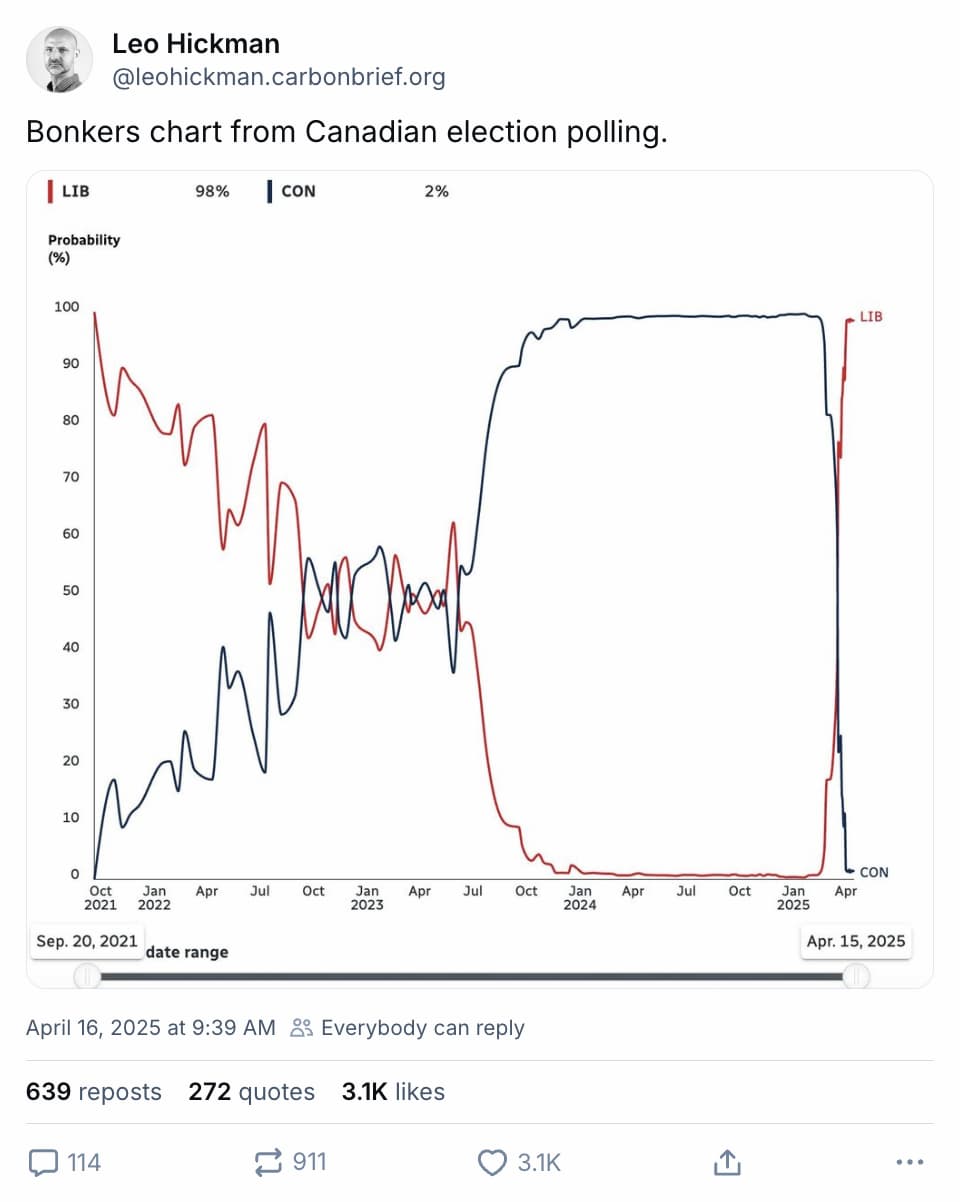
Carney is facing a stiff challenge from Conservative leader Pierre Poilievre, whose party was leading in the national polls from 2023 till the beginning of 2025.
However, the campaigning has occurred under the shadow of US president Donald Trump’s tariffs, with 25% taxes placed on Canada’s steel, aluminium and vehicles exports.
The US president’s tariffs and calls to make Canada the “51st state” have contributed to a late surge of support for the Liberals, according to multiple polls.
Carbon Brief analysis finds that a Conservative victory over the Liberals could lead to nearly 800m extra tonnes of greenhouse gas emissions over the next decade.
Each entry in the grid represents a direct quote from one or more of these documents. The grid will be updated as each party publishes their manifesto.
Net-zero and climate framing
Climate and energy issues have dropped down the election agenda in Canada.
In a poll of 2,000 adults in late March, just 5% of Canadians said that climate issues would most influence their vote.
More than a third cited the “cost of living” as the top issue influencing their vote, while 19% chose Trump’s impact on Canada. Other key issues singled out by respondents were healthcare, housing, jobs, taxes and government spending.
Trump’s election and subsequent tariff announcements have had a dramatic effect on polling ahead of the election, as seen below which highlights the extreme change in probability of each party winning enough seats to form the next government.