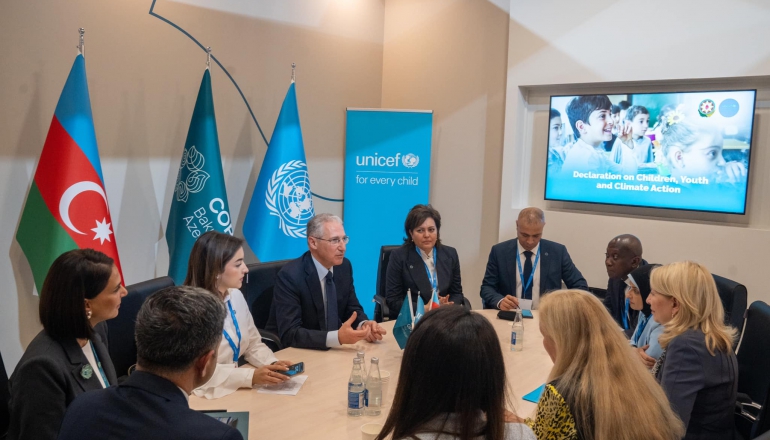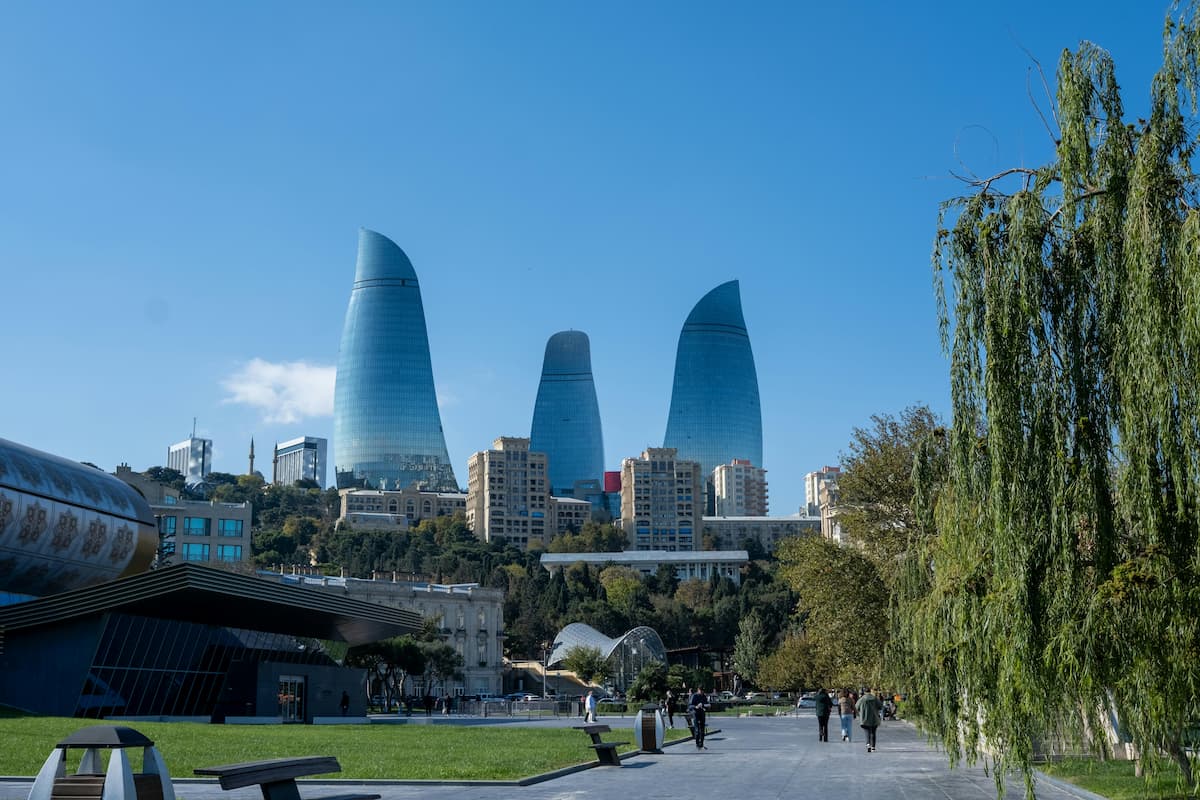
Baku, Azerbaijan. (Photo: Pexels)
Azerbaijan’s economy is highly dependent on fossil-fuel exports, making its economic prospects vulnerable to rising emissions-cutting ambition around the world.
As decarbonisation reduces global fossil-fuel demand and prices, the country will not be able to earn as much money from its oil and gas resources.
In a recent study, we looked at the policy solutions Azerbaijan could implement, in order to shift towards cleaner energy and diversify its economy away from fossil fuels to benefit domestic consumers, while remaining competitive in global markets.
Our results suggest that, while being adversely impacted by decarbonisation efforts in countries around the world, it is in Azerbaijan’s self-interest to implement domestic mitigation policies.
With proper sequencing and design of such policies, including a combination of fossil-fuel subsidy reform, a price on carbon post-2030 and use of collected revenue to cut taxes elsewhere, the country could achieve nationally determined contribution (NDC) targets, boost income growth and increase economic diversification.
Moreover, ambitious mitigation efforts towards net-zero by 2060 would yield substantial health co-benefits that could almost fully outweigh the direct economic costs of cutting emissions.
Vulnerability of the status quo
Net fossil-fuel exporting economies, such as Azerbaijan, not only need to implement domestic decarbonisation policies, but also face the consequences of global mitigation efforts if global climate targets are to be met. The latter could substantially impact the country’s future revenue flows from fossil fuel exports.
During the early 2000s, Azerbaijan’s hydrocarbon-fueled economy contributed to rapidly rising incomes and the development of domestic infrastructure. Between 2000 and 2014, per-capita gross domestic product (GDP) in the country increased more than 10-fold, transitioning Azerbaijan from a low-income to an upper-middle-income economy, according to the World Bank.
However, over the past decade, GDP growth has slowed down, while the country’s diversification efforts have not led to major transformations in the structure of the domestic economy, with fossil-fuel activities still playing a central role. Fossil-fuel subsidies in the country remain large and they continue to distort domestic energy markets, according to the International Energy Agency.