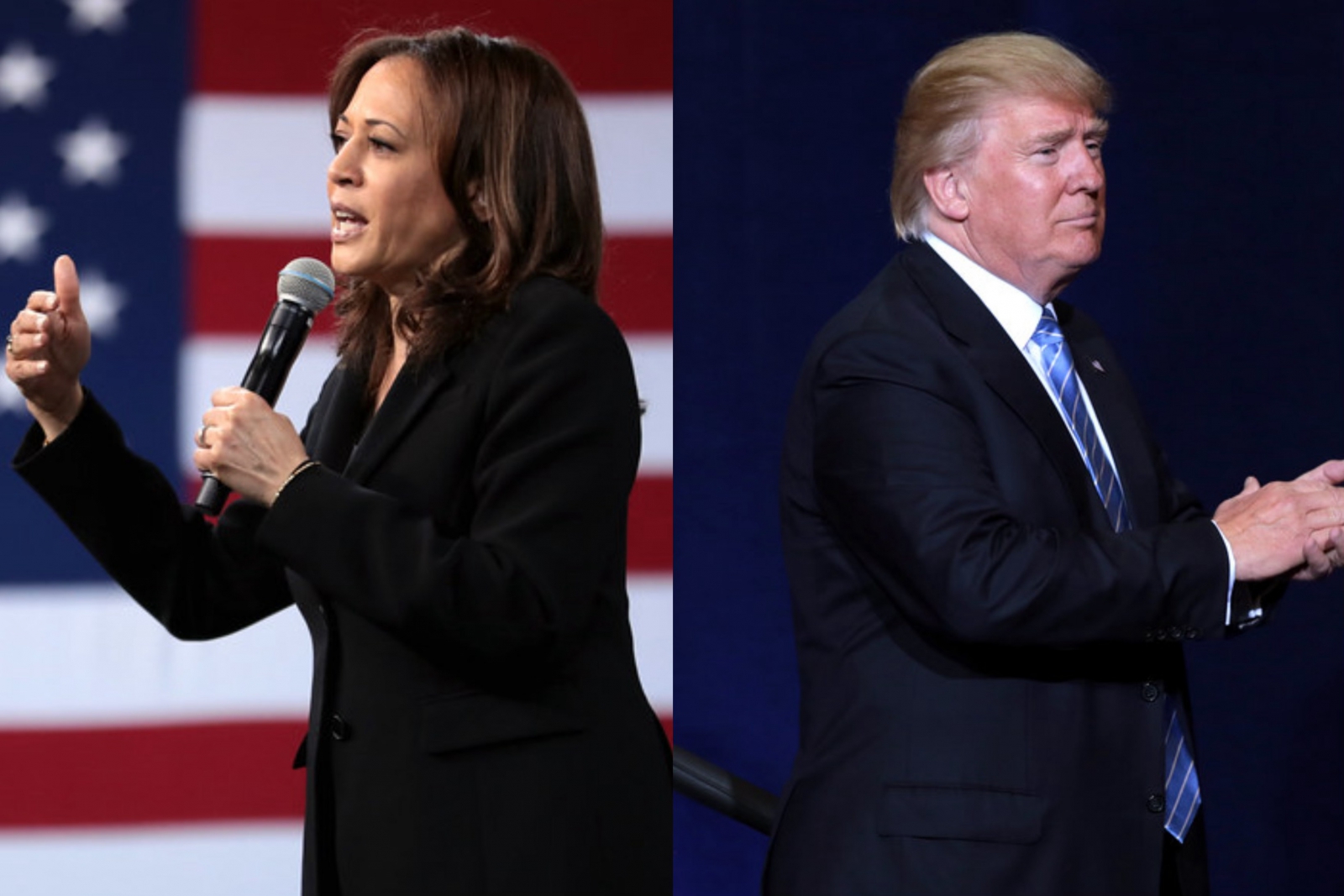
US Vice President Kamala Harris and Donald Trump are nearly tied in recent polls, just under two months before the US election. (Image: Flickr)
On 5 November, US voters will elect either Kamala Harris or Donald Trump as their next president.
The election, in a nation that is the largest oil producer and second largest source of greenhouse gas emissions in the world, will be highly significant for climate politics both in the US and around the world.
Harris, a Democrat who is currently serving as vice president under Joe Biden, is part of a government that has passed the most ambitious climate legislation in US history.
US fossil-fuel production has surged during the Biden administration. However, the Inflation Reduction Act (IRA) has set the nation on a course to slash its domestic emissions by offering billions of dollars in subsidies and tax credits for clean energy and electric vehicles.
Trump, the Republican candidate, is a climate sceptic who rolled back many environmental regulations during his 2017-2021 presidential term. He has dismissed climate policies as a “scam”, pulled the US out of the Paris Agreement and called for yet more oil production by repeating the mantra “drill, baby, drill”.
Neither candidate has yet released a detailed outline of their plans for US climate and energy policy.
In the interactive table below, Carbon Brief has assembled public statements from speeches, interviews and press conferences given in recent months.
The grid also includes comments made by their vice-presidential picks. For Harris, that is Tim Walz, the governor of Minnesota, who has passed ambitious climate laws in his own state.
Trump’s running mate is Ohio senator JD Vance, a critic of the IRA who has leaned into climate scepticism in recent years as he has aligned himself with the former president.