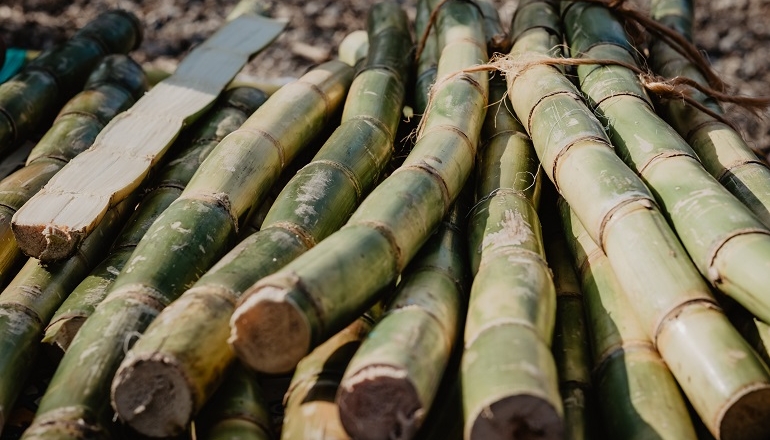
The charcoal-like substance has enormous potential to remove CO2, but more research and new accounting methodologies are needed, writes Deng Xu.
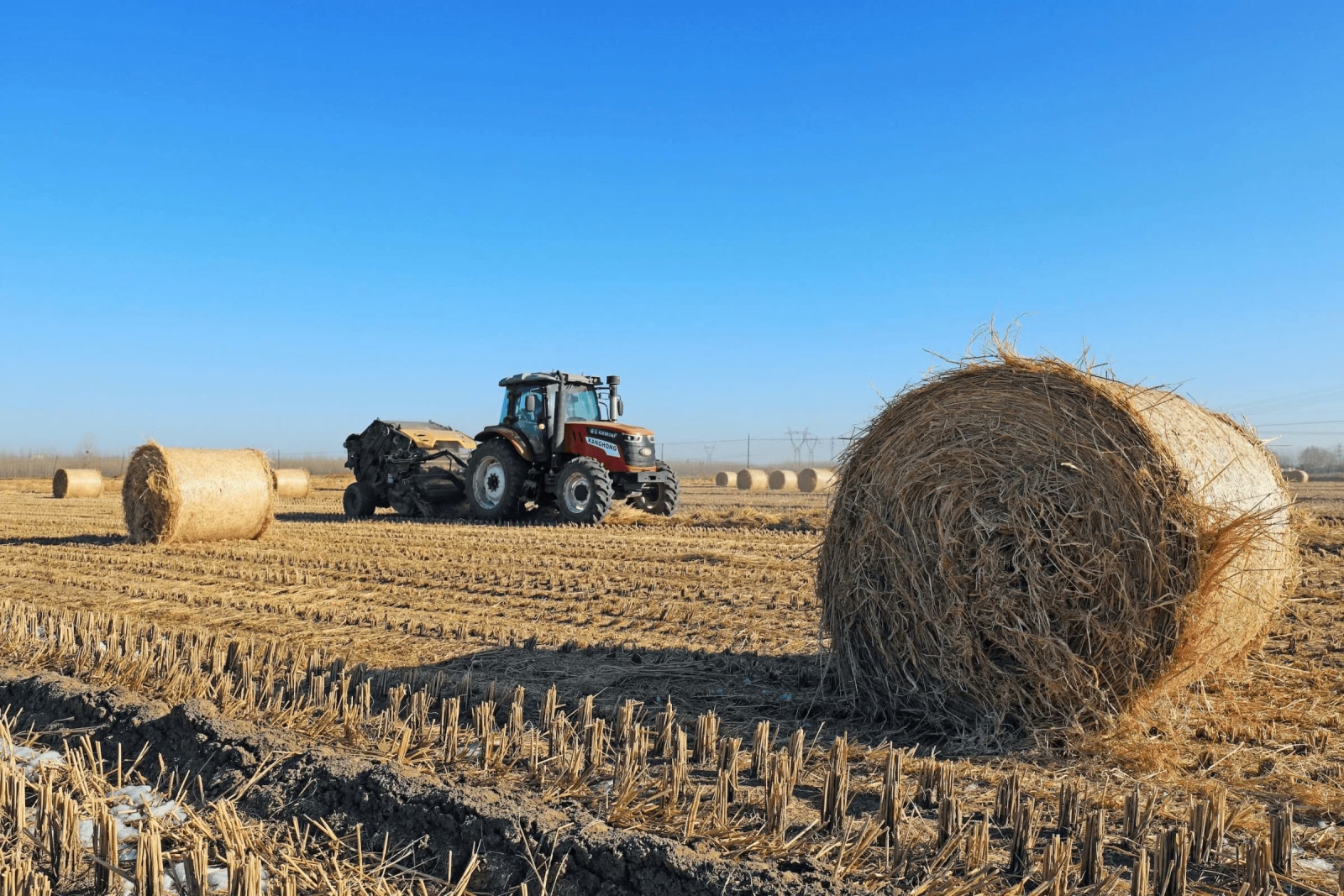
A farmer creates bales from leftover straw following the harvest in north China’s Hebei province. Biochar made from agricultural residues like this is a mature technology that could help remove CO2 from the atmosphere (Image: Yongxin Zhang / Alamy)
For China and the world to achieve carbon neutrality will require both a steep reduction in “anthropogenic”, or human-caused, CO2 emissions and the removal of CO2 from the atmosphere. In pursuit of the latter goal, national climate change action plans are increasingly reliant on “negative-emission technologies”.
Some of these techniques to remove CO2 rely on chemical processes, such as direct air carbon capture and storage (DACCS) and enhanced weathering. The others use biomass, meaning matter from recently living organisms. They include afforestation, bioenergy with carbon capture and storage (BECCS), and biochar.
Biochar is a product similar to charcoal, produced by slowly heating biomass at high temperatures in the absence of oxygen. As it is rich in carbon and can be kept for centuries without degrading much, biochar is a promising, and mature, negative-emissions technology.
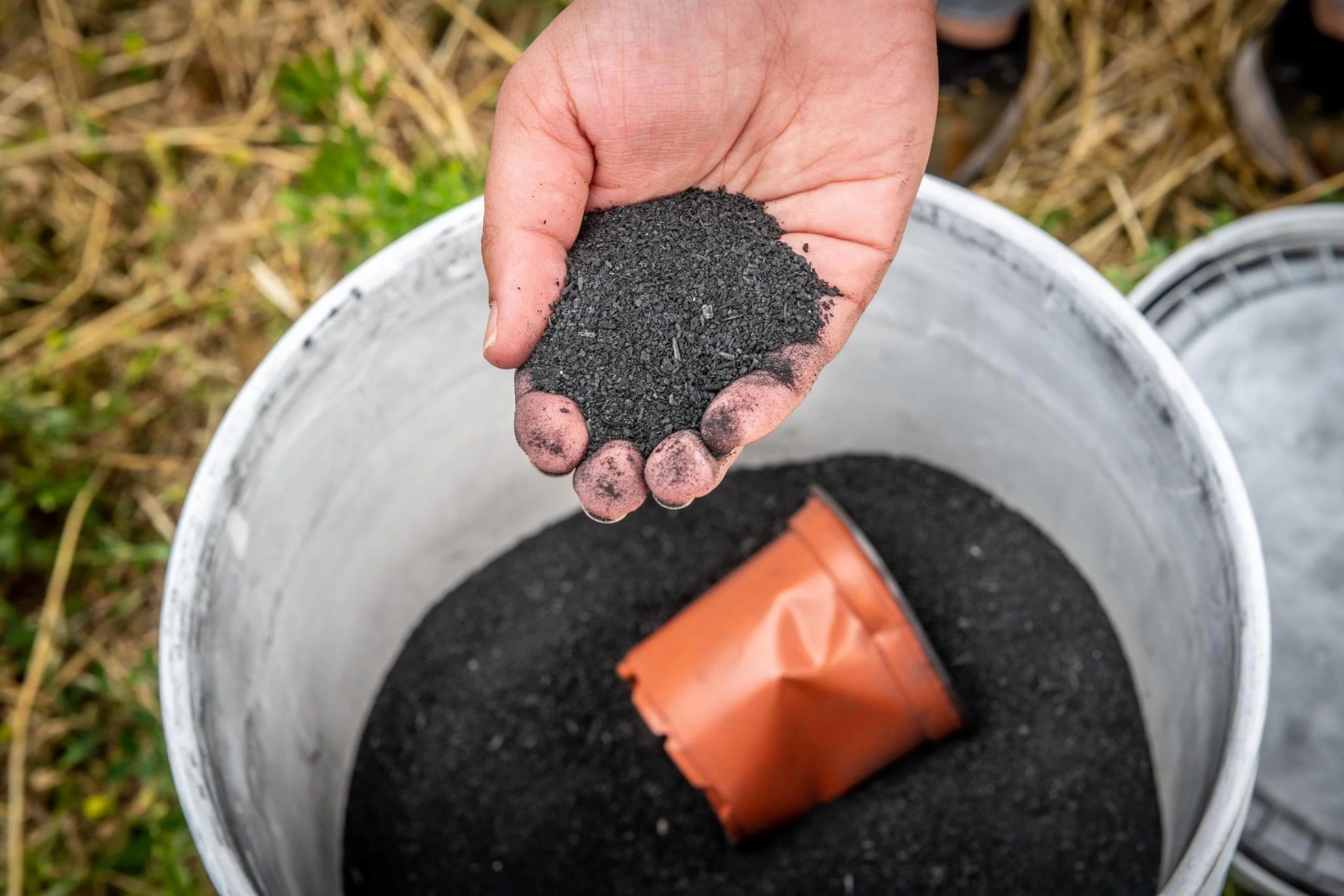
Industrially produced biochar used as a soil improver (Image: Edwin Remsberg / Alamy)
In 2019, the UN’s climate science body, the Intergovernmental Panel on Climate Change (IPCC), produced its special report on global warming of 1.5°C . It found that, to stay within 1.5°C , humanity must remove somewhere in the range of 100 billion to 1,000 billion tonnes of CO2 from the atmosphere between now and 2100.
In China, negative-emission technologies are critical if the country is to meet its “dual carbon” goals of peaking its carbon emissions by 2030, then reaching carbon neutrality by 2060. Projections indicate a median annual requirement for CO2 removal in China of about 1 billion tonnes between 2050 and 2060, with the high end reaching around 2.9 billion tonnes. That is equivalent to 10-27% of China’s current energy-related carbon emissions.
In 2022, the Ministry of Science and Technology issued a notice expressing the need to improve national negative-emission capabilities, such as through carbon capture, utilisation and storage (CCUS) and “green carbon sinks”.