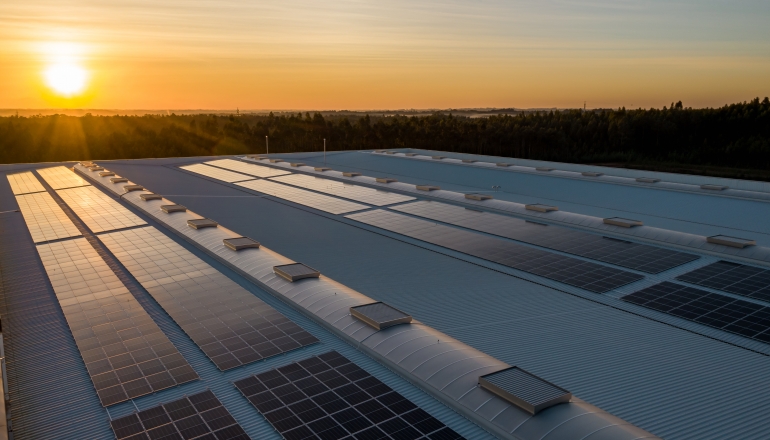
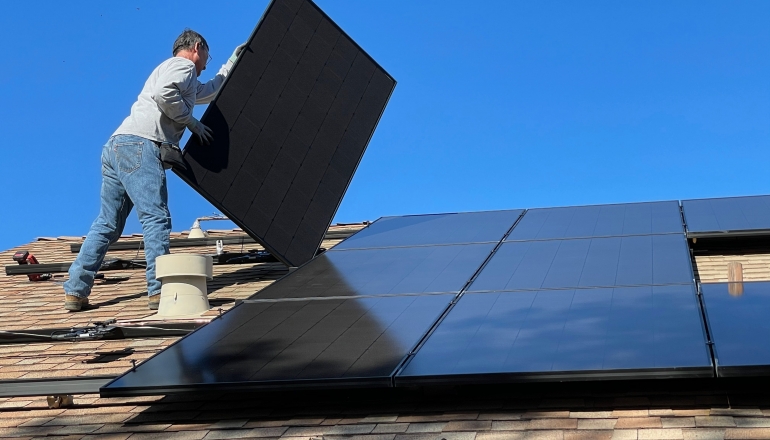
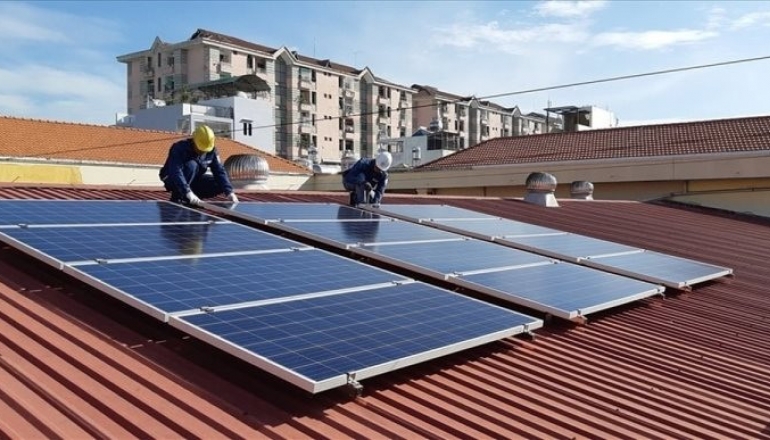
Taiwan’s Legislative Yuan passed a draft amendment to the Renewable Energy Development Act in 2023, requiring new buildings, expanded, or altered construction that meet certain conditions to install rooftop solar panels with a specific capacity to boost renewables.
While the draft amendment could drive Taiwan's solar energy generation, it presents a problem for rooftop gardening, as the current crystalline solar panels obstruct the sunlight necessary for plants and affect their growth, putting homeowners in a dilemma between installing solar panels and rooftop gardening.
How can solar energy and plants thrive together while increasing rooftop utilization? The answer lies in the organic photovoltaic (OPV) installations.
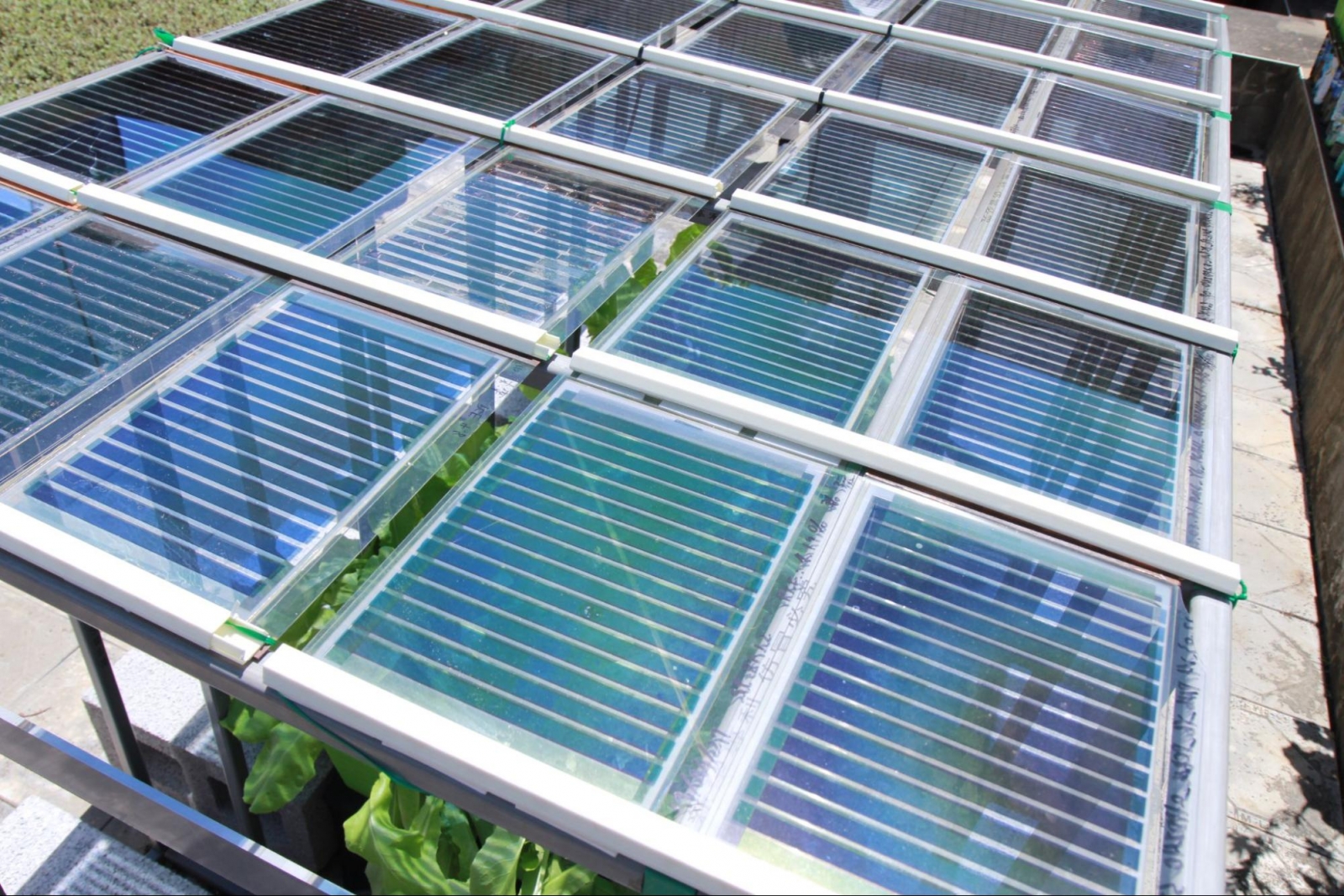
According to Professor Meng Hsin-fei (孟心飛) at the Institute of Physics of the National Yang Ming Chiao Tung University (NYCU), traditional crystalline solar panels are like thick slices of toast, with strong shading properties and an inability to transmit light. Organic solar panels, on the other hand, have a transmittance of around 10-30%. While OPV’s generation efficiency is not comparable to that of crystalline ones, it offers value-added utilization of composite land use.