RECCESSARY’s “ASEAN Weekly” highlights Southeast Asia’s new energy and carbon market updates. (Image: RECCESSARY)
This week in ASEAN sustainability developments unfolded amid rising energy security pressures across the region. The ASEAN Summit was held in a scaled-back format due to the Middle East energy crisis with member states accelerating cooperation on the ASEAN Power Grid and petroleum security. Meanwhile Jakarta expanded its electric bus rollout and waste-to-energy strategy while Vietnam’s carbon market continued its shift toward commercialization. Below are ASEAN’s key stories from May 4–10.
Energy crisis forces lean ASEAN Summit, accelerates regional power and oil cooperation
ASEAN member states convened their ministerial and leaders’ meetings this year in Cebu, Philippines, where economic ministers pledged to continue advancing the ASEAN Power Grid (APG), including accelerating the development of a regulatory framework for submarine cables.
As the rotating chair, the Philippines also pushed to operationalize the ASEAN Petroleum Security Agreement (APSA), aiming to jointly address the energy crisis triggered by ongoing Middle East conflicts. Read more here
.jpg)
ASEAN foreign and economic ministers met ahead of the leaders’ summit to build consensus. (Photo: ASEAN Philippines 2026)
Middle East conflict fuels Malaysia demand for portable solar, sending prices up 20%
The conflict in the Middle East has translated into buying behavior in Malaysia. Since February, prices for portable solar power stations have risen by around 20%, as households hedge against potential power disruptions and rising electricity costs.
Portable solar stations combine the convenience of a power bank with the self-sufficiency of a traditional generator, drawing energy from solar panels. Unlike diesel generators, they can continue operating without reliance on fuel supply, allowing them to generate power even when other energy sources are unavailable. Read more here
Vietnam pushes rooftop solar adoption as new directive gains early traction
Vietnam’s rooftop solar policy is drawing a positive response, with industrial users, businesses and households all reporting tangible benefits. A machinery manufacturer said the scheme has significantly increased its renewable energy share, while a hotel operator is exploring installation to enhance energy independence and reduce long-term electricity expenses. For households, daytime electricity bills have fallen noticeably.
Energy expert Ha Dang Son noted that rooftop solar offers relatively short payback periods, making it well aligned with Vietnam’s current policy direction. Read more here
Jakarta to tackle pollution with 10,000 electric buses, new waste-to-energy plants
Indonesia’s megacity Jakarta is stepping up efforts to curb environmental pollution while expanding the deployment of low-carbon technologies.
Governor Pramono Anung announced on May 4 that the city plans to procure 10,000 electric buses by 2030 to reduce transport-related air pollution. The administration has also signed a cooperation agreement with sovereign wealth fund Danantara to build two new waste-to-energy plants, alongside stricter enforcement of waste sorting rules — with violations potentially punishable by up to three months in jail. Read more here
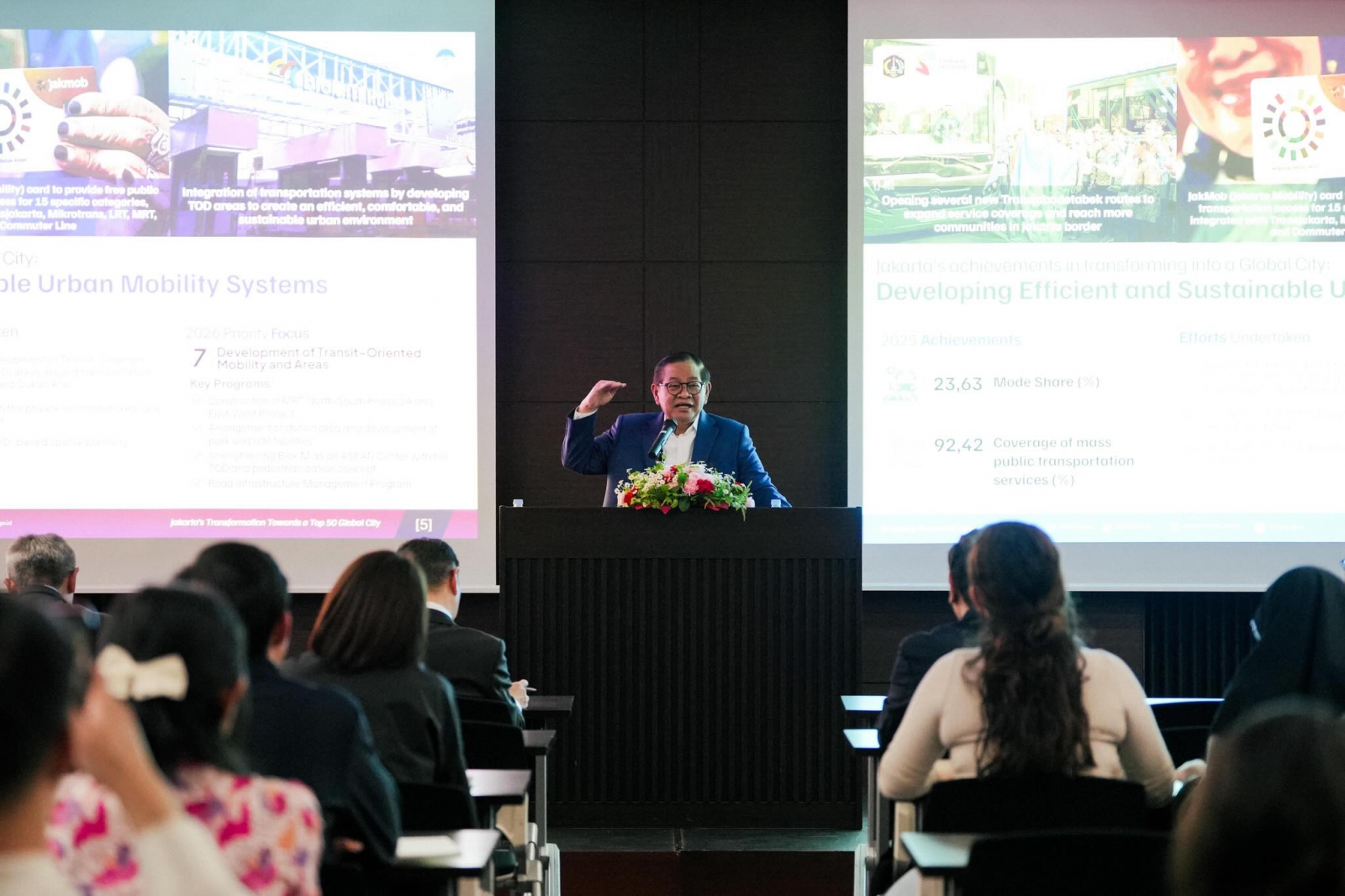
Pramono Anung announced plans to expand electric bus procurement and build waste-to-energy plants in Jakarta. (Photo: Pramono Anung's facebook)
Nuclear revival in Southeast Asia: How Vietnam and the Philippines differ on constraints
After nearly a decade on pause, nuclear power is re-entering Southeast Asia’s energy planning with clearer policy backing and institutional momentum.
At a May 5 webinar hosted by the ISEAS–Yusof Ishak Institute, experts highlighted that although Vietnam and the Philippines both seek nuclear power to decarbonize their grids, their focus remains distinct. Vietnam is moving ahead with financing and project execution, while the Philippines is still building the institutional foundations needed to support deployment. Read more here
Vietnam leads Southeast Asia in carbon projects but faces scaling challenges, experts say
As Vietnam’s carbon market gradually shifts toward commercialization, experts from the Climate Impact X (CIX) warn that demand for high-quality carbon credits will continue to rise, urging developers to align with the global shift toward carbon removal credits.
Meanwhile, Verra advises companies to collaborate with technology partners and conduct robust feasibility studies to better assess financial viability and mitigate investment risks. Read more here
Southeast Asia must decisively decouple from fossil fuels, starting with transport
As the Iran war crunches global energy supplies and disrupts prices, Southeast Asian leaders may need to diversify oil and gas supplies in order to protect ordinary people.
However, they must also look beyond short-term remedies and seek to get their countries off the fossil fuel rollercoaster. As well as building out renewable energy generation and modernising the grid so it can handle the new power, the region should be more prudent about importing gas and turbocharge electric vehicle (EV) adoption. Read more here
Track ASEAN energy and carbon markets with clarity. Subscribe to RECCESSARY for policy intelligence and business-ready insights across Asia-Pacific.