RECCESSARY’s “ASEAN Weekly” highlights Southeast Asia’s new energy and carbon market updates. (Image: RECCESSARY)
This week in ASEAN, energy transition remained in focus as the Bonn climate talks highlighted a push for a global electrification target ahead of COP31, raising attention on ASEAN’s grid development and renewable energy investment needs. Meanwhile, Malaysia and South Korea signed a letter of intent (LOI) to develop a bio-CNG project that will convert palm oil waste into renewable gas, marking a step toward expanding Southeast Asia’s bioenergy potential. Below are ASEAN’s key stories from June 22–28.
Malaysia, South Korea launch $169 million bio-CNG plan using palm oil waste
Malaysia and South Korea have signed a letter of intent (LOI) to develop a bio-compressed natural gas (bio-CNG) project that will convert palm oil waste into renewable gas. The facility is the first project in a proposed MYR 700 million (USD 169 million) investment pipeline targeting more than 20 biogas upgrading plants across Malaysia.
Bio-CNG is produced by purifying and compressing biogas to increase methane concentrations to typically between 92% and 98%. In this project, the feedstock is POME (Palm Oil Mill Effluent), the liquid by-product generated during palm oil milling. Read more here
Singapore’s energy transition hinges on imported power, emerging technologies: experts
Singapore’s long-term decarbonization plans increasingly depend on imported electricity and a suite of emerging low-carbon technologies. But according to Aurora Energy Research, many of the commercial, regulatory, and technical conditions needed to support that transition are still evolving.
During a June 24 webinar on Singapore’s power market outlook, Aurora analysts pointed to several uncertainties that could shape the pace and economics of the country’s transition, including prolonged gas market disruptions, financing challenges for import projects, and questions around the commercial readiness of alternative power technologies. Read more here
Bonn talks: Why COP31’s electrification target matters for ASEAN energy markets
Two weeks of UN climate talks in Bonn ended on June 18 with few concrete outcomes on adaptation finance, emissions reductions, and climate science.
Yet amid the deadlock, one proposal emerged as the defining signal ahead of COP31 in Antalya, Turkey, this November with a push to increase electricity’s share of global final energy consumption from just over 20% today to 35% by 2035. Read more here
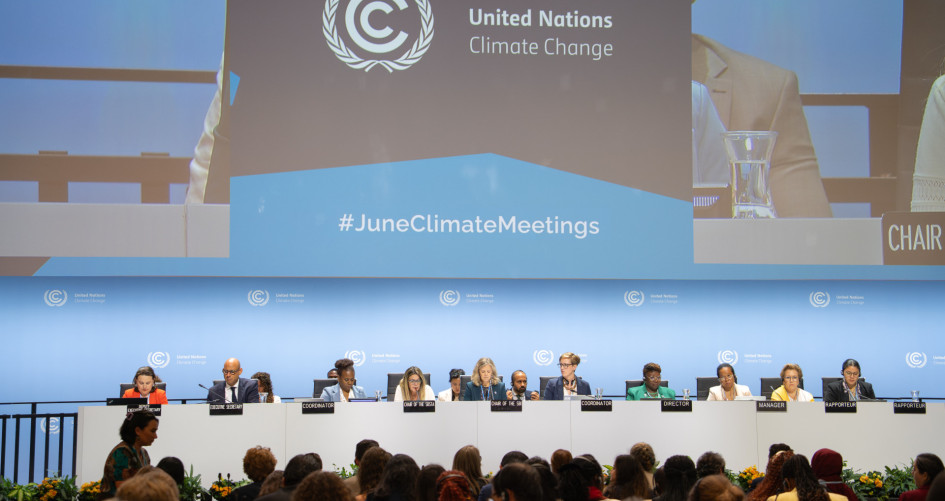
The Bonn climate talks ended with little progress on adaptation finance and emissions cuts, but COP31 has put forward a new target to raise electricity's share of global final energy demand to 35% by 2035. (Photo: Lara Murillo / UN Climate Change)
Prabowo’s nickel state: Indonesia’s search for power
President Prabowo Subianto is trying to convert Indonesia’s nickel dominance into state power. While Joko Widodo’s decade (2014-2024) forced ore onshore and built the processing base, Prabowo now governs the industry that downstreaming created, tightening control across nearly every lever the state holds. Indonesia is a nickel state in formation, leveraging mineral rents the way petrostates leverage hydrocarbons. Mining and quarrying contributed close to 9 per cent of GDP and 17 per cent of export value in 2025. Read more here
How Indonesia, Malaysia can turn energy security responses into long-term resilience
The Strait of Hormuz has reopened. Over the past few months, Southeast Asian governments have expanded fuel subsidies, accelerated biofuel policies, and introduced other measures to cushion consumers from higher energy prices.
Experts at an ISEAS-Yusof Ishak Institute webinar said the episode also exposed the region’s continued dependence on imported fossil fuels and underscored the need for longer-term structural reforms to strengthen energy security. Read more here
.jpg)
The energy crisis prompted Indonesia and Malaysia to expand solar power, highlighting that even major energy producers are exposed to supply disruptions and price swings. (Photo: Pixabay)
Foxconn’s Vietnam operations to need 1.4 billion kWh of green power by 2030, environmental chief outlines four pathways
In recent months, Foxconn has expanded its involvement in nature-based solutions (NbS) projects and announced plans with Canadian investment firm Brookfield to jointly develop 1 GW of renewable energy capacity in Vietnam, strengthening the resilience and competitiveness of its green supply chain.
In a written interview with RECCESSARY, Foxconn Chief Environmental Officer Ron Horng (洪榮聰) said the company expects annual renewable electricity demand across its Vietnam operations to reach around 1.4 billion kWh by 2030 as manufacturing capacity continues to expand. To meet that demand, Foxconn plans to accelerate the development of a diversified renewable energy portfolio. Read more here
Thailand’s biggest power price reform in two decades: A closer look at new tariff structure
Thailand is preparing for its first major overhaul of residential electricity tariffs in more than 20 years. Spearheaded by Energy Minister Akanat Promphan, the reform is built around a simple principle: households that consume less electricity will pay less, while those with higher consumption will face higher rates.
The government aims to ease the burden on ordinary consumers amid volatile global energy markets, while widening the price gap between consumption tiers to encourage energy efficiency and improve the economics of renewable energy technologies such as rooftop solar. The new tariff structure is expected to take effect in June. Read more here
From 100% renewable electricity to product carbon footprints, Wistron’s roadmap for low carbon manufacturing in Vietnam
Vietnam’s electronics industry plays a pivotal role in global supply chains. In 2025, electronics exports accounted for more than 35% of the country’s total exports, reaching a record USD 165 billion. The figure is expected to climb to USD 200 billion in 2026, reinforcing the sector’s position as a key driver of economic growth and job creation.
Electronics manufacturing services provider Wistron established its Vietnam production base in 2019, where it manufactures laptops, desktop computers, and servers. The site has already achieved 100% renewable electricity use. As Vietnam’s renewable energy market continues to mature, Wistron plans to increase the share of electricity sourced through direct procurement mechanisms while expanding the application of its product carbon footprint system across more product lines, supporting its goal of achieving carbon neutrality in operations by 2030. Read more here
Track ASEAN energy and carbon markets with clarity. Subscribe to RECCESSARY for policy intelligence and business-ready insights across Asia-Pacific.