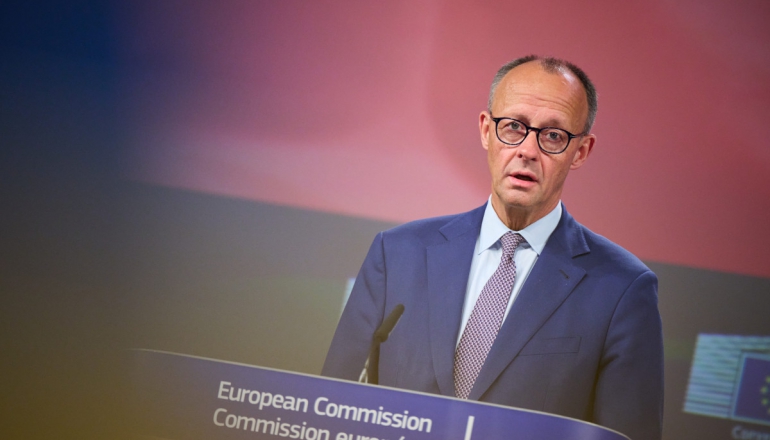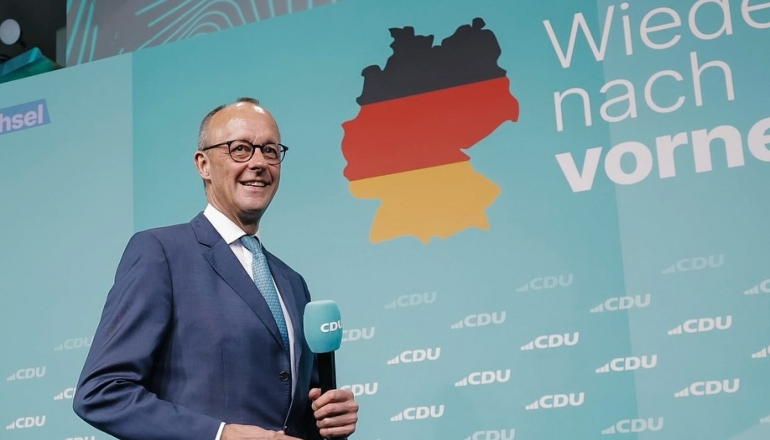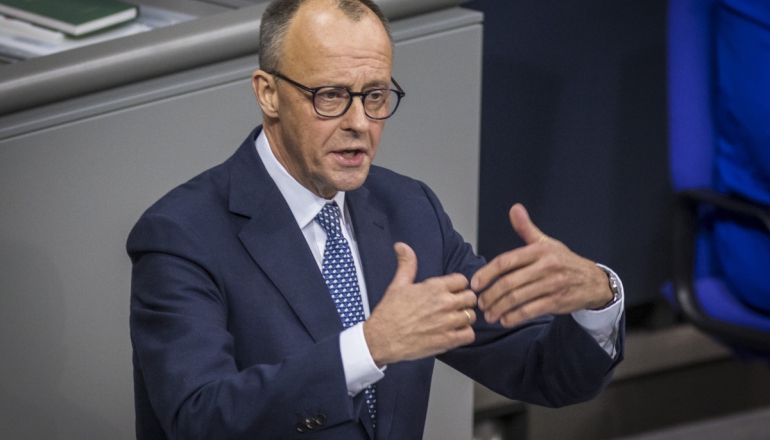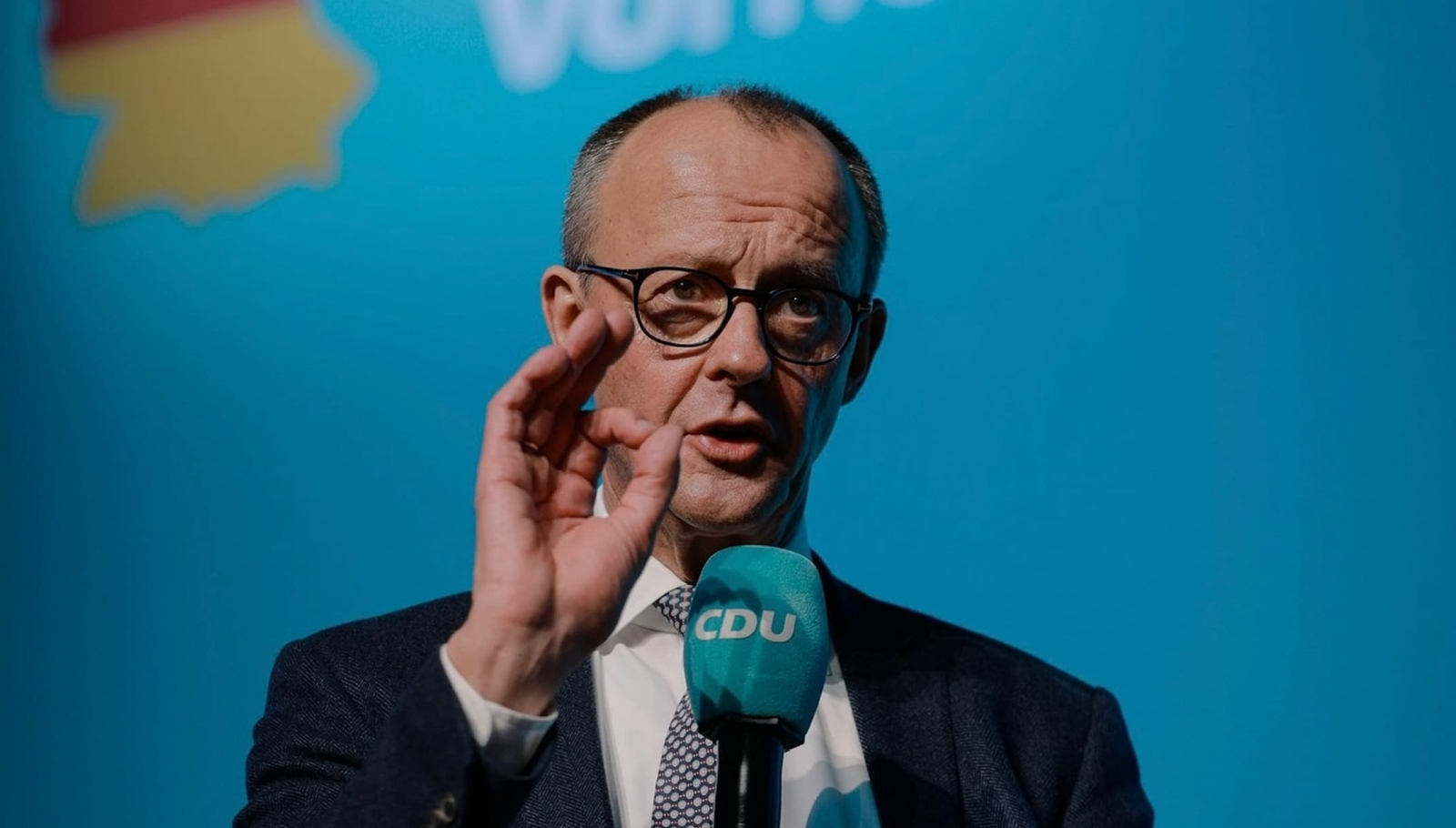
Germany's likely next chancellor, Friedrich Merz, has pledged to revive the country’s industrial competitiveness by deprioritizing climate policies.
Photo: Friedrich Merz's Facebook
The conservative CDU leader Friedrich Merz is widely tipped to become Germany’s next chancellor – but remains ambiguous on a range of policy fields, notably on energy and climate. Despite being known as a senior policymaker for decades, Merz’s long stint in the private sector not only sets him apart from previous chancellor candidates but also raises a range of questions regarding his priorities as head of government.
Many voters regard Merz’s experience in the corporate world as an asset during a difficult time for the German economy. Others are worried that climate action could slide down on the agenda, as the conservative leader seeks to distance himself from the previous centre-left government and its decarbonisation focus. But many industry leaders still are in the dark what Merz plans to do on energy and climate instead.
After losing its place in the German government in 2021, Germany’s conservative Christian Democratic Union (CDU) is poised to regain its leading position in the country’s politics and form the next coalition government. Less than a full term after the last elections – and just about a week before the snap elections on 23 February that followed on the collapse of the coalition government of chancellor Olaf Scholz’s Social Democrats (SPD), the Green Party and the pro-business Free Democrats (FDP) – the CDU is enjoying a comfortable lead in polls. The party is widely expected to win the election, with the choice of its future coalition partner seemingly the most important open question left to be answered at the ballot.
But the CDU of 2025 is no longer the same that Germans voted out at the previous election after 16 years in power. Its new leader, Friedrich Merz, took over in 2022 after losing out in two previous internal leadership bids against candidates seen as supporters of long-term CDU chancellor Angela Merkel’s liberal-centrist approach to government. Despite overseeing the CDU’s return to the top of national polls, Merz himself remains shrouded in mystery for many voters – not least with respect to his approach on Germany’s future energy and climate policy.
During the election campaign, Merz so far said he dislikes the appearance of wind turbines and hoped they could be replaced by something else one day, and insisted that his government would repeal Building Energy Law that the outgoing government adopted to comply with EU climate targets. He repeatedly said he regretted Germany’s nuclear exit – while admitting that a return is less likely than ever.
However, the CDU’s election manifesto remained steadfast on the energy transition: “We will consistently use renewable energies, all of them.” In his personal newsletter, Merz in early 2025 stressed that “we stand by the Paris Climate Agreement and our ambitious climate targets” but added that this should be achieved “with intelligent solutions, not ideological ones.”
“Climate policy is probably not something that is close to Mr Merz’s heart”
So, what kind of solutions to one of the greatest challenges is the leader of Germany’s prospective next government looking for?
“Climate policy is probably not something that is close to Mr Merz’s heart,” Ursula Heinen-Esser, a former member of parliament for the CDU, told Clean Energy Wire.
Like Merz, Heinen-Esser hails from the party’s largest subnational grouping in the western state of North Rhine-Westphalia and together with him served as an MP in Berlin since 1998. “But he clearly sees the need for action,” she added, arguing that the party leader favours creating incentives and using market-based instruments instead of regulation and planned phase-outs of technologies to achieve decarbonisation targets. However, a majority of 51 percent of German citizens asked by environmental NGO BUND doubted Merz’s ability to craft a successful climate policy as chancellor.