RECCESSARY maps out ten key issues in Southeast Asia’s energy and carbon markets.(Image: RECCESSARY)
With the European Union’s Carbon Border Adjustment Mechanism (CBAM) entering into force and electricity demand from data centers rising rapidly, ASEAN is approaching a critical inflection point in its sustainability transition in 2026. As carbon pricing frameworks advance alongside energy transformation, investment flows and industrial competitiveness across the region are being reshaped. RECCESSARY maps out ten key issues in Southeast Asia’s energy and carbon markets, offering readers a clear view of the year’s defining trends and the evolving global landscape.
1.EU’s CBAM set to bite as low ASEAN carbon prices offer little relief
The European Union’s Carbon Border Adjustment Mechanism (CBAM) is set to take effect in 2026, requiring companies to calculate the embedded carbon emissions of covered products, account for free allowances under the EU Emissions Trading System (ETS), and factor in carbon prices in the country of origin.
According to Andrew Hammond, a research associate at LSE IDEAS, a foreign policy think tank at the London School of Economics, exporters, including those from ASEAN countries, are already adjusting their business strategies as carbon management becomes an integral part of corporate decision-making. The shift is expected to pose a particularly significant challenge for small and medium-sized enterprises.
BloombergNEF (BNEF) notes that as the EU’s third-largest trading partner, ASEAN cannot avoid the impact of CBAM. While the mechanism formally targets EU importers, Southeast Asian manufacturers will also need to accelerate emissions reductions to remain competitive. Failure to do so could erode product competitiveness and weigh on overall export performance.
Analysts caution that carbon prices across Southeast Asia remain substantially lower than those under the EU ETS and are also expected to stay below CBAM certificate prices. Whether it is Thailand’s carbon levy of 200 baht per tonne on petroleum products (about USD 6.34) or Singapore’s carbon tax, which is set to rise to as much as SGD 80 per tonne (about USD 62), the price gap means offset credits will provide only marginal relief. Exporters are therefore likely to face significant additional costs under CBAM. Read more here
2.Data centers’ growing energy use drives the rise of PPAs,DPPAs
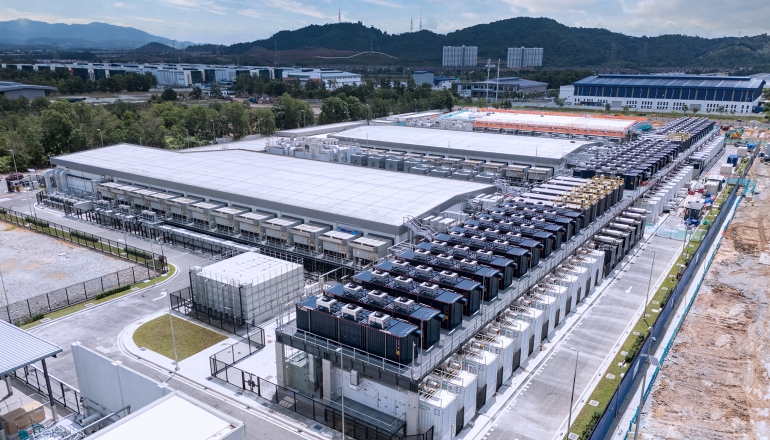
Asia-Pacific is on track to become the world’s largest data center market, surpassing North America before 2030. The rapid growth of data centers, driven by AI and semiconductor expansion, is putting unprecedented pressure on power grids across Southeast Asia. In Thailand, regulators have responded by approving a 2 GW Direct Power Purchase Agreement (DPPA) pilot specifically targeting data centers, set to launch in January 2026, allowing eligible operators to procure renewable electricity directly from generators.
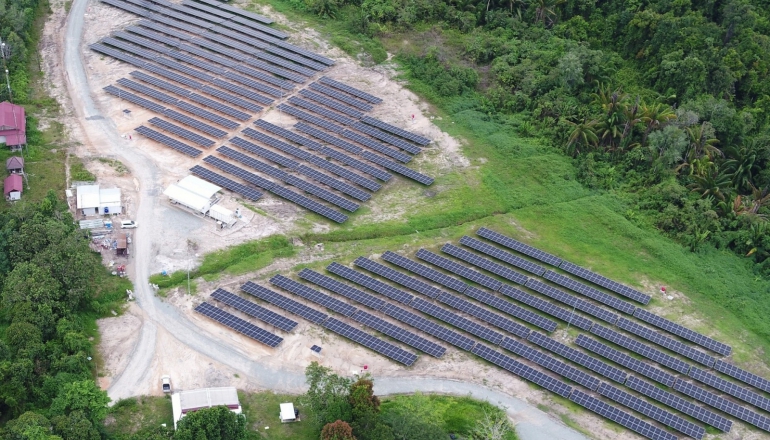
In Malaysia, Google has signed a solar PPA with Shizen Energy under the Corporate Green Power Programme, covering a 29.9 MW solar project to supply electricity to its regional data center operations. The agreement enables Google to source renewable energy beyond standard grid supply, addressing both rising power demand and Scope 2 emissions exposure.
As data center buildout accelerates, DPPA and PPA arrangements are expected to increase across Southeast Asia in 2026, providing operators with a way to secure renewable electricity beyond traditional utility supply. For power developers and policymakers, data centers are emerging as anchor offtakers that can accelerate renewable buildout while testing more flexible electricity market designs. Read more here
3.Wind power slows in the West as Asia eyes renewed growth by 2026
Policy headwinds from the United States under President Donald Trump, combined with underwhelming onshore and offshore wind auction results across Europe, have added further strain to an already embattled wind power sector. Several projects in Germany and Denmark have even failed to attract any bidders, compounding the challenges facing an industry grappling with surging costs and mounting financial pressure.
Looking ahead to 2026, however, Asia appears to offer a tentative path to recovery for the wind sector.In Japan, the government has revised its offshore wind policy framework and in November 2025 unveiled seven new measures, including the inclusion of offshore wind in the Long-Term Decarbonization Power Source Auction. The move is expected to improve the bankability of offshore wind projects. In a recent analysis, the Institute for Energy Economics and Financial Analysis (IEEFA) said the Japanese market remains promising over the medium to long term.
Elsewhere in Southeast Asia, Vietnam’s conglomerate Vingroup has secured two landmark offshore wind development projects in Ha Tinh province, with total investment reaching VND 39 trillion (about USD 1.5 billion), marking a potential turning point for the country’s wind power sector. Malaysia, meanwhile, is preparing to launch its first utility-scale wind power project, with a planned capacity of up to 100 MW, to be located in Kudat in northern Sabah. Read more here
4.Battery integration is improving solar economics across Southeast Asia
Solar project economics in Southeast Asia are improving as battery costs fall and storage becomes increasingly viable as part of utility-scale and commercial projects. Solar project profitability in Southeast Asia rose by 9%, driven in part by the integration of battery energy storage systems that allow solar generation to better match demand and mitigate curtailment risks.
Energy think tank Ember analysis indicates that battery prices have declined to a level where dispatchable solar is now economically feasible, fundamentally changing how solar assets are valued in power markets. Ember also highlights how countries such as Vietnam, the Philippines, and Indonesia are moving from emissions-intensive power systems toward becoming renewable investment hotspots, supported by policy reforms and growing interest in hybrid solar-plus-storage projects.
Rather than viewing storage as an optional add-on, developers and investors are increasingly treating batteries as a core component of solar project design. This shift has implications for power pricing, grid planning, and procurement strategies, as dispatchable solar begins to compete more directly with conventional generation while supporting higher renewable penetration across ASEAN power systems. Read more here
5.Vietnam to enforce stricter vehicle emissions standards
Vietnam will tighten vehicle emissions standards starting March 2026. Cars produced between 2017 and 2021 must meet Euro 3 standards, while vehicles manufactured from 2022 onward must comply with the stricter Euro 4 norms. Under EU regulations, higher Euro standards correspond to more stringent limits on pollutants, including carbon monoxide, nitrogen oxides, and hydrocarbons.
To improve air quality, the Vietnamese government is encouraging vehicle owners to replace older models and use higher-standard fuels, while actively promoting green transportation. Both Ho Chi Minh City and Hanoi aim to achieve low-carbon mobility by 2030, requiring all public buses to run on electricity or other clean energy sources.
Hanoi, in particular, has faced deteriorating air quality. In March 2025, PM2.5 levels briefly surpassed those of New Delhi, ranking the city among the world’s most polluted. In response, city authorities plan to ban gasoline-powered motorcycles from the downtown area starting July 2026, with intentions to gradually expand low-emission zones in the following years. Read more here
6.Malaysia rolls out carbon tax, targeting steel, cement, and energy sectors first
Malaysia prepares to introduce a carbon tax in 2026. Under Budget 2026, the government reaffirmed its commitment to economy-wide decarbonization while confirming that a carbon tax framework will be implemented starting in 2026, initially targeting steel, cement and energy sectors. Other industries are likely to face short-term supply chain cost pressures and will need to prepare for potential inclusion in future phases of the carbon tax.
At the same time, Malaysia has unveiled a Steel Industry Decarbonization Roadmap toward 2050, positioning one of its most emissions-intensive sectors at the center of the transition. The steel roadmap outlines a phased approach, focusing first on improving energy efficiency and increasing the use of cleaner electricity, before gradually adopting advanced technologies such as green hydrogen and carbon capture as they become commercially viable.
Malaysia also aims to promote regional coordination by establishing an ASEAN steel capacity and utilization database and developing a regional decarbonization framework, including full monitoring, reporting, and verification (MRV) systems and environmental product declarations (EPDs). Read more here
7.Indonesia to halt diesel imports as biodiesel capacity expands
Indonesia, the world’s largest producer and exporter of palm oil, is accelerating its push toward higher biofuel blending by promoting B50 biodiesel, which contains up to 50% palm oil. The government plans to stop diesel imports in 2026, with B50 targeted for rollout in the second half of the year.
The Ministry of Energy and Mineral Resources (ESDM) has said the biodiesel program helps curb fuel imports while increasing domestic palm oil utilization. Between 2020 and 2025, the policy is estimated to have saved Indonesia IDR 673.73 trillion (around USD 40.7 billion) in foreign exchange, underscoring its macroeconomic impact alongside energy security benefits.
Despite these gains, scaling up B50 presents structural challenges, including limited biodiesel production capacity and uneven infrastructure distribution. ESDM estimates that full B50 implementation would require 19.7 billion liters of biodiesel annually. In response, state-owned energy company Pertamina is upgrading its refineries, with the Balikpapan Refinery Development Master Plan (RDMP) standing out as one of the country’s largest downstream energy investments. Once completed, the refinery’s processing capacity is expected to rise by 100,000 barrels per day to 360,000 barrels per day. Read more here
8.China expands role in ASEAN Power Grid, with geopolitics shaping investment decisions
The ASEAN Power Grid (APG) aims to interconnect electricity systems across Southeast Asia by 2045, enabling multilateral power trading to strengthen energy security, resilience, and progress toward net-zero targets. In October 2025, all ten ASEAN member states endorsed the ASEAN Plan of Action for Energy Cooperation (APAEC) 2026–2030, which places grid interconnection and energy security at the core of regional energy policy.
Realizing high shares of renewable generation across ASEAN will require substantial capital. According to assessments by the Heads of ASEAN Power Utilities/Authorities (HAPUA) and the ASEAN Centre for Energy (ACE), total investment needs for power generation and transmission could reach USD 764 billion.
This scale has drawn increasing interest from foreign investors, particularly Chinese clean energy companies active in solar, wind, nuclear, and transmission infrastructure. While opportunities are expanding, geopolitical considerations are becoming a central factor in project selection. Investors are likely to favor markets with lower geopolitical risk, clearer regulatory frameworks, and more predictable returns, shaping how and where capital flows into the ASEAN Power Grid. Read more here
9.Philippines hosts World Nuclear Supply Chain Conference to boost regional interest
Rising electricity demand driven by energy transition pressures and the expansion of AI is prompting Southeast Asian countries to explore nuclear energy as part of their long-term power strategies.
The Philippines aims to commission its first nuclear power plant by 2032. In June 2025, the Philippine Congress passed the National Nuclear Safety Act, laying the legal foundation for nuclear development. Building on this momentum, the country will host the World Nuclear Supply Chain Conference (WNSC 2026) in May 2026, positioning itself to tap into a rapidly expanding global nuclear supply chain.
The Philippines, Singapore, and Malaysia have all signed the 123 Agreements with the United States, enabling cooperation on nuclear technology, materials, and equipment under strict non-proliferation safeguards. Malaysia is also considering nuclear power as a potential electricity source for data centers to reduce reliance on fossil fuels. However, domestic political dynamics and environmental regulations will play a critical role in determining how quickly such plans progress. Read more here
10.COP31 positions Australia as a bridge between ASEAN and global climate diplomacy
Australia’s bid to host COP31 in partnership with Türkiye is reshaping its role in regional and global climate diplomacy, creating scope to deepen engagement with ASEAN and Pacific partners on climate finance, adaptation, and energy transition pathways.
In July 2025, it launched the Joint Statement on ASEAN and Australia’s Shared Future, backed by concrete financial support totalling around AUD 704 million (approximately USD 472 million), part of which will be directed toward facilitating energy transition and sustainable development.
According to WWF Australia, hosting the climate summit would give Australia a platform to elevate issues critical to climate-vulnerable regions, including climate resilience, loss and damage, and the delivery of long-standing climate finance commitments.
For ASEAN countries, closer collaboration with Australia around COP31 could open new channels to influence global climate agendas, particularly on adaptation financing and just transition priorities. As climate impacts intensify across Southeast Asia, Australia’s COP31 ambitions will test whether major climate summits can function not only as forums for international consensus-building, but also as practical instruments for regional coordination and implementation. Read more here