RECCESSARY’s “ASEAN Weekly” highlights Southeast Asia’s new energy and carbon market updates. (Image: RECCESSARY)
This week in ASEAN, sustainability developments are shaped by accelerating energy transition policies and rising challenges in energy security. Malaysia is advancing its biofuel strategy with plans to raise the national biodiesel blending mandate to B15, and Japan has unveiled a USD 10 billion initiative at the AZEC meeting to strengthen regional energy security and supply chain resilience. Here are the key ASEAN stories from April 13 to 19.
Thailand’s data center boom hits grid ‘megawatt gap’ despite ample power supply
Thailand’s planned data center capacity has reached around 2.87 GW. The core issue is no longer whether the country can produce enough electricity, but whether it can deliver that power reliably to high-demand clusters, said Jerin Raj, senior vice president and managing director at engineering firm Black & Veatch.
He described this mismatch as a ‘megawatt gap’ between where power is generated and where it is needed, a constraint that must be addressed before Thailand can fully capitalize on investor momentum. Read more here
Malaysia ramps up biofuel transition with B15 mandate, longer-term B100 plans
To address ongoing diesel supply constraints, Malaysia is stepping up its bioenergy push, with plans to increase the national biodiesel blending mandate to 15%. The government is also evaluating the feasibility of deploying B100—100% palm-based biodiesel—following pilot projects led by the Federal Land Development Authority (FELDA).
Preliminary findings suggest that B100 production costs are significantly lower than conventional diesel, highlighting strong development potential and offering a pathway to reduce reliance on imported fuels. Read more here
Green power, supply chains, and carbon costs: Three factors to shape Vietnam and Thailand’s competitiveness through 2050
Net zero by 2050 may seem distant, but the decisions that will determine competitiveness are being made today. As carbon constraints tighten and supply chains realign, three factors are emerging as decisive filters: access to renewable energy, the depth of industrial upgrading, and the maturity of carbon markets.
Vietnam and Thailand, the region’s two leading manufacturing hubs, are advancing along these trajectories at different speeds. The way these paths converge or diverge by 2050 will shape not only their decarbonization outcomes, but also their position in the global manufacturing landscape. Read more here

Q&A: As Thailand bets on EVs, what will happen to the spent batteries?
In 2020, Thai authorities announced that they would endeavour to make Thailand a regional electric vehicle (EV) hub in just five years. True enough, by 2025, Chinese EV manufacturing companies had made the country a solid base. This was epitomised by BYD opening a 948,000 sq m plant in Rayong in July 2024, boasting an annual production capacity of 150,000 vehicles. Other Chinese brands – including Great Wall Motor, SAIC Motor, and Changan Automobile – have all found a home for manufacturing in Thailand’s Eastern Economic Corridor. Read more here
Making energy efficiency bankable: How bbp brings zero-CAPEX cooling optimization to SEA's industrial facilities
An impending seasonal heatwave is colliding with tightening energy supplies across Southeast Asia, pushing operational costs higher for corporate energy users. With fuel prices under pressure from geopolitical disruptions, facility managers are looking for near-term relief. For Boon Chye Hoe, CEO of Singapore-based bbp, the solution is already within reach. Read more here
Thailand, Taiwan align in EV supply chain as AI-defined vehicles reshape industry
The word “smart” is being applied to nearly every sector, but in automotive the shift is structural. At the International Smart Automotive Seminar in Taipei on April 15, speakers from Taiwan and Thailand outlined why closer alignment between the two economies is emerging as a key opportunity as supply chains fragment under geopolitics and electrification.
The global manufacturing system has been moving away from the cost-driven logic of “just in time” toward a resilience-focused “just in case” model built on shorter regional supply chains, a shift that has been underway since 2018, said Joseph Ng, associate analyst at Taiwan’s Institute for Information Industry (III). Read more here
Malaysia’s Solarvest accelerates project delivery, completes 108 MWp projects for Micron, NTT
Malaysian renewable energy developer Solarvest is moving to compress project timelines as renewable demand accelerates amid rising fuel costs. The company also plans to add roughly 1.3 GW of solar capacity in 2026.
Solarvest aims to bring large-scale project delivery down from 18 to 24 months to around 12 to 16 months, and is in active discussions with regulators to make that feasible, Chief Executive Officer Davis Chong told Bloomberg on Tuesday. Read more here
Japan unveils $10 billion plan to reinforce Asia’s energy security at AZEC meeting
Japan is calling for greater regional unity to confront mounting energy risks, unveiling a USD 10 billion initiative aimed at strengthening Asia’s energy resilience.
At the Asian Zero Emission Community (AZEC) leaders’ meeting on April 15, Japanese Prime Minister Sanae Takaichi announced the launch of the Partnership on Wide Energy and Resources Resilience (POWERR Asia). The initiative seeks to reinforce regional energy supply chains by expanding crude stockpiles, diversifying energy sources, and supporting industrial upgrading. Read more here
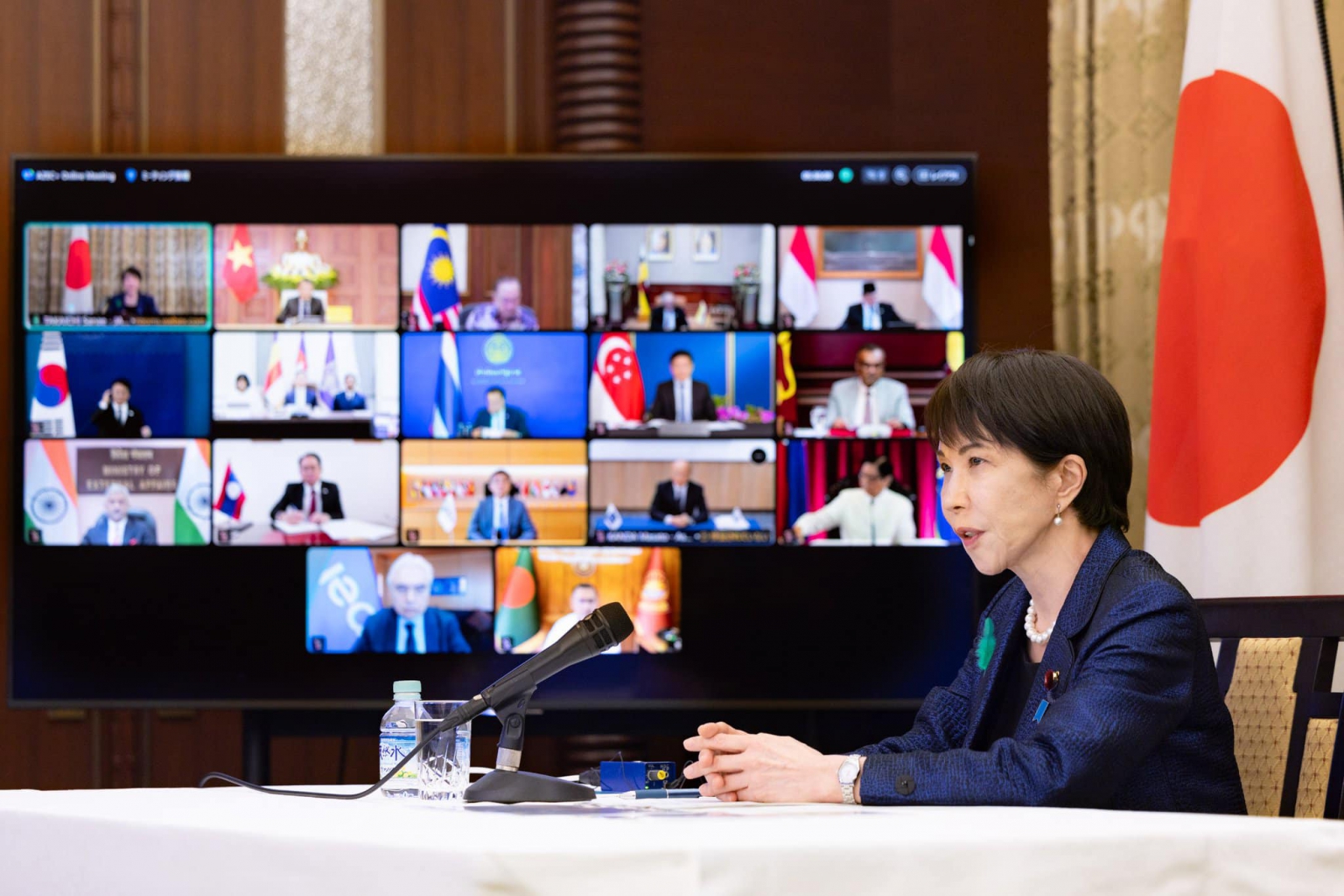
Japan-led Asian Zero Emission Community (AZEC) held a leaders’ meeting on April 15. (Photo: Sanae Takaichi’s Facebook)
Philippines sets new microgrid rules as largest rural electrification project breaks ground
The Philippines, an archipelago of 7,641 islands, is moving to close persistent electricity access gaps in remote communities, where fragmented geography limits centralized grid expansion. The government is rolling out a new microgrid regulatory framework alongside its largest-ever private rural electrification investment.
The Energy Regulatory Commission (ERC) said that the rules are expected to accelerate microgrid deployment using renewable and locally sourced energy, reducing diesel dependence and stabilizing electricity costs over time. Read more here
Vietnam’s EVN proposes deep FiT cuts to resolve $13 billion renewable dispute
Vietnam’s long-running feed-in tariff (FiT) dispute has entered a new phase, with state utility EVN proposing to apply “transitional tariffs” to renewable energy projects with controversy. Under the plan, some projects could see tariff cuts of more than 40% compared to FiT levels.
Reactions among international developers are mixed. While some expressed dissatisfaction and signaled no intention to pursue further legal action. Read more here
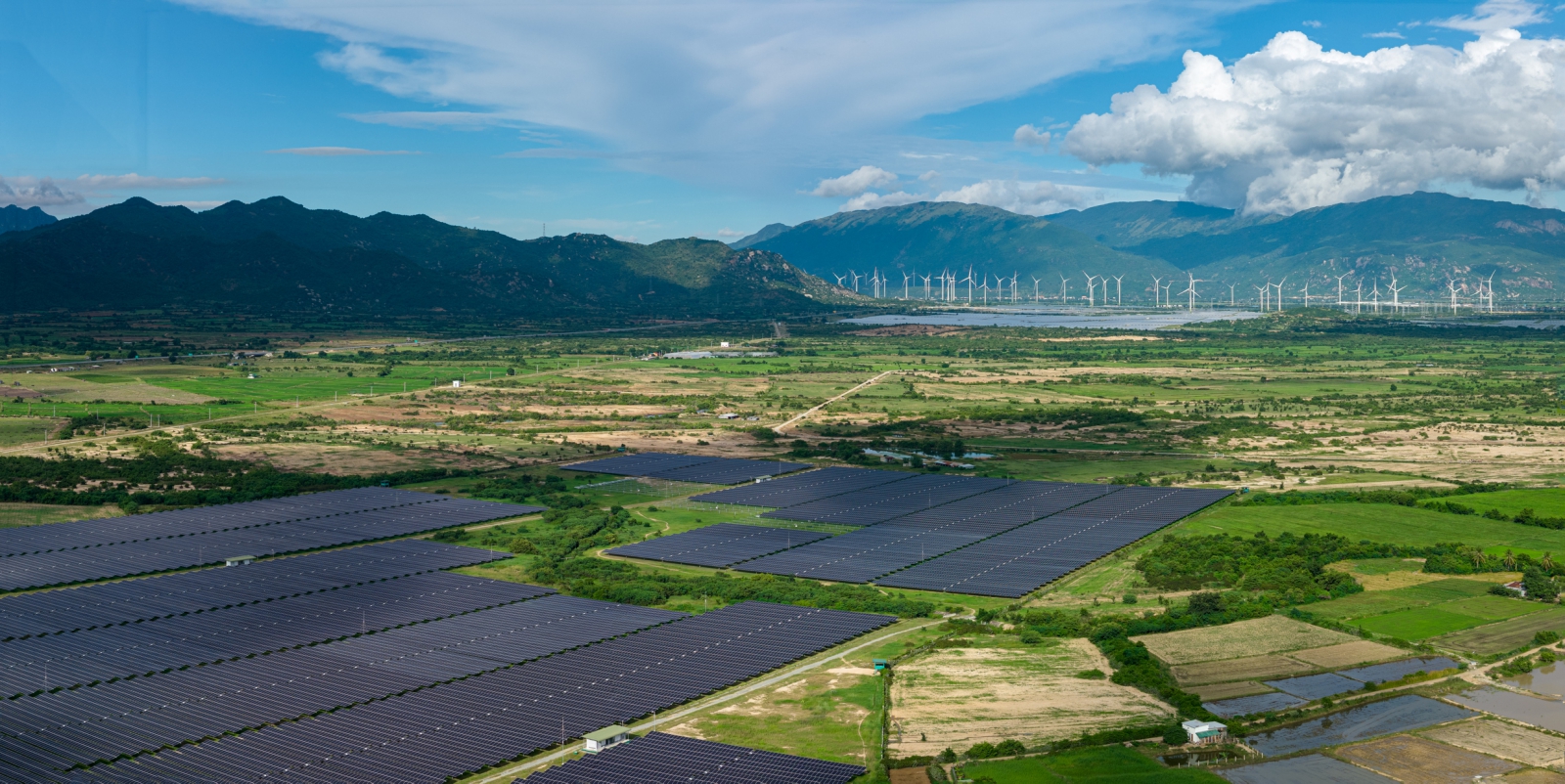
Vietnam’s state utility EVN has proposed a solution to the feed-in tariff (FiT) dispute. (Photo: iStock)
Repeated failures expose gaps in Indonesia’s nickel waste management
Indonesia is the world’s biggest producer of nickel, and its output has surged in recent years, driven by global demand for electric vehicle batteries. The country’s annual nickel production rose from 130,000 metric tons in 2015 to 2.2 million metric tons in 2024, taking the country’s share of global supply from 5.7% to 59.5% in just a decade. Indonesia’s booming nickel industry generates massive volumes of toxic waste, with dry stack or “filtered” tailings promoted as safer than the typical wet sludge, but often poorly implemented. Read more here
Indonesia braces for possible ‘Godzilla El Niño’ as fire season escalates early
Indonesia is entering the 2026 fire season with early signs of escalation, as burned area surges even before the dry season peak and forecasts raise the possibility of a so-called “Godzilla” El Niño later this year.
Burned area reached 32,637 hectares (80,650 acres) by February — about three times the size of Paris, 20 times higher than the same period last year — even before the dry season has fully set in. Scientists say this early surge could signal the start of a more intense fire season, especially as climate forecasts point to the possible return of El Niño. Read more here
Track ASEAN energy and carbon markets with clarity. Subscribe to RECCESSARY for policy intelligence and business-ready insights across Asia-Pacific.