.jpg)
RECCESSARY’s “ASEAN Weekly” highlights Southeast Asia’s new energy and carbon market updates. (Image: RECCESSARY)
This week in ASEAN, Indonesia’s B50 biodiesel strategy is reshaping its fuel market as the country plans to convert surplus diesel into aviation fuel, while Thailand reviews legacy renewable power contracts amid declining solar costs. Across the region, clean energy investment and decarbonization efforts continue to accelerate. Below are ASEAN’s key stories from July 13–19.
Indonesia to convert diesel surplus into aviation fuel under B50 strategy
Indonesia plans to convert a growing surplus of diesel into domestically produced aviation fuel, as its biodiesel mandate and refinery expansion reshape the country’s refined fuel balance.
Energy Minister Bahlil Lahadalia said Indonesia expects to generate 3 million to 4 million kiloliters of surplus diesel this year. The Ministry of Energy and Mineral Resources and state-owned Pertamina are preparing a roadmap for domestic aviation fuel production, with construction of a dedicated plant targeted to begin by the end of 2026. Read more here
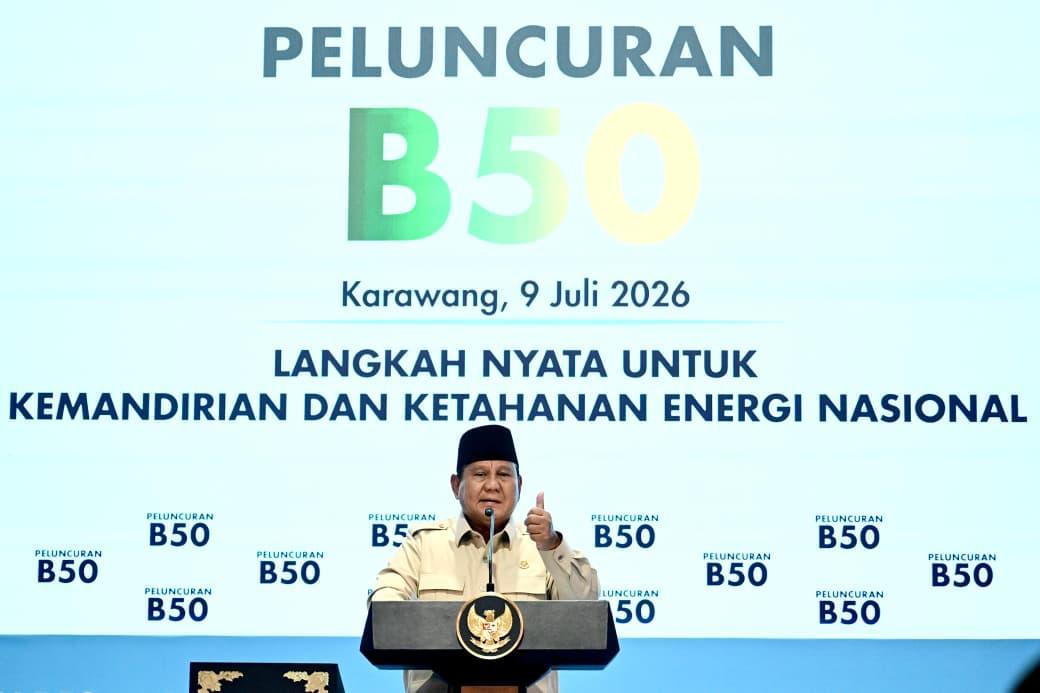
Indonesia is preparing to convert surplus diesel into aviation fuel under its B50 biodiesel strategy. (Photo: Cabinet Secretariat of the Republic of Indonesia)
Thailand considers lower purchase prices for 3.8 GW legacy renewable power contracts
Thailand’s energy regulator is reviewing electricity purchase prices under legacy renewable energy contracts, as the government seeks to align older tariffs with the sharp decline in solar power costs. Poonpat Leesombatpiboon, secretary-general of the Office of the Energy Regulatory Commission, said the review is not intended to cancel existing power purchase agreements, but to bring their purchase rates closer to current market conditions.
Under Thailand’s earlier adder incentive scheme, some solar producers received total payments of around THB 8 to THB 11 (USD 0.24 to 0.33) per kilowatt-hour during the subsidy period. After the incentive expired, they continued selling electricity at approximately THB 3.10 (USD 0.093) per kWh, compared with the current solar purchase price of THB 2.16 (USD 0.064) per kWh. Read more here
Huawei expands Southeast Asia clean energy push as Philippines fuels China solar growth
Huawei’s digital power business generated about USD 11 billion in revenue in 2025 as the company expanded beyond telecommunications into solar inverters, battery storage and digital energy systems.
Southeast Asia is becoming an increasingly important growth market. The Philippines emerged as China’s second-largest solar panel export destination in early 2026, while more than 80,000 Thai households have adopted Huawei’s residential solar systems. Across the region, Chinese suppliers including Huawei and Sungrow now dominate much of the inverter and storage equipment market. Read more here
Vietnam’s gas projects stall amid investor claims of unbankability and a renewables pivot
Vietnam revised its national energy plan in 2025, nearly a year before the global energy landscape would be shaken by the conflict in Southwest Asia. Its LNG goal was ambitious even then. The plan staked between 9.5-12.3% of the country’s targeted 2030 electricity capacity on LNG with projects totalling 22.5 GW, and a strategic bet that the fuel could bridge the country’s transition from coal to renewables.
But four years from that deadline, Vietnam still only has one complex of two operational LNG power plants with a combined capacity of 1.62 GW, with a second 1.2 GW project in progress. The rest of the pipeline is either stalled, delayed or scrapped. Read more here
[Op-ed] Why Indonesia is aligning with climate-forward carbon policies
In this opinion piece, Raja Juli Antoni, Indonesia’s Minister of Forestry, argues that high-integrity carbon markets are essential to mobilizing private investment for forest conservation and nature-based climate solutions. He outlines how Indonesia is strengthening forest carbon governance, building a unified carbon market infrastructure, and joining the Coalition to Grow Carbon Markets as part of its strategy to align climate action with long-term economic development. Read more here
How much can Thailand's carbon tax offset CBAM costs? Insights from steel, aluminum, and cement
After the European Commission released its draft implementing act on Carbon Border Adjustment Mechanism (CBAM) carbon price deductions on May 13, a key question long raised by importers and supply chain companies finally received a preliminary answer: can carbon taxes or carbon fees already paid in Asian countries be deducted from CBAM costs?
Using Thailand's existing carbon pricing mechanism embedded in fuel taxation as a case study, this article examines the potential scope and grey areas of the CBAM deduction mechanism. It also combines a carbon price model based on the Total Number of Allowances in Circulation (TNAC) to estimate the residual costs companies may still face after eligible deductions are applied. Read more here
From CBAM to Scope 3: How Thailand’s electronics, auto supply chains are navigating low-carbon transition
As global brands accelerate supply chain decarbonization, Thailand, one of Southeast Asia’s leading manufacturing hubs, is facing mounting pressure to transition toward low carbon production. While companies once focused primarily on reducing emissions from their own operations, decarbonization requirements are now extending across the value chain. As a result, Scope 3 emissions management has become a key factor in maintaining export competitiveness.
According to RECCESSARY carbon market analyst Sherry Hu (胡湘渝), export-oriented industries including electronics, automotive components, and petrochemicals are among the first sectors in Thailand to feel the pressure. Read more here
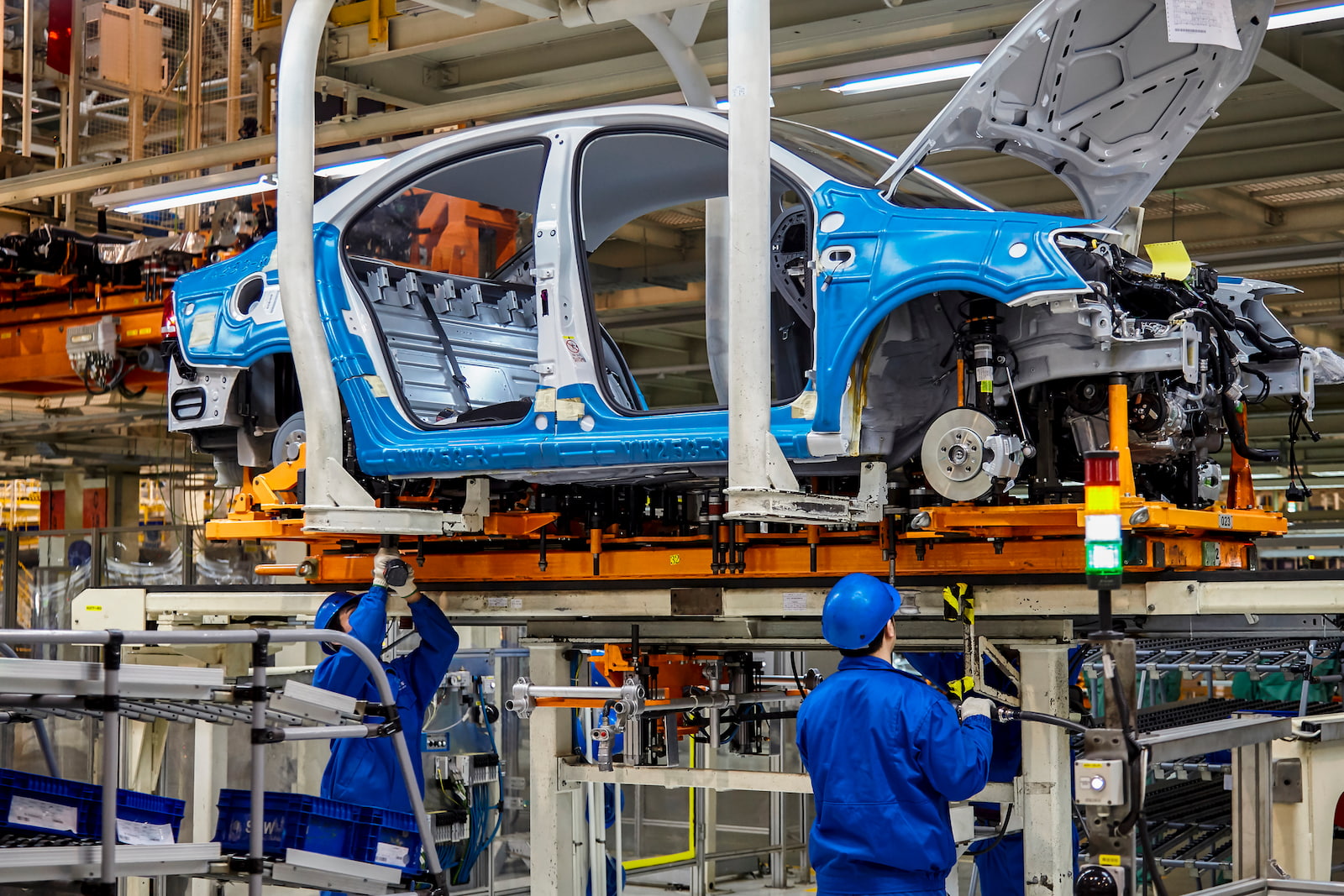
Thailand is a key manufacturing hub in Southeast Asia, with electronics and automative industries attracting significant foreign investment. (Photo: iStock)
“Detroit of the East” moves toward green manufacturing: 4 decarbonization challenges facing Taiwanese firms in Thailand
Driven by government promotion of the electric vehicle sector, the country has drawn significant investment from Taiwanese electronics and automotive suppliers in recent years, particularly within the printed circuit board, automotive electronics, battery, and component industries. As international brands extend carbon reduction mandates to their suppliers and Thailand prepares to introduce domestic carbon pricing, manufacturers face mounting pressure to decarbonize.
In an exclusive interview with RECCESSARY, President Chen Hann-chuan (陳漢川) of Thai Taiwan Business Association said more than half of the Taiwanese companies operating in Thailand have installed rooftop solar systems to meet their self-consumption needs. As corporate demand for green electricity surges, manufacturers are looking for more diverse renewable energy procurement options. In some industrial estates, demand for renewable energy has already begun to outpace current supply. Read more here
Track ASEAN energy and carbon markets with clarity. Subscribe to RECCESSARY for policy intelligence and business-ready insights across Asia-Pacific.