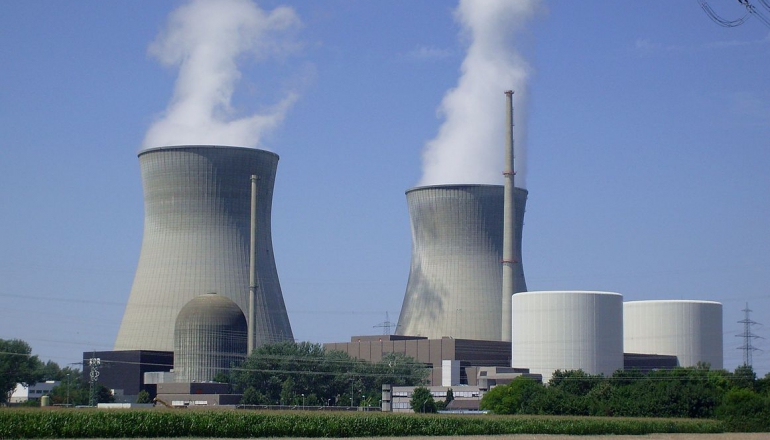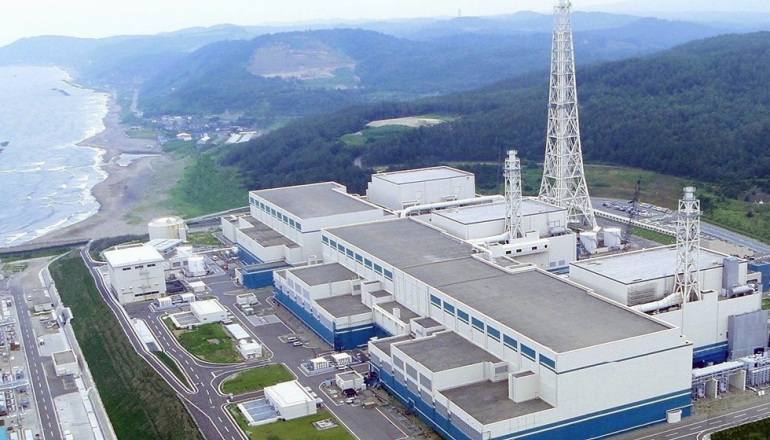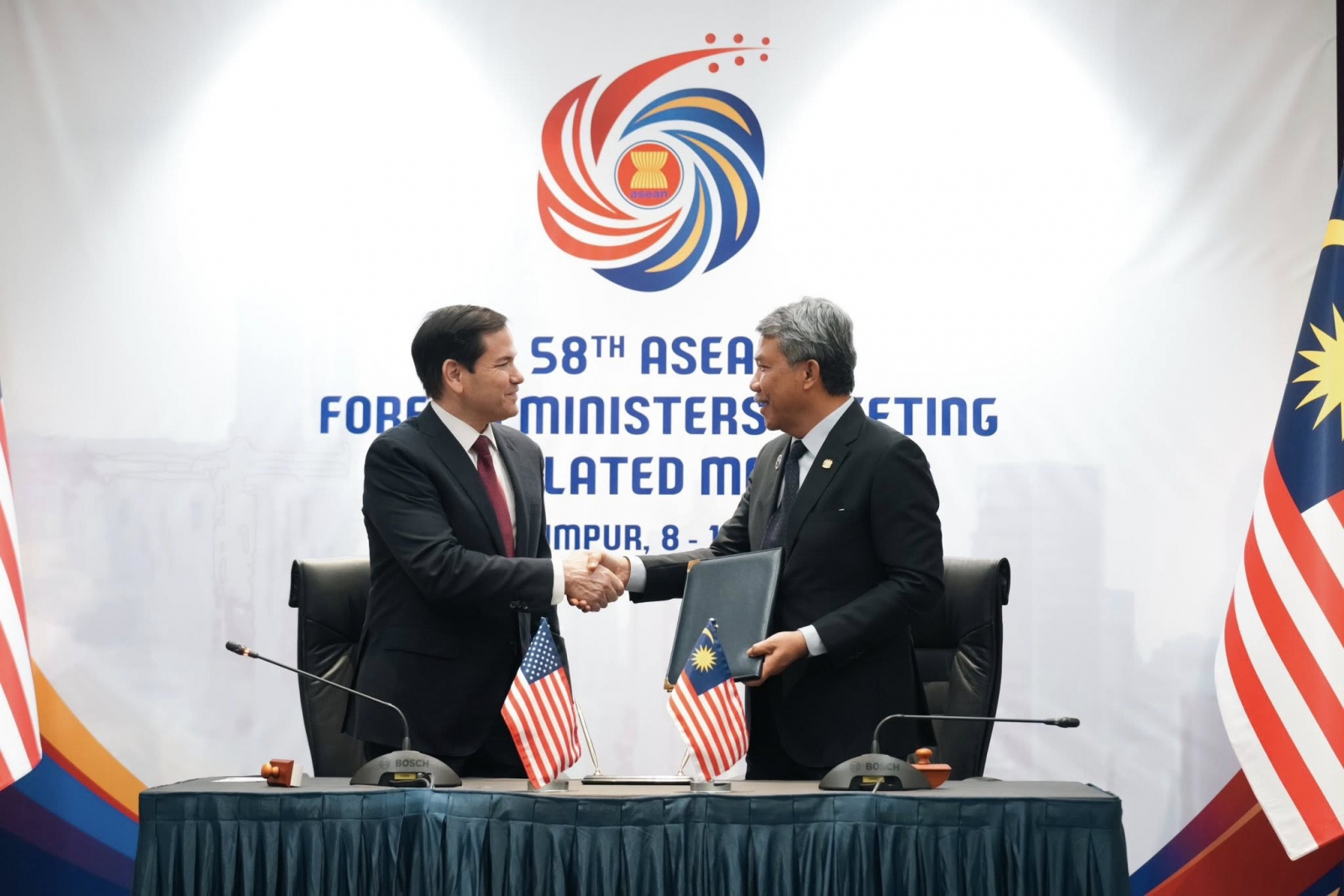
US Secretary of State Marco Rubio and Malaysian Foreign Minister Mohamad Hasan signed a memorandum of understanding concerning strategic civil nuclear Cooperation (NCMOU) with the aim of advancing peaceful nuclear cooperation between the United States and Malaysia on 10 July 2025. (Photo: Mohamad Hasan's Facebook)
Malaysia is re-considering the use of nuclear power. But the government will need to tackle questions about trade-offs.
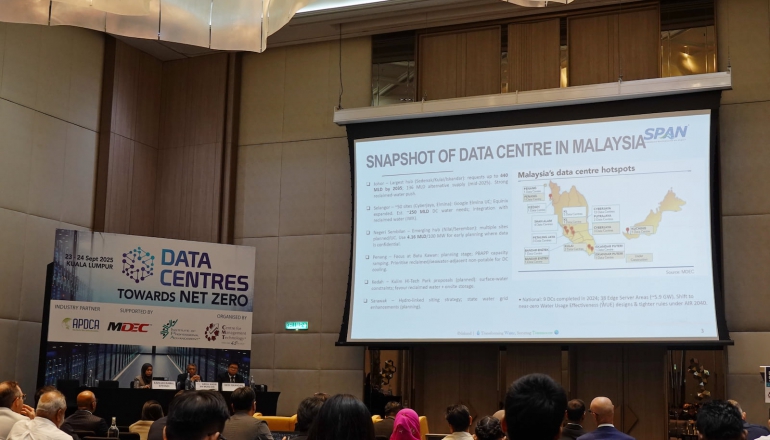
Nuclear power is back on the table for Malaysia. The imperatives are clear: the country must increasingly feed energy-intensive sectors such as data centres. In addition, Malaysia risks becoming a net gas importer within 10 to 20 years despite producing oil and gas (O&G).
But nuclear power’s revival is anything but straightforward. Malaysia is reopening its once-shelved nuclear file under much tighter political, environmental, and geoeconomic constraints than the public debate reflects.
In 2024, the Cabinet approved a 2035 nuclear power deployment target. In December 2025, the government amended the nuclear regulatory framework. It mandated permits for the import, export and transshipment of radioactive materials.
This is not Malaysia’s first nuclear rodeo. The country’s nuclear ambitions date back to the 1970s, initially focused on research and capacity-building (see Table 1). Subsequently, Malaysia prioritised natural gas via Petronas instead. Nuclear power was left on the backburner until the Najib administration.
By the 2010s, Malaysia was considered one of Southeast Asia’s most nuclear-ready economies. This followed the establishment of a Nuclear Power Development Steering Committee in 2008 and a 2014 Nuclear Roadmap under state-owned utility Tenaga Nasional Bhd (TNB), which would operate nuclear power plants. There were plans to have two operational nuclear power plants by 2021. But in 2018, then Prime Minister Mahathir Mohamad cancelled those plans due to a lack of capacity and expertise — particularly in the disposal of radioactive waste.