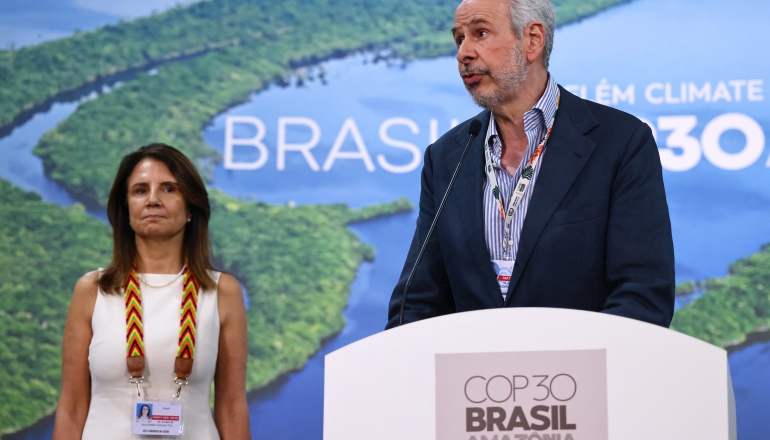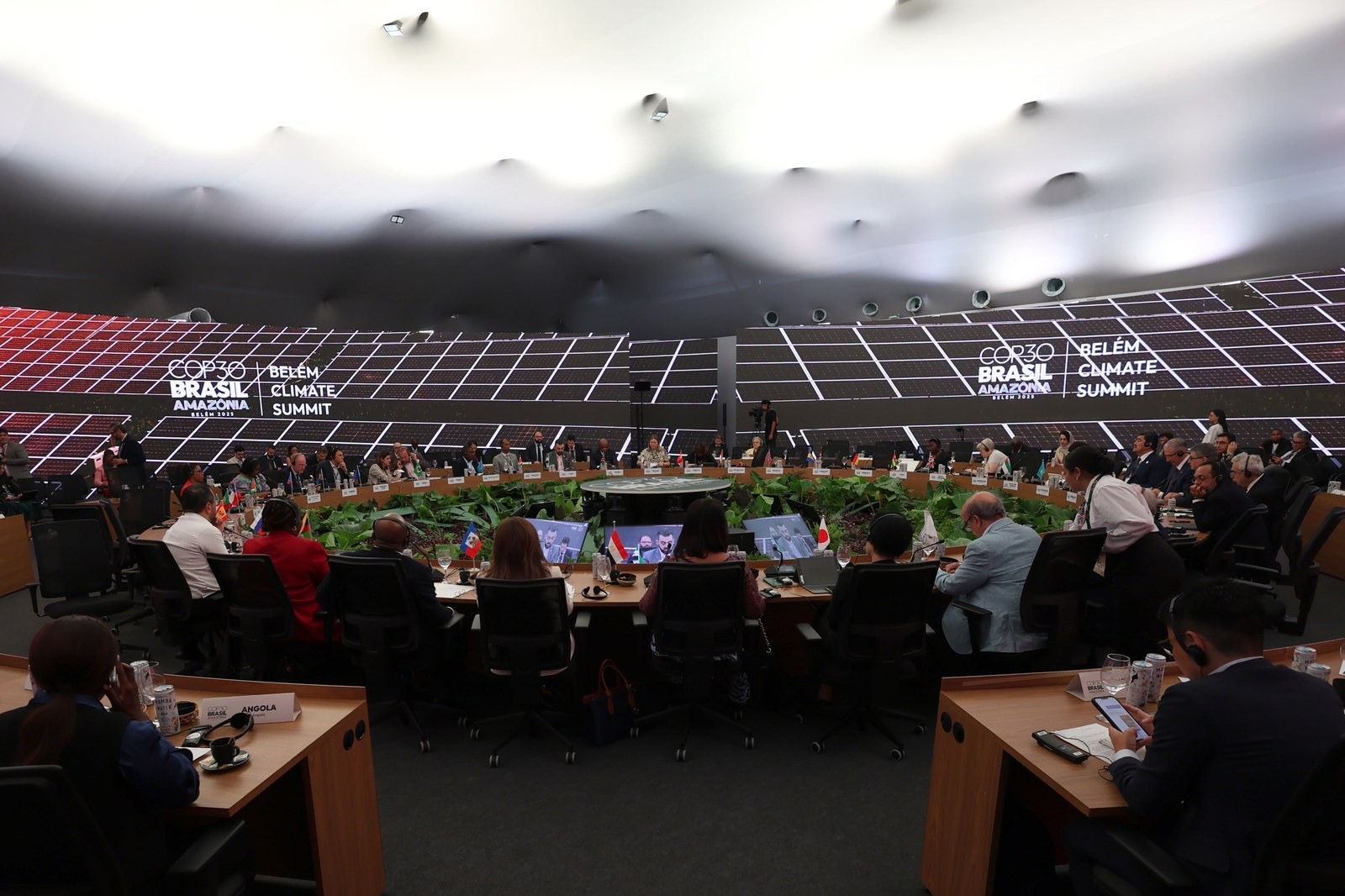
The Open Coalition Alliance on Compliance Carbon Markets proposed by Brazil has won backing from 18 countries. (Photo: Alex Ferro/COP30)
This year’s COP30 brought the world’s climate spotlight to the Southern Hemisphere, as leaders gathered in Belém—a gateway city to the Amazon rainforest. With forest protection, climate finance, and updated Nationally Determined Contributions (NDCs) at the heart of the agenda, the summit also marked the 10th anniversary of the Paris Agreement, drawing global attention. RECCESSARY unpacks the key decisions and emerging trends from this landmark event.
As the Paris Agreement marks its tenth anniversary this year, countries are rolling out a new round of Nationally Determined Contributions (NDC 3.0) ahead of COP30, outlining emissions targets for 2035. With stricter reduction requirements in place, the role of international cooperation and carbon markets is gaining renewed importance. For instance, the EU’s 2040 target of a 90% emissions cut includes plans to offset up to 5% through international carbon credits, aiming to increase flexibility and reduce overall costs.
Host country Brazil has launched the Open Coalition on Compliance Carbon Markets initiative, which has secured support from 18 countries. The coalition aims to connect different carbon trading systems through the development of common standards.
Meanwhile, Singapore, the U.K., and Kenya are leading the government-backed Coalition to Grow Carbon Markets, which promotes shared principles for high-quality carbon credits and has gained backing from 11 governments.
At COP30, international political momentum is clearly intensifying, as countries form alliances to shape the future landscape of carbon markets. How will these efforts influence the development of Article 6 mechanisms under the Paris Agreement, and what implications might they hold for the global carbon market framework in 2026?
Brazil pushes ETS linkage and standards through carbon market coalition
Brazil unveiled the Open Coalition on Compliance Carbon Markets declaration at COP30. Led by the Ministry of Finance, the initiative has gained support from the EU, the U.K., China, Canada, and Singapore. The coalition aims to develop common monitoring, reporting, and verification (MRV) methodologies and establish shared accounting standards, laying the groundwork for linking national emissions trading systems (ETS) in the future.