.jpg)
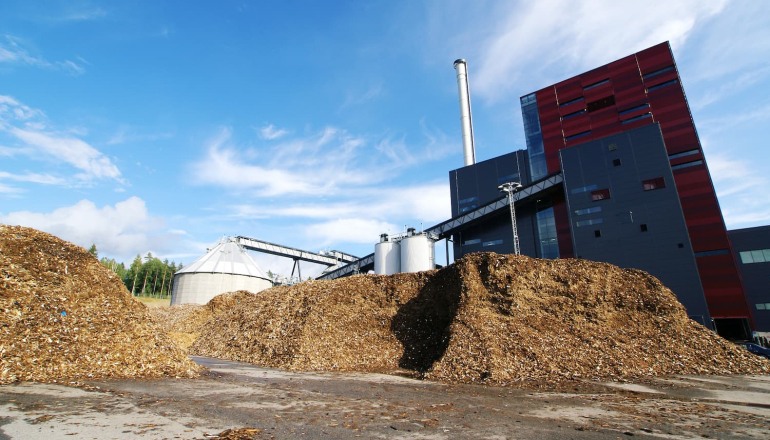
Tree felling on an energy plantation concession in Indonesia where wood has been used to supply wood pellets to South Korea. Image courtesy of FWI.
The harvesting and burning of forest biomass to produce energy continues to surge, according to a new report on near-term global production and demand for wood pellets. This growth comes despite scientists’ warnings of the industry’s harm to the climate and its contribution to deforestation — increasingly in the tropics.
It comes even as forest advocates score early wins in their efforts to derail what scientists call an unsustainable form of bioenergy.
The numbers are stark, according to the new report. By 2030, the supply of forest biomass for energy is projected to triple compared to 2021, after expanding by 50% between 2010 and 2021.
That jump in wood pellet production to meet global demand will require a 13-fold increase in monoculture biomass plantations from current levels, especially in Southeast Asia. The ongoing conversion of native tropical forests to short-rotation plantations for crops, timber and wood pellets will continue being a significant driver of global deforestation.
The report, titled Burning Up the Biosphere, offers what it calls “a global threat map of biomass energy development.” It was produced by the Biomass Action Network of the Environmental Paper Network (EPN), an international forest advocacy group. The map and projections are based on data produced by the International Energy Agency’s (IEA) Net Zero Scenario study.
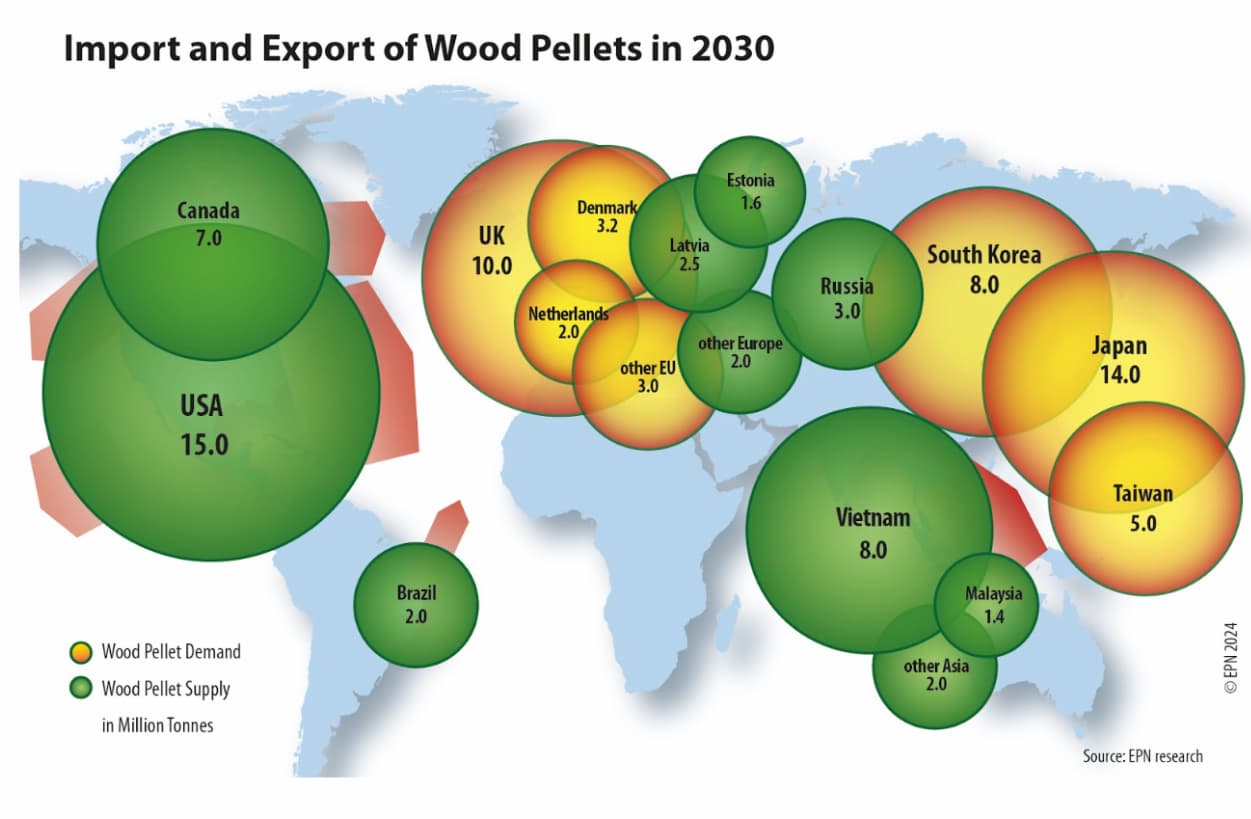
Estimate of global wood pellet production and use in metric tons by nation by 2030. Data sourced from the International Energy Agency’s Net Zero Scenario study. Image courtesy of the Environmental Paper Network.
In a move viewed as ironic by campaigners, IEA’s projections for achieving global net zero emissions by 2050 rely on not counting CO2 emissions produced at the smokestack by wood pellets — a clear carbon accounting error sanctioned by the United Nations Convention on Climate Change (UNFCCC) and adopted in policies by European and Asian nations desperate to meet 2030 legal mandates to stop burning coal.
Unfortunately, say forest advocates, nature will not be fooled by UNFCCC’s creative accounting. Science has shown repeatedly that the burning of wood pellets spews more carbon emissions than coal per unit of electricity produced. In fact, it’s possible the biomass industry wouldn’t exist if the world’s nations weren’t providing multi-million-dollar subsidies to biomass companies to cut down forests and turn them into wood pellets.