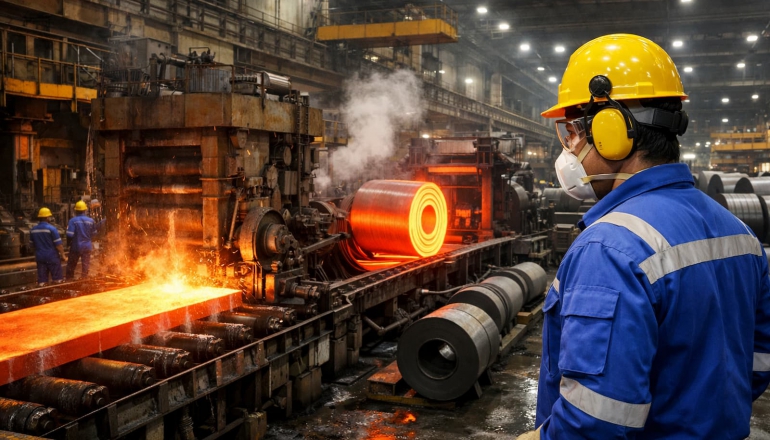
With policies accelerating, companies face a real-world stress test where carbon reduction shapes global competitiveness. (Photo: CSC)
With Taiwan’s carbon fee now in place, the EU’s Carbon Border Adjustment Mechanism (CBAM) in effect, and global sustainability standards evolving, 2026 marks a pivotal shift from voluntary ESG commitments to policy-driven action. This moment calls on companies to assess whether their operations truly reflect low-carbon competitiveness. In this feature series, RECCESSARY explores how businesses are responding to rising regulatory pressure by turning decarbonization into practical, long-term strategies — from policy changes and industry practices to technological pathways.
2026 marks a pivotal crossroads for corporate sustainability. Taiwan will officially begin collecting carbon fees, with plans to trial a cap-and-trade Emissions Trading System (ETS) and cement sector pilot under a local version of the Carbon Border Adjustment Mechanism (CBAM) in the second half of the year. Internationally, the EU’s CBAM takes full effect on Jan. 1, 2026, while ASEAN countries are also moving toward their own carbon pricing frameworks.
As policies gain momentum, businesses are facing a real-time pressure test on decarbonization. Carbon reduction has become more than a compliance issue — it is now a key factor in global competitiveness. For high-emitting sectors like cement and steel, the next few years will be crucial in navigating regulatory shifts and evaluating the feasibility of various decarbonization technologies.

Chou Wen-hsien, VP of the Production Division at China Steel, says ensuring fairness starts with preventing carbon fees and ETS from overlapping on the same emissions source. (Photo: CSC)
From carbon pricing to Taiwan’s ETS, fairness remains top industry concern
Walker Chen (陳志賢), chief deputy plant manager at Asia Cement Corporation (ACC)’s Hualien facility, said the company is taking a wait-and-see approach to whether Taiwan will move forward with an ETS. The key factor, he noted, is how the government designs the free allocation mechanism.