Large trials in Indonesia and Malaysia are showing it is possible to become sustainable without damaging productivity or local economies
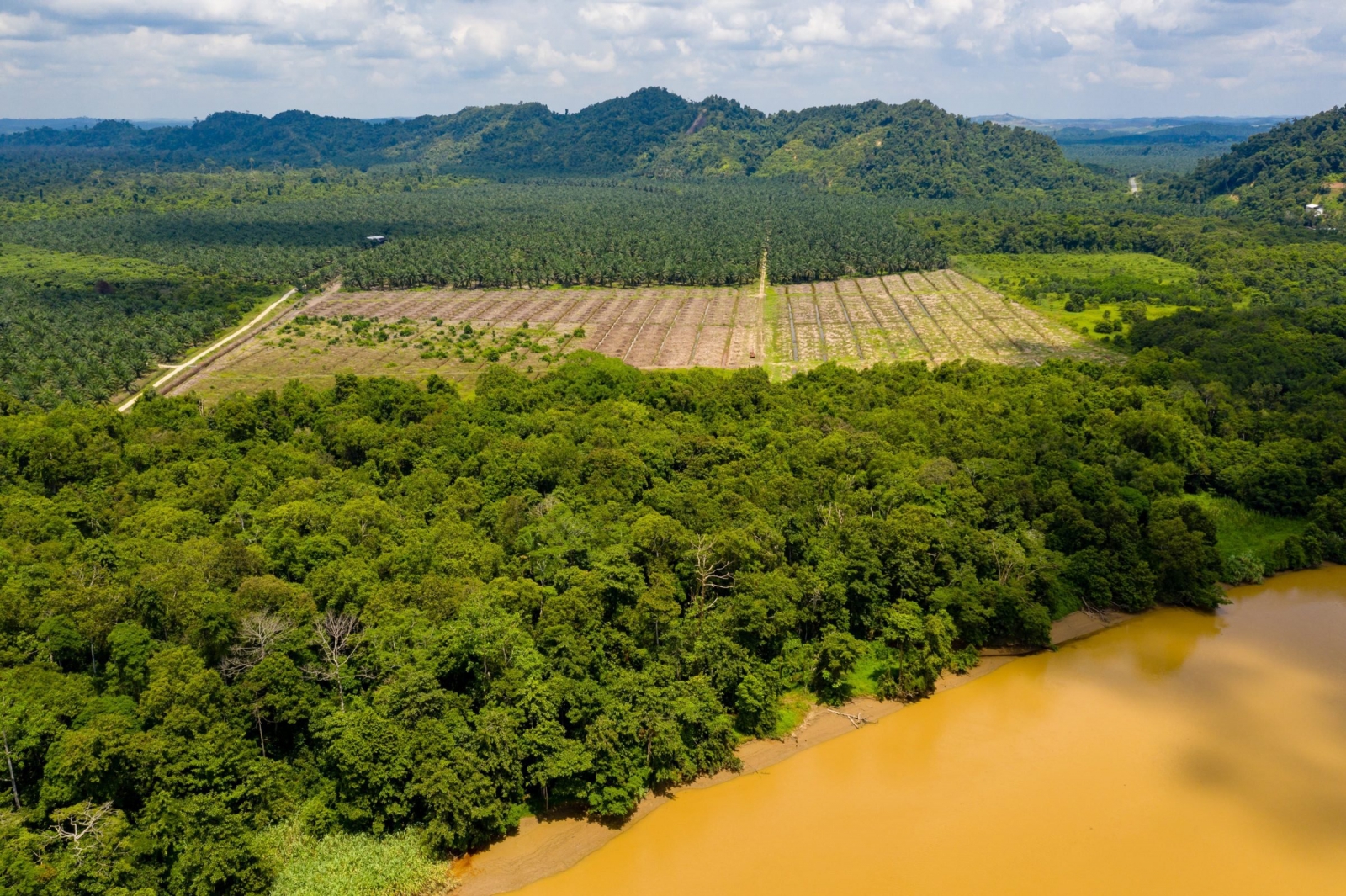
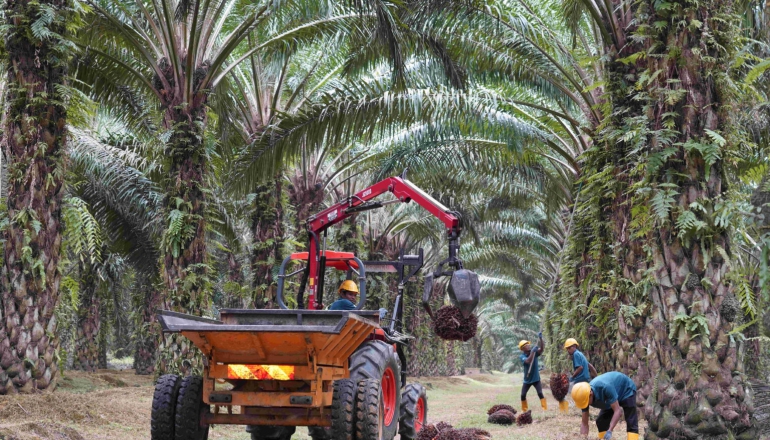
The palm oil boom that took hold in the late 1980s and 1990s in Malaysia and Indonesia has now replaced vast areas of biodiverse, tropical rainforest and peatland with oil palm monocultures: regimented rows of trees, usually kept bare of other vegetation with chemicals.
This degradation of ecosystems has significantly contributed to greenhouse gas emissions, and the decline of orangutans, proboscis monkeys and other endemic species. There are now about 21 million hectares of oil palm plantations around the world – approximately 30 times the size of Jakarta’s metropolitan area.
Facing growing public concern, the industry is trying to reduce its environmental impact. Zero-deforestation commitments and sustainability certification schemes have emerged, while academics have been advocating for sustainable farming strategies and guidelines.
This call is being answered with pioneering, large-scale trials that are testing various restorative and regenerative approaches. Crucially, these solutions must balance sustainability with productivity, to protect local economies and communities. So, how are they doing it?
Island efforts
A five-year experiment led by Germany’s University of Göttingen has found that introducing “islands” of native trees within oil palm plantations can help to restore ecosystem functions and biodiversity without decreasing crop yields.
The Ecological and Socioeconomic Functions of Tropical Lowland Rainforest Transformation Systems (EFForTS) trial was the first experiment to test the tree islands concept within an actively producing oil palm plantation. Previously, only inactive, post-agricultural degraded land had been used for trials. Working with a mid-sized oil palm company, researchers set up 52 tree islands of different sizes across a 140-hectare plantation in Sumatra, Indonesia.
The results, published in 2023, were more promising than anticipated. “It increased biodiversity and ecosystem functioning overall, and it doesn’t decrease oil palm yield at this stage,” says Clara Zemp, who led the study. “For restoration it’s a suitable strategy and for productivity it’s still compatible.” This approach could also promote soil fertility and make oil palm production more resilient to climate change.
The EFForTS trial found tree islands offer multiple ecological benefits, such as better water filtration, biomass input and soil fertility, compared to conventionally managed oil palm. Over a five-year period, there was no loss in productivity. After five to seven years, there could be marginal declines as the trees start competing with the oil palms in the area they were planted, which in this case covered less than 5% of the total plantation.