The government has ambitious plans for renewable energy but coal power is still on the rise
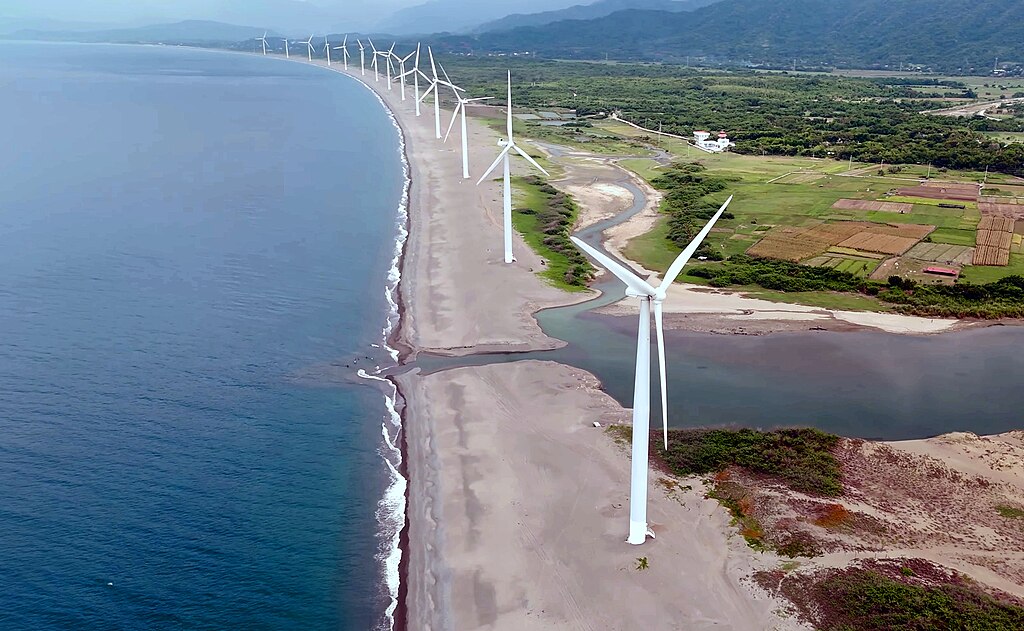
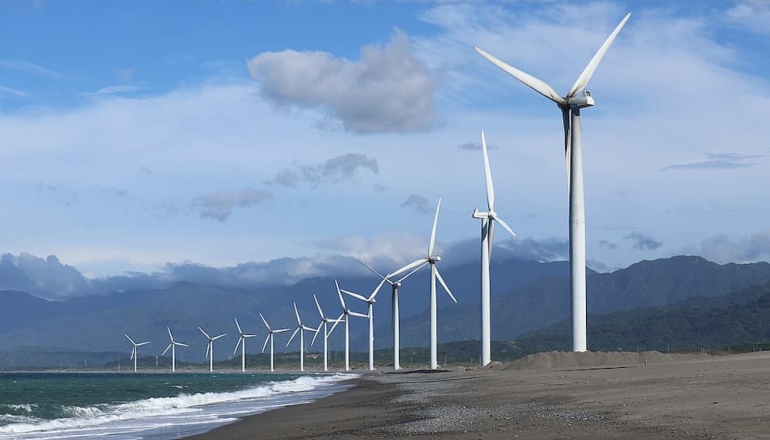
Bangui wind farm in Ilocos Norte, Philippines. (Photo: Wikimedia Commons)
The constant rumble of machinery from nearby coal-fired power plants and the acrid, rotten egg-like stench have become an unwelcome part of life in Limay town in the Philippine province of Bataan.
Since the first plant went live in 2013, residents of the coastal municipality have been suffering the consequences: respiratory illnesses, displacement, and loss of livelihoods. Locals are stuck with expensive bills because the electricity generated in their town is sold to other provinces.
Despite ambitions for a clean energy transition, coal continues to be the most trusted source of power in the Philippines. It leaves Derek Cabe, an anti-fossil fuel campaigner from Bataan, often wondering: at what cost do communities like hers power a nation?
“Our community should not be collateral damage just so other regions can have electricity,” she said.
The Philippines, which is highly vulnerable to climate change, is struggling to reduce its reliance on coal, a major driver of global warming, despite ambitious renewable energy pledges.
At the COP28 summit in Dubai last year, the country signed a pledge to triple the world’s renewable energy capacity, aligning with its domestic goal of increasing renewables’ share in the electricity mix to 35% by 2030 and to 50% by 2040.
“Having that target, you could say the Philippines is one of the more ambitious countries in Southeast Asia, maybe after Vietnam,” said Dini Setyawati, senior electricity policy analyst for Southeast Asia at energy think tank Ember.
However, coal still fuels 57% of the Philippines’ energy needs. The country currently operates 28 coal-fired plants with a combined capacity of 9.88 gigawatts.